Turkey's hidden Christian past: Extraordinary discoveries are rewriting the story of early Christianity
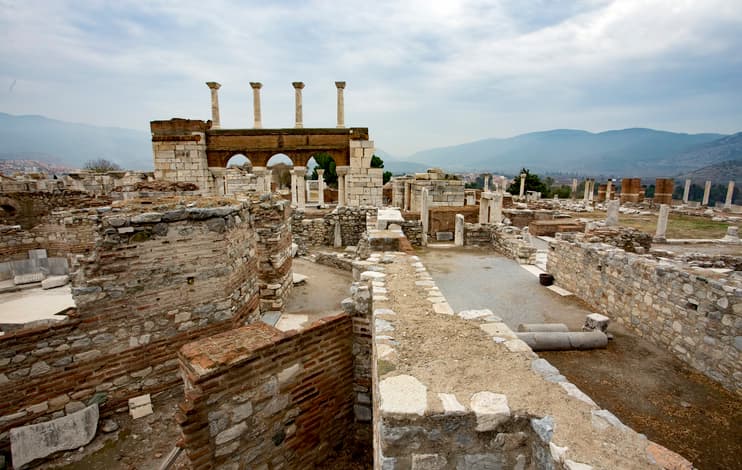
Archaeological discoveries in Turkey are revealing the hidden history of early Christianity, showcasing the faith's deep roots and resilience. This reminds believers that God preserves His church's witness through the ages, even in lands where it once flourished and later faced opposition.
Matthew 16:18
Covenant Promise“And I tell you, you are Peter, and on this rock I will build my church, and the gates of hell shall not prevail against it.”
Why this passage
In its original context, Jesus promised that His church—the community of believers confessing Him as Messiah—would be built on the foundation of apostolic testimony and would withstand all opposition. The promise was given to the disciples in Caesarea Philippi, a region of pagan worship, underscoring that no earthly power could destroy Christ's assembly.
This covenantal assurance extends through church history. The discovery of early Christian sites in Turkey—where the church faced Roman persecution, later Islamic conquest, and centuries of cultural erasure—demonstrates that the church's foundations remain, even when visible structures are buried.
Historical context, theological significance, application today — denomination-neutral, ~1,000-word walk-through.
Behold, the Lord who builds His church (Matthew 16:18) does not let its foundations be forgotten. These ancient tombs and churches unearthed in Turkey testify that the faith once delivered to the saints (Jude 1:3) was planted deeply in Asia Minor, where Paul and the apostles labored.
Though empires rise and fall, the stones cry out (Luke 19:40) with the truth of Christ's enduring presence. Let these discoveries stir gratitude for the faithful who came before us and confidence that the gospel's roots run deeper than any earthly power can erase.
Today's Prayer
Pray that these archaeological finds would spark renewed interest in the gospel among modern Turks and that the Lord would raise up laborers for the harvest in this historic land.
Further Scripture
Additional passages that illuminate this event, each grounded in a distinct interpretive lens.
“This continued for two years, so that all the residents of Asia heard the word of the Lord, both Jews and Greeks.”
Why this passage
Luke records that during Paul's ministry in Ephesus (in modern-day Turkey), the gospel spread so powerfully that 'all the residents of Asia heard the word of the Lord.' This describes the rapid, Spirit-driven expansion of Christianity through the Roman province of Asia Minor in the first century.
The archaeological discoveries now being made—tombs, churches, and icons from the early centuries—are the material remains of that very movement. They confirm the historical reality of the apostolic mission described in Acts and show that the faith took deep root in this region.
How it applies
These discoveries are not merely academic; they are echoes of the apostolic age. The 'hidden Christian past' of Turkey is the buried legacy of the very people who heard Paul preach in Ephesus, Colossae, and the seven churches of Revelation.
For modern readers, this is a call to remember that the gospel's advance is never forgotten by God, even when human history buries it. The same Spirit who moved through Asia Minor is still at work today, building the church in every generation.
Related by Scripture
Other events we've interpreted through the same passage or hermeneutical lens.
Community launching soon
Get the invite by email when the Watchman's Wall opens
Share this article
Source: Christiantoday.com— we link to the original for full context.