Tsunami survivor battles wildfire to protect hometown in Japan's northeast
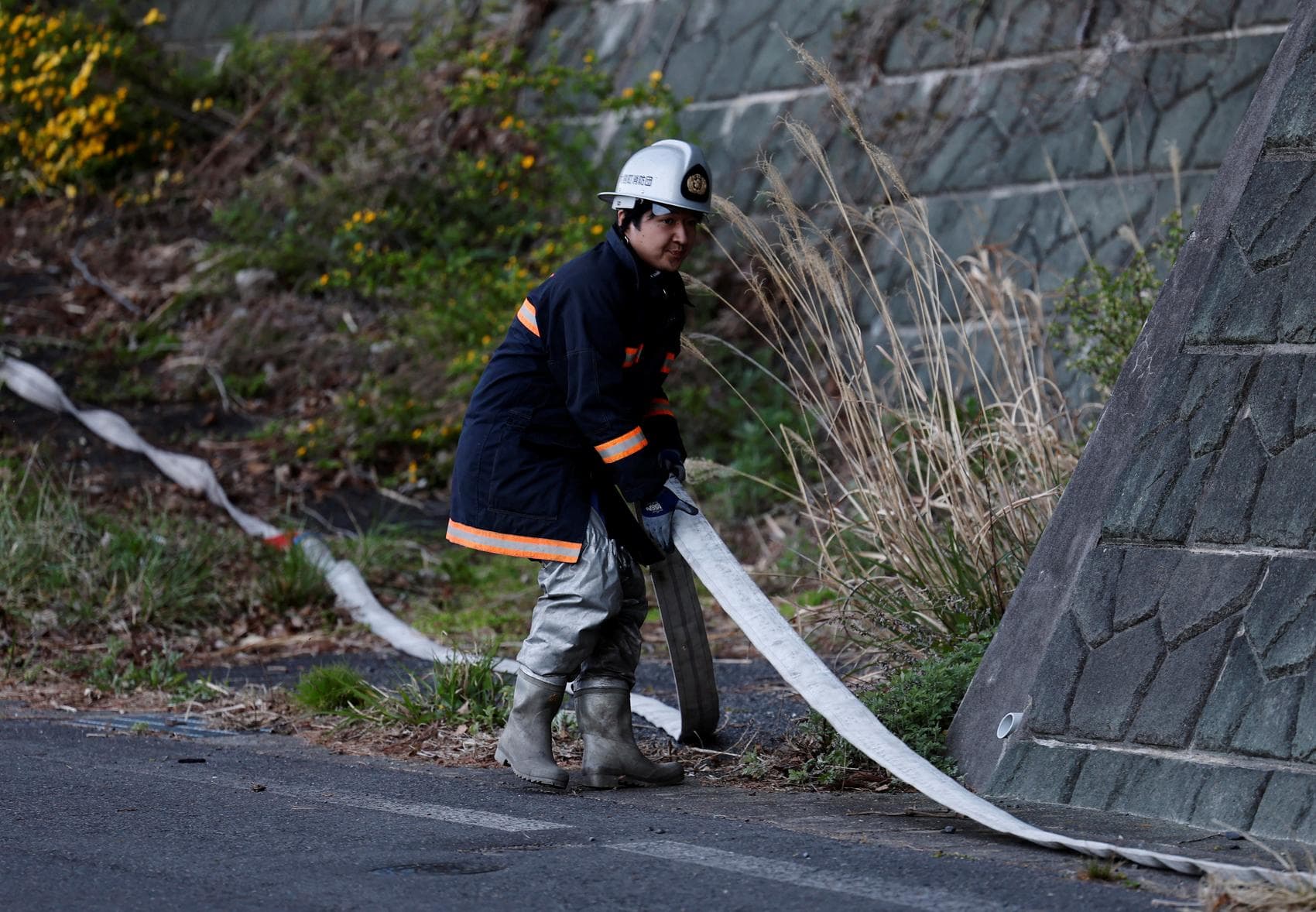
A survivor of Japan's catastrophic 2011 earthquake and tsunami now battles a wildfire threatening the same northeastern town — a convergence of natural disasters that echoes Scripture's warning of increasing calamities upon the earth in the last days.
Luke 21:11
Prophetic Fulfillment“There will be great earthquakes, and in various places famines and pestilences. And there will be terrors and great signs from heaven.”
Why this passage
In the Olivet Discourse, Jesus lists catastrophic natural events — earthquakes, famines, pestilences, and terrors — as 'birth pangs' preceding the end of the age (cf. Luke 21:9-11).
The original horizon addressed the destruction of Jerusalem (AD 70) and simultaneously pointed forward to the consummation, as the disciples' double question in v.7 makes plain.
The pattern Jesus describes is not a single event but a season of accumulating, diversifying calamities striking 'in various places' — a phrase the Greek kata topous emphasizes as geographically scattered and relentless.
Historical context, theological significance, application today — denomination-neutral, ~1,000-word walk-through.
Luke 21:11 declares that there will be 'great earthquakes, and in various places famines and pestilences. And there will be terrors and great signs from heaven.' Ryota Haga's story — stripped of home by earthquake and tsunami, now standing against wildfire in the same town — puts a human face on precisely the multiplying, overlapping calamities Scripture foretells.
The herald's word to the believer is not despair but readiness. Where the world sees random misfortune, the watchful church sees the birth pangs the Lord described — and is moved to compassion, prayer, and the work of restoration.
Today's Prayer
Pray for the people of Otsuchi and northeastern Japan, that God would surround them with His mercy amid layered grief, and that believers there would shine as lights of hope and practical service in their battered communities.
Further Scripture
Additional passages that illuminate this event, each grounded in a distinct interpretive lens.
“God is our refuge and strength, a very present help in trouble. Therefore we will not fear though the earth gives way, though the mountains be moved into the heart of the sea.”
Why this passage
Psalm 46 was composed against a backdrop of political and natural upheaval — 'the earth gives way' and waters roar (v.3), imagery that the Sons of Korah employed to express both literal and cosmic disorder. The psalm's theological center is not the absence of catastrophe but the unshakeable presence of God within it.
The wisdom embedded here is covenantal: the righteous do not escape natural disaster, but they possess a refuge that the disaster cannot breach.
How it applies
Ryota Haga, a man who has now twice watched disaster consume his hometown, represents millions around the world for whom calamity is not abstract. The psalm speaks directly to such lives: the earth literally 'gave way' in 2011 beneath his feet, and the fire threatens again.
The church is called to carry Psalm 46's confession — that God is a very present help — into the ash and grief of communities like Otsuchi, embodying the refuge the psalm declares.
“The great day of the LORD is near, near and hastening fast; the sound of the day of the LORD is bitter; the mighty man cries aloud there. A day of wrath is that day, a day of distress and anguish, a day of ruin and devastation, a day of darkness and gloom, a day of clouds and thick darkness.”
Why this passage
Zephaniah's oracle of the Day of the Lord depicts a world overtaken by cascading ruin — wrath, distress, devastation, and darkness arriving together. The prophet spoke first to Judah's immediate judgment under Babylon, but the scope of the language in chapters 1-3 deliberately expands to universal proportions, making this one of the broadest Day-of-the-Lord texts in the Minor Prophets.
The theological principle embedded here is that God is sovereign over natural catastrophe, and the accumulation of disasters upon a people is never merely meteorological — it is a call to sobriety and return.
How it applies
The images of 'ruin and devastation' and 'darkness and gloom' resonate with the physical reality of wildfire smoke blotting out sky over a town already marked by the ruins of 2011. While no specific judgment on Japan is being declared, the pattern of mounting disaster Zephaniah portrays stands as a universal pastoral warning.
For the watching church, such scenes are a summons to intercession and to remember that the Day hastens — and the world's communities need the Gospel before that Day arrives.
Related by Scripture
Other events we've interpreted through the same passage or hermeneutical lens.
Bird flu confirmed in South Australia as infected petrel brings deadly H5N1 cases to three
Pestilence & PlaguesShares Luke 21:11The ‘earthquake gate’ stopping a San Andreas disaster is under its highest stress in 1,000 years
Earthquakes & Natural DisastersShares Luke 21:11Where the 'Big One' will hit... as underground stress reaches a 1,000-year high and earthquakes split the ground throughout the US: See America's 'time bombs'
Earthquakes & Natural DisastersShares Luke 21:11One dead, dozens injured after Indonesian quake
Earthquakes & Natural DisastersShares Luke 21:11California’s tectonic systems at highest levels of stress in 1,000 years – study
Earthquakes & Natural DisastersShares Luke 21:11
Community launching soon
Get the invite by email when the Watchman's Wall opens
Share this article
Source: Japan Today— we link to the original for full context.