Trump Demands Muslim Nations Join Abraham Accords as Iran Deal Nears Completion
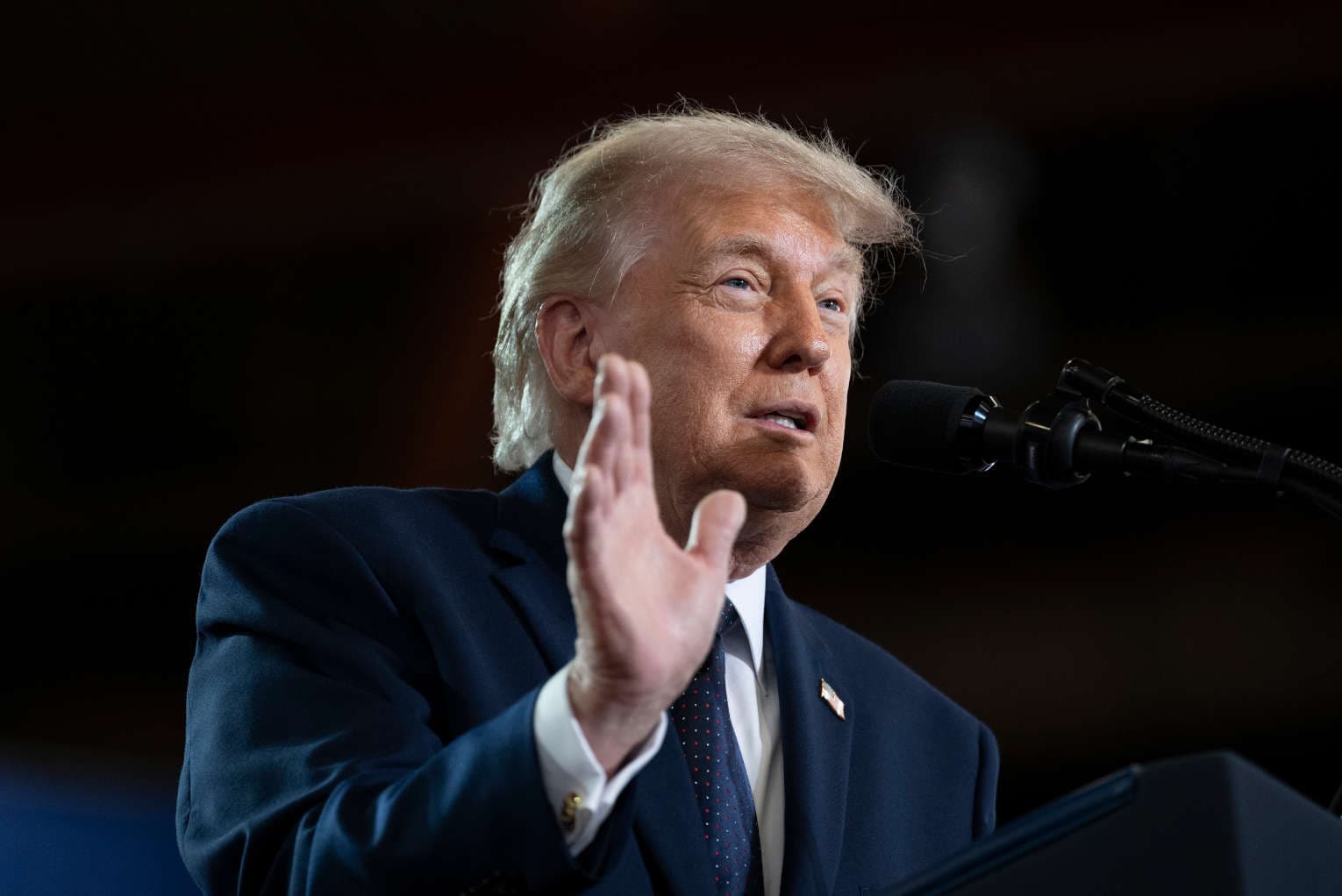
President Trump's demand that Muslim nations normalize relations with Israel as a condition for an Iran deal reflects a prophetic pattern of nations being drawn to align with or against Jerusalem in the last days.
Zechariah 12:2-3
Prophetic Fulfillment“"Behold, I am about to make Jerusalem a cup of staggering to all the surrounding peoples. The siege of Jerusalem will also be against Judah. On that day I will make Jerusalem a heavy stone for all the peoples. All who lift it will surely hurt themselves. And all the nations of the earth will gather against it."”
Why this passage
Zechariah 12:2-3 is an oracle of judgment and restoration concerning Jerusalem in the latter days. The 'cup of staggering' and 'heavy stone' imagery depicts Jerusalem as a source of conflict and division for all nations—not merely a local skirmish but a global flashpoint.
The original hearers understood this as a future time when Jerusalem's fate would entangle every major power.
This prophecy is not about a single battle but about a sustained pattern: Jerusalem becomes the geopolitical fulcrum that draws the nations into confrontation or alignment. The Abraham Accords and Iran deal negotiations fit this pattern precisely, as Muslim nations are now being asked to take a stand regarding Israel as a condition for broader regional cooperation.
Historical context, theological significance, application today — denomination-neutral, ~1,000-word walk-through.
Behold, the nations are being drawn to Jerusalem, not by accident but by the hand of the Lord who makes Jerusalem a cup of trembling to all peoples round about. As Zechariah declared, 'Behold, I am about to make Jerusalem a cup of staggering to all the surrounding peoples.'
This news shows how even political negotiations over Iran become entangled with the status of Israel. The Abraham Accords, once a distant hope, now serve as a bargaining chip—a sign that Jerusalem remains the axis around which the nations turn, just as the prophets foretold.
Today's Prayer
Pray that the leaders of Muslim nations would see the peace of Jerusalem not as a political prize but as a divine calling, and that Israel's security would be established by God's hand, not man's treaties.
Further Scripture
Additional passages that illuminate this event, each grounded in a distinct interpretive lens.
“"In that day there will be a highway from Egypt to Assyria, and Assyria will come into Egypt, and Egypt into Assyria, and the Egyptians will worship with the Assyrians. In that day Israel will be the third with Egypt and Assyria, a blessing in the midst of the earth, whom the Lord of hosts has blessed, saying, 'Blessed be Egypt my people, and Assyria the work of my hands, and Israel my inheritance.'"”
Why this passage
Isaiah 19:23-25 is a remarkable prophecy of peace and reconciliation between former enemies—Egypt, Assyria (modern Iraq/Syria region), and Israel—who together become a blessing in the earth. The 'highway' imagery suggests open trade, travel, and diplomatic relations.
This is not a military conquest but a voluntary alignment under God's blessing.
The Abraham Accords, which normalized relations between Israel and several Arab nations (including the UAE, Bahrain, Morocco, and Sudan), represent the first concrete steps toward this prophetic vision. The demand that more Muslim nations join extends this highway of peace further into the region.
How it applies
President Trump's push to expand the Abraham Accords by requiring Muslim nations to normalize with Israel as a condition for an Iran deal echoes Isaiah's highway of peace. While the current negotiations are political, they unwittingly advance a biblical pattern: former enemies of Israel are being drawn into relationship with her.
This is a foretaste of the day when Egypt, Assyria, and Israel will be a blessing in the midst of the earth.
“"Why do the nations rage and the peoples plot in vain? The kings of the earth set themselves, and the rulers take counsel together, against the Lord and against his Anointed, saying, 'Let us burst their bonds apart and cast away their cords from us.'"”
Why this passage
Psalm 2 is a royal psalm describing the rebellion of the nations against God's anointed king (ultimately Christ). The 'raging' and 'plotting' of the nations is futile because God has already established His King on Zion.
The psalm presents a pattern: human rulers conspire against divine authority, but their plans are overturned.
This pattern applies to any diplomatic maneuvering that treats Israel as a mere political pawn. The nations may negotiate, form coalitions, and make demands, but their counsel is ultimately 'in vain' if it opposes God's purposes for His Anointed and His people.
How it applies
The Iran deal negotiations and the Abraham Accords expansion represent the 'counsel' of the nations—rulers taking counsel together about the fate of Israel and the region. Yet Psalm 2 reminds us that all such plotting is ultimately 'in vain' if it does not align with God's sovereign decree.
The nations may rage, but the Lord laughs; His Anointed is already established on Zion.
Related by Scripture
Other events we've interpreted through the same passage or hermeneutical lens.
Iran seeks new regional norm with strikes on Israel | The Jerusalem Post
Wars & Rumors of WarsShares Zechariah 12:2-3Erdogan-Trump connection may moderate strained Israel-Turkey relations | The Jerusalem Post
Israel & JerusalemShares Zechariah 12:2-3Israel and Iran trade strikes, threatening to drag the region back into full-scale war
Wars & Rumors of WarsShares Psalm 2:1-2Chinese FM expresses deep concern over renewed Iran-Israel clashes
Wars & Rumors of WarsShares Psalm 2:1-2Middle East crisis live: Trump tells Israel and Iran to stop ‘shooting’ after countries launch first strikes since April ceasefire
Wars & Rumors of WarsShares Psalm 2:1-2
Community launching soon
Get the invite by email when the Watchman's Wall opens
Share this article
Source: mycharisma— we link to the original for full context.