Three strong earthquakes shake Attica: Strongest reaches 5.2 magnitude, epicenter in Northern Evia
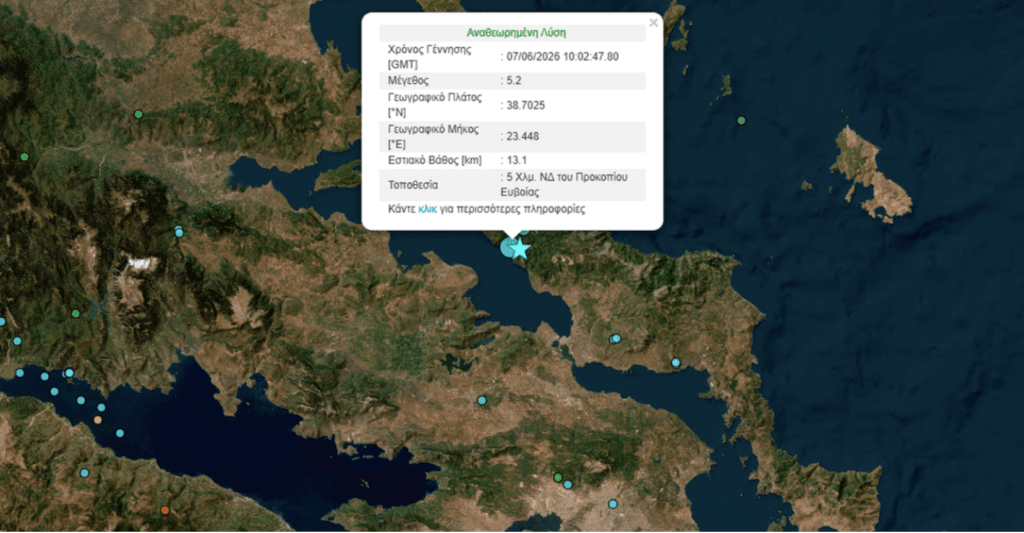
A series of strong earthquakes, including a 5.2 magnitude tremor, struck the Attica region of Greece, causing panic and structural concern. Scripture declares that earthquakes in diverse places are a sign of the last days, pointing to the birth pangs preceding Christ's return.
Matthew 24:7
Prophetic Fulfillment“For nation will rise against nation, and kingdom against kingdom, and there will be famines and earthquakes in various places.”
Why this passage
In the Olivet Discourse, Jesus answers the disciples' question about the sign of His coming and the end of the age. He lists earthquakes 'in various places' as one of the 'beginning of birth pains' (Matthew 24:8).
The Greek phrase 'kata topous' means 'according to places' or 'in various places,' indicating scattered, regional seismic events—not necessarily global catastrophes. This matches the localized swarm of earthquakes in Attica and Northern Evia.
The original audience understood earthquakes as divine judgments or signs (cf. Amos 1:1, Zechariah 14:5).
Jesus uses them as a general sign of the age, not a specific date marker, but a pattern that intensifies as the end approaches.
Historical context, theological significance, application today — denomination-neutral, ~1,000-word walk-through.
Behold, the earth trembles and the hearts of men fail for fear. Our Lord Jesus foretold that there would be 'earthquakes in divers places' as the beginning of sorrows (Matthew 24:7-8).
When the ground shakes, it is a physical reminder that this creation is groaning, awaiting its redemption. Let not your heart be troubled, but let these tremors stir you to watchfulness and prayer, for your redemption draweth nigh.
Today's Prayer
Pray for the people of Attica and Northern Evia, that God would protect them from harm and grant them peace in the midst of these shaking foundations.
Further Scripture
Additional passages that illuminate this event, each grounded in a distinct interpretive lens.
“"I overthrew some of you, as when God overthrew Sodom and Gomorrah, and you were as a brand plucked out of the burning; yet you did not return to me," declares the LORD.”
Why this passage
Amos 4 is a series of covenant lawsuits where God lists judgments—famine, drought, pestilence, and earthquake—that He sent to call Israel to repentance. The earthquake reference in verse 11 recalls the destruction of Sodom and Gomorrah (Genesis 19) and serves as a severe warning.
The prophet's point is that even catastrophic events are meant to drive people back to God, not merely to terrify them.
The original hearers in the northern kingdom had experienced a literal earthquake (Amos 1:1) two years before Amos's prophecy. The principle is that natural disasters are not random but are permitted by God as calls to repentance.
How it applies
The earthquake swarm in Greece, a region with a rich biblical heritage (Acts 17:16-34, Paul in Athens), serves as a modern echo of Amos's warning. The panic and shaking are a divine megaphone, calling individuals and nations to examine their lives and return to the Lord.
For the believer, it is a reminder to be plucked as a brand from the burning through faith in Christ.
Related by Scripture
Other events we've interpreted through the same passage or hermeneutical lens.
10ID Deploys Rescuers After 7.8 Mindanao Quake
Earthquakes & Natural DisastersShares Matthew 24:7Philippines earthquake kills 15, prompts tsunami fears: All to know
Earthquakes & Natural DisastersShares Matthew 24:7Catastrophic Quake Shakes Mindanao: 7.8 Magnitude Causes Widespread Damage
Earthquakes & Natural DisastersShares Matthew 24:7Powerful earthquake in southern Philippines leaves at least 19 dead
Earthquakes & Natural DisastersShares Matthew 24:7Major quake off Philippines kills one, triggers tsunami warnings
Earthquakes & Natural DisastersShares Matthew 24:7
Community launching soon
Get the invite by email when the Watchman's Wall opens
Share this article
Source: Protothema.gr— we link to the original for full context.