The Latest: Iran attacks 3 ships in the Strait of Hormuz as Trump indefinitely extends ceasefire
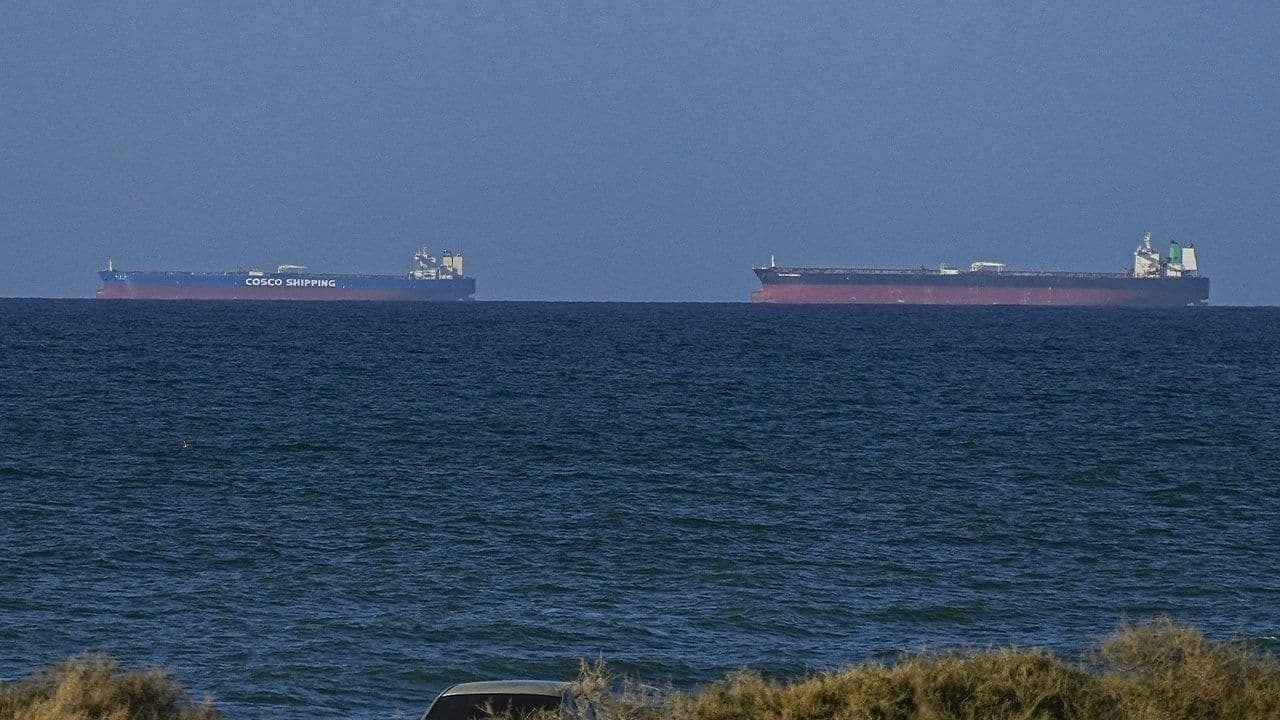
Iran's Revolutionary Guard attacked three commercial ships in the Strait of Hormuz while ceasefire negotiations with the United States stall, escalating regional tensions and threatening a critical global waterway — a pattern the prophets and Christ himself identified as characteristic of the end of the age.
Amos 3:6
Direct Principle“Is a trumpet blown in a city, and the people are not afraid? Does disaster come to a city, unless the LORD has done it?”
Why this passage
Amos 3:6 is part of a series of rhetorical questions establishing the principle of divine sovereignty over geopolitical catastrophe. The 'trumpet blown in a city' refers to the war alarm — sudden military threat — and the verse asserts that such disruptions do not occur outside God's providential governance.
This is not fatalism but a prophetic insistence that behind every human act of aggression stands the LORD's sovereign permission, which he extends for purposes of judgment, warning, and ultimately redemption.
Historical context, theological significance, application today — denomination-neutral, ~1,000-word walk-through.
The prophet Ezekiel wrote of a time when a great power from the north would 'come like a storm' against the covenant land, stirring the nations into conflict (Ezekiel 38:9). While Ezekiel's oracle concerns a specific future campaign, its underlying spiritual reality — that proud, militaristic powers will defy God's sovereign order and menace the world's peace — is on full display in the Strait of Hormuz today.
Iran's Revolutionary Guard, striking commercial vessels in one of the world's most critical waterways while nuclear talks collapse, embodies precisely this pattern: a nation that openly declares hostility to Israel and the West, wielding force while diplomats scramble. For the Christian, these events are neither surprising nor cause for despair; they are reminders that history is moving toward the day when every sword is finally sheathed under the reign of the Prince of Peace.
Today's Prayer
Pray that God would restrain the aggression of hostile powers in the Persian Gulf, protect the lives of sailors and civilians caught in the crossfire, and open the hearts of Iran's leaders to the knowledge of the true and living God.
Further Scripture
Additional passages that illuminate this event, each grounded in a distinct interpretive lens.
“There is no peace, says my God, for the wicked.”
Why this passage
Isaiah 57:21 (echoing 48:22) is God's declarative verdict on human attempts to forge peace apart from righteousness and covenant faithfulness. The verse is not merely descriptive but prescriptive — it announces that lasting peace is structurally impossible for those who have rejected God's ways.
In its original context, it addressed Israel's futile alliances and idolatrous compromises; its principle extends to any nation or power whose peace-making is divorced from justice and the fear of God.
How it applies
The headline captures the contradiction starkly: a ceasefire is indefinitely extended even as Iran's military attacks ships in international waters. This is precisely the pattern Isaiah's verse predicts — declared ceasefires that cannot hold because the underlying moral and spiritual conditions for genuine peace do not exist.
There is no peace for the wicked, says God; and so ceasefires in the Middle East collapse, extend, and collapse again, not merely because of political failure but because peace built on terms that exclude God's righteousness cannot stand.
“What causes quarrels and what causes fights among you? Is it not this, that your passions are at war within you? You desire and do not have, so you murder. You covet and cannot obtain, so you fight and quarrel. You do not have, because you do not ask.”
Why this passage
James 4:1-2 traces the root of all armed conflict to disordered human desires — covetousness, pride, and the lust for dominance. James is writing to a scattered community experiencing internal strife, but he uses the language of war and murder at a macro level ('fights' and 'quarrels' in the Greek context can apply to communal and national conflict).
The principle is universally applicable: military aggression at the national level flows from the same disordered passions — desire for regional hegemony, ideological dominance, and control of strategic resources — that James identifies as the root of all human conflict.
How it applies
Iran's attack on shipping in the Strait of Hormuz, coupled with the breakdown of ceasefire negotiations, exemplifies James's diagnosis: the desire for regional power, nuclear capability, and economic leverage drives the Islamic Republic to 'fight and quarrel' even as diplomatic options remain on the table. The Strait of Hormuz conflict is not merely strategic — it is a manifestation of the disordered human passions James identifies as the universal engine of warfare.
“You will advance, coming on like a storm. You will be like a cloud covering the land, you and all your hordes, and many peoples with you.”
Why this passage
Ezekiel 38-39 is an oracle against 'Gog of the land of Magog,' a coalition that descends against Israel in the latter days. Whatever the precise identification of Gog, the oracle's central pattern is unmistakable: a northern/eastern military power characterized by arrogance and hostility to God's people moves aggressively, dragging other nations into conflict, and does so while the world watches.
The phrase 'coming on like a storm' and 'a cloud covering the land' describes a sudden, overwhelming, destabilizing military surge — not a declared war but a bold, disruptive act of force. The oracle's far-horizon fulfillment remains future, but its near-horizon is the ancient recurring pattern of proud empires menacing smaller states and chokepoints.
How it applies
Iran's Revolutionary Guard striking three ships in the Strait of Hormuz — the world's most critical oil chokepoint — while nuclear diplomacy collapses fits the Ezekiel 38 pattern with uncomfortable precision: a regional power driven by ideological hostility moves aggressively, not through open declaration of war but through sudden destabilizing force, dragging the international community toward a broader confrontation. Whether or not Iran maps directly onto Gog, the spiritual archetype Ezekiel describes — proud military power defying covenant order — is visibly at work here.
Related by Scripture
Other events we've interpreted through the same passage or hermeneutical lens.
Russia’s Northern Fleet Bastion missile system crews hold exercise in Arctic
Wars & Rumors of WarsShares Amos 3:6What is the Azawad Liberation Front, part of the Mali attacks?
Wars & Rumors of WarsShares Amos 3:6Iran-US war latest: Tehran calls opening Strait of Hormuz ‘impossible’ as US navy chief steps down
Wars & Rumors of WarsShares Amos 3:6Deterring the next nuclear arms race
Wars & Rumors of WarsShares James 4:1-2
Community launching soon
Get the invite by email when the Watchman's Wall opens
Share this article
Source: Greater Kashmir— we link to the original for full context.