The “big one” might not come alone: Double West Coast earthquake threat
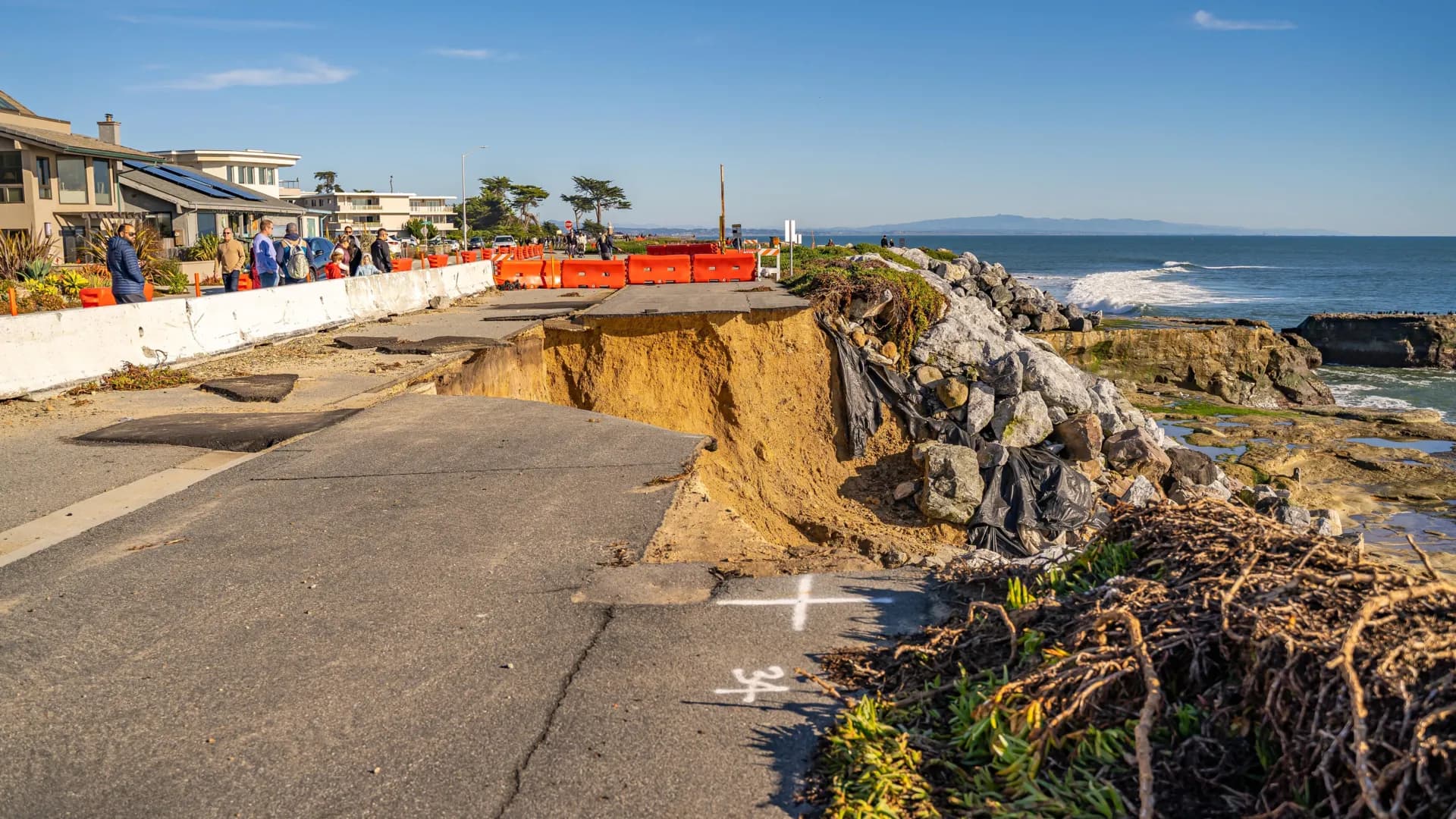
New research reveals that two of North America's most catastrophic fault systems may synchronize, triggering cascading mega-earthquakes — a compounding natural disaster threat that Scripture long declared would mark the last days.
Haggai 2:6
Prophetic Fulfillment“For thus says the LORD of hosts: Yet once more, in a little while, I will shake the heavens and the earth and the sea and the dry land.”
Why this passage
Haggai 2:6 is cited directly in Hebrews 12:26-27 as an eschatological promise: a final, comprehensive shaking of all created things is coming. The author of Hebrews interprets the phrase "yet once more" as indicating the removal of "things that are made" so that what is unshakeable remains — grounding the prophecy explicitly in the last-days register.
The phrase "the sea and the dry land" is noteworthy: it encompasses precisely the tectonic interface that the Cascadia subduction zone represents, where oceanic plate meets continental plate in the sea-to-land boundary along the Pacific Northwest.
The prophet Isaiah declared, "Therefore I will make the heavens tremble, and the earth will be shaken out of its place, at the wrath of the LORD of hosts in the day of his fierce anger" (Isaiah 13:13). Here, modern science confirms what the Word has always proclaimed: the very foundations of the earth are neither stable nor safe apart from God's sustaining hand — and their trembling is no accident of geology alone.
The revelation that two fault systems once thought independent may "sync up" to unleash compounding destruction is a sober reminder that the judgments Scripture describes are not metaphors. Reader, take heed: the earth itself rehearses the language of a holy God who shakes what can be shaken, that only the unshakeable Kingdom may remain (Hebrews 12:27).
Today's Prayer
Pray that the trembling of the earth would awaken sleeping hearts to seek the unshakeable Kingdom of God before the day of greater shaking comes.
Further Scripture
Additional passages that illuminate this event, each grounded in a distinct interpretive lens.
“There will be great earthquakes, and in various places famines and pestilences. And there will be terrors and great signs from heaven.”
Why this passage
In the Olivet Discourse, Jesus specifically lists "great earthquakes" (seismoi megaloi) in "various places" as among the signs preceding the end of the age. The modifier "great" (megas) in Greek indicates extraordinary magnitude, and "various places" suggests a geographic distribution rather than a single locale.
The research reported here concerns two distinct geographic fault systems — the Pacific Northwest and California — that could produce simultaneous great earthquakes across vast swaths of the continent, fitting the profile of "great earthquakes in various places" more precisely than any single-fault event would.
How it applies
Christ's own words named great earthquakes as a sign — and science is now revealing that the architectural capacity for such events is greater, more synchronized, and more compounding than previously understood.
The West Coast scenario described here — two fault systems rupturing in concert — could produce destruction on a scale that would mark world history. The believer who hears Christ's warning in Luke 21:11 is not surprised; the believer is watchful.
“Therefore I will make the heavens tremble, and the earth will be shaken out of its place, at the wrath of the LORD of hosts in the day of his fierce anger.”
Why this passage
Isaiah 13 is a Day-of-the-Lord oracle originally directed against Babylon, but its cosmic framing — the shaking of the heavens and the earth being displaced from its place — places it within the broader prophetic genre of eschatological earth-judgment that Scripture applies repeatedly to the last days (cf. Isaiah 24:18-20; Haggai 2:6; Hebrews 12:26-27).
The grammatical-historical sense is that God employs seismic and cosmic upheaval as the instrument of covenantal judgment upon proud civilizations. The West Coast research — two fault systems synchronizing to produce compounding destruction beyond what any single earthquake could deliver — directly mirrors the language of earth being "shaken out of its place": not one tremor, but an interlocking, cascading displacement.
How it applies
Scientists are now warning that the Cascadia and San Andreas systems can trigger one another within minutes or hours, multiplying catastrophic force far beyond previous models.
This is precisely the pattern Isaiah's oracle envisions: not a contained local event, but a systemic shaking that reshapes the landscape of human presumption. The nations that build coastal civilizations without reference to God's sovereignty will find even their geology testifying against them.
“The mountains quake before him; the hills melt; the earth heaves before him, the world and all who dwell in it. Who can stand before his indignation? Who can endure the heat of his anger? His wrath is poured out like fire, and the rocks are broken into pieces by him.”
Why this passage
Nahum's theophany in chapter 1 establishes a foundational theological principle: tectonic upheaval — mountains quaking, hills melting, the earth heaving — is the creation's natural response to the manifest presence of its holy Creator in judgment. This is not metaphor alone; the imagery is drawn from genuine volcanic and seismic phenomena in the ancient Near East.
The plain grammatical sense is that no geological formation, however massive, is stable before the wrath of God. The rhetorical questions — "Who can stand?
Who can endure?" — are an implicit call to humility before divine sovereignty over the physical world.
How it applies
Modern seismology has given us names — Cascadia, San Andreas — for the fault systems that, when they fail together, will ask the very same question Nahum poses: "Who can stand?"
The research strips away the comforting assumption that these systems operate in isolation. Before the God who causes mountains to quake, no engineering standard, no coastal building code, and no emergency management plan is the ultimate refuge.
The only unshakeable ground is the Lord Himself (Psalm 46:1-2).
Related by Scripture
Other events we've interpreted through the same passage or hermeneutical lens.
Bird flu confirmed in South Australia as infected petrel brings deadly H5N1 cases to three
Pestilence & PlaguesShares Luke 21:11The ‘earthquake gate’ stopping a San Andreas disaster is under its highest stress in 1,000 years
Earthquakes & Natural DisastersShares Luke 21:11Where the 'Big One' will hit... as underground stress reaches a 1,000-year high and earthquakes split the ground throughout the US: See America's 'time bombs'
Earthquakes & Natural DisastersShares Luke 21:11One dead, dozens injured after Indonesian quake
Earthquakes & Natural DisastersShares Luke 21:11California’s tectonic systems at highest levels of stress in 1,000 years – study
Earthquakes & Natural DisastersShares Luke 21:11
Community launching soon
Get the invite by email when the Watchman's Wall opens
Share this article
Source: Science Daily— we link to the original for full context.