‘Severe’ stress on oceans as rate of sea level rise doubles in 10 years, UN warns
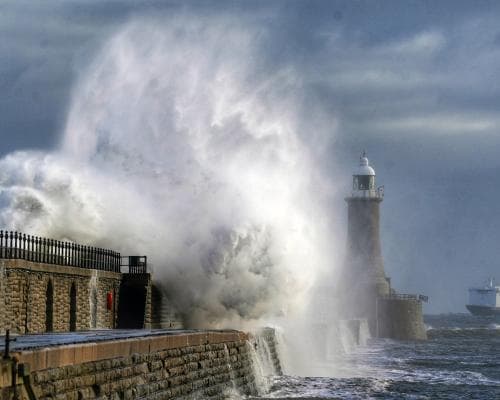
The UN warns that the rate of sea level rise has doubled in a decade, signaling severe stress on the oceans—a pattern that echoes biblical prophecies of the earth groaning under human sin and judgment through the waters.
Isaiah 24:4-6
Prophetic Fulfillment“The earth mourns and withers; the world languishes and withers; the heavens languish together with the earth. The earth lies defiled under its inhabitants; for they have transgressed the laws, violated the statutes, broken the everlasting covenant. Therefore a curse devours the earth, and its inhabitants suffer for their guilt; therefore the inhabitants of the earth are scorched, and few men are left.”
Why this passage
Isaiah 24 is a prophetic oracle describing the Lord's judgment on the whole earth for its inhabitants' transgression of His laws and covenant. The passage depicts environmental decay—the earth mourning, withering, and being defiled—as a direct consequence of human sin.
This is not a localized judgment but a global one, where the created order itself suffers under the curse of human guilt.
The plain grammatical-historical sense of Isaiah 24:4-6 is that the earth's physical condition is tied to the moral and covenantal state of its people. The 'everlasting covenant' likely refers to the Noahic covenant (Genesis 9), which established the order of creation and held humanity accountable for bloodshed and corruption.
When humanity breaks this covenant, the earth itself is cursed.
Behold, the seas themselves bear witness to the groaning of creation under the weight of man's rebellion. As the rate of sea level rise doubles, we hear an echo of the Lord's word through the prophet: 'The earth mourns and withers; the world languishes and withers; the heavens languish together with the earth.'
This is not merely a climate report—it is a sign that the creation, subjected to futility, waits eagerly for the revealing of the sons of God. Let this news stir you not to despair but to watchfulness, for the Lord who shakes the heavens and the earth is near.
Today's Prayer
Pray that the nations would repent of their stewardship of the earth and turn to the Creator before the waters rise as a sign of His coming judgment.
Further Scripture
Additional passages that illuminate this event, each grounded in a distinct interpretive lens.
“The nations raged, but your wrath came, and the time for the dead to be judged, and for rewarding your servants, the prophets and saints, and those who fear your name, both small and great, and for destroying the destroyers of the earth.”
Why this passage
Revelation 11:18 is part of the seventh trumpet judgment, where the heavenly elders declare that God's wrath has come. The phrase 'destroying the destroyers of the earth' indicates that human activity that corrupts and ruins the created order is subject to divine judgment.
The verse assumes that the earth can be 'destroyed' by human action, and that God holds those who do so accountable.
In its original context, this is a declaration of eschatological judgment, but the principle is clear: those who degrade God's creation will face His wrath. The verse links human destruction of the earth directly to the timing of God's final judgment.
How it applies
The UN report highlights how pollution, industrial fishing, and climate change are 'destroying' the oceans—the very 'destroyers of the earth' that Revelation warns about. The doubling of sea level rise in a decade is a measurable consequence of this destruction.
This news serves as a sobering reminder that the nations' rage against God's order—including their exploitation of creation—will not go unaddressed. The accelerating stress on the oceans is a precursor to the judgment that will come upon those who destroy the earth, as the Lord's wrath is revealed from heaven.
“Some went down to the sea in ships, doing business on the great waters; they saw the deeds of the Lord, his wondrous works in the deep. For he commanded and raised the stormy wind, which lifted up the waves of the sea. They mounted up to heaven; they went down to the depths; their courage melted away in their evil plight; they reeled and staggered like drunken men and were at their wits' end.”
Why this passage
Psalm 107 is a wisdom psalm that celebrates God's sovereignty over creation, particularly the sea. Verses 23-27 describe how those who go to sea witness the Lord's power in the deep—He commands the stormy wind and raises the waves, reducing even experienced sailors to helplessness.
The psalm's point is that the sea is not a force independent of God; it obeys His command and reveals His majesty and judgment.
The original hearers understood that the sea, often a symbol of chaos and danger in ancient Near Eastern thought, was under the absolute control of Yahweh. Human 'business on the great waters' is always subject to His sovereign will.
How it applies
The UN's warning about severe stress on the oceans and accelerating sea level rise is a modern reminder that the seas are not a neutral resource for human exploitation. They are the Lord's domain, and when humanity's 'business on the great waters'—industrial fishing, pollution, carbon emissions—disrupts His order, the seas themselves respond in ways that leave even the world's experts 'at their wits' end.'
The doubling of sea level rise is like the stormy wind that the Lord commands: it is a sign that the creation is no longer stable under human mismanagement. This should drive us to acknowledge His sovereignty over the deep, rather than trusting in our own ability to manage the oceans apart from Him.
Community launching soon
Get the invite by email when the Watchman's Wall opens
Share this article
Source: The Guardian— we link to the original for full context.