Ruling Party in Armenia Releases Anti-Church Platform
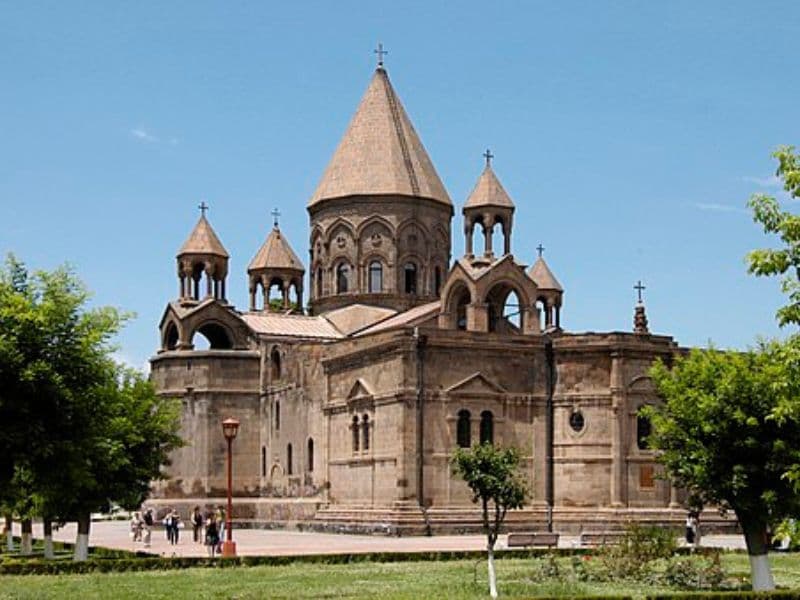
Armenia's ruling party has issued a platform demanding the removal of the Catholicos and state restructuring of the Armenian Apostolic Church — one of Christianity's oldest institutions — marking a direct governmental assault on Christian ecclesiastical independence.
Jeremiah 23:1-2
Direct Principle“"Woe to the shepherds who destroy and scatter the sheep of my pasture!" declares the LORD. Therefore thus says the LORD, the God of Israel, concerning the shepherds who care for my people: "You have scattered my flock and have driven them away, and you have not attended to them. Behold, I will attend to you for your evil deeds, declares the LORD."”
Why this passage
Jeremiah 23 addresses civil and religious rulers in Israel who exploited or dismantled the covenant community's spiritual structure for political ends. The oracle's plain sense is that any earthly authority that arrogates to itself the power to disperse, restructure, or silence the community of God's people stands under divine judgment.
The principle is not limited to ancient Israel's theocracy — it reflects God's consistent posture toward powers that treat His people as a political asset to be managed rather than a flock to be tended. The warning is directed precisely at those who 'scatter' through official decree.
The prophet Jeremiah warned of rulers who would scatter the sheep and destroy the Lord's pasture: "Woe to the shepherds who destroy and scatter the sheep of my pasture!" — yet the promise that follows is equally certain, that God Himself will gather the remnant of His flock. When a ruling political party issues decrees demanding the removal of church leadership and state control over doctrine and structure, it enacts precisely the ancient pattern Jeremiah condemned: civil power arrogating to itself dominion over the household of God.
The Armenian Apostolic Church traces its roots to the apostolic age and stands as a living monument to centuries of Christian witness, often in the face of persecution. Believers are called not to despair when earthly powers move against Christ's Church, but to remember that no government decree has ever extinguished what the Holy Spirit has preserved — and to pray with urgent faithfulness for their brothers and sisters under this new pressure.
Today's Prayer
Pray that the Armenian Apostolic Church, its clergy, and its faithful people would stand firm against state coercion, that church leaders would be granted courage and wisdom, and that Armenia's government would turn back from this assault on one of Christianity's most ancient institutions.
Further Scripture
Additional passages that illuminate this event, each grounded in a distinct interpretive lens.
“But Peter and the apostles answered, "We must obey God rather than men."”
Why this passage
Peter's declaration before the Sanhedrin establishes an irreducible principle of the New Testament Church: when civil authority commands what God forbids — or forbids what God commands — the Church's allegiance to God takes absolute precedence. The Sanhedrin was itself a religious governing body making civil demands; the apostles' refusal was not rebellion but covenant faithfulness.
The plain grammatical-historical sense is that ecclesiastical authority ultimately derives from God, not from the state, and no political platform can legitimately dissolve that order.
How it applies
Armenia's ruling party is demanding that the Church submit to state-directed leadership changes and structural reorganization — precisely the kind of civil override of spiritual authority against which Peter's declaration stands.
The Armenian Church and its faithful now face the apostolic test in a modern key: whether to yield the appointment of their Catholicos and the shape of their worship to a ruling party's platform, or to stand in the tradition of the apostles who answered earthly councils with 'We must obey God rather than men.'
“And they withstood King Uzziah and said to him, "It is not for you, Uzziah, to burn incense to the LORD, but for the priests, the sons of Aaron, who are consecrated to burn incense. Go out of the sanctuary, for you have done wrong, and it will bring you no honor from the LORD God."”
Why this passage
King Uzziah's attempt to assume priestly functions in the Temple represents the clearest Old Testament narrative of civil power overreaching into sacred office. The priests' rebuke — 'It is not for you, Uzziah' — establishes a structural boundary between civil and religious authority that God Himself enforced with immediate judgment.
The parallel pattern is precise: a powerful political actor, emboldened by earthly success, attempts to dictate the terms of the sacred institution rather than respect its divinely ordered autonomy. The consequence in Uzziah's case was leprosy; the principle is that such overreach is not merely politically inappropriate but spiritually transgressive.
How it applies
Armenia's ruling party demanding the removal of the Catholicos — the chief bishop of the world's oldest Christian national church — mirrors Uzziah's entry into the sanctuary: a civil authority claiming the right to determine who stands in sacred office and how the Church is structured.
The priests' words to Uzziah apply with striking precision: this is not Armenia's government's domain to enter. History's testimony, from Uzziah to every Caesaro-papist overreach, is that God does not honor such trespasses.
“Beloved, do not be surprised at the fiery trial when it comes upon you to test you, as though something strange were happening to you. But rejoice insofar as you share Christ's sufferings, that you may also rejoice and be glad when his glory is revealed. If you are insulted for the name of Christ, you are blessed, because the Spirit of glory and of God rests upon you.”
Why this passage
Peter writes to dispersed Christians facing imperial and social pressure, warning them not to regard persecution as an anomaly but as the normative experience of those who bear Christ's name. The phrase 'do not be surprised' acknowledges the shock believers feel when civil power turns against the Church, while reframing the trial as participation in Christ's own suffering.
The plain sense extends to any generation of Christians facing state-directed hostility — the form changes (lions to legislation, arenas to administrative platforms) but the spiritual reality Peter addresses is the same.
How it applies
Armenian Christians now face a government platform designed to dismantle the leadership and reshape the structure of their ancient Church — a fiery trial in the institutional, not merely personal, sense.
Peter's word to them is: 'Do not be surprised.' This is not the failure of God's purposes but their testing — and the Spirit of glory rests upon those who bear this pressure for Christ's sake rather than capitulating to it.
Related by Scripture
Other events we've interpreted through the same passage or hermeneutical lens.
For Christians in Israel and Jerusalem, intolerance is becoming normal - Al Jazeera
Persecution of ChristiansShares 1 Peter 4:12-14Egypt Placed on 'Special Watch List' for Persecuting Christians - Elizabeth Delaney - Crosswalk.com
Persecution of ChristiansShares 1 Peter 4:12-14What Country of Particular Concern status could mean for persecuted Christians in Pakistan - Mission Network News
Persecution of ChristiansShares 1 Peter 4:12-14British Police Arrest Preacher
Persecution of ChristiansShares 1 Peter 4:12-14Gunmen Kill Pastor, Family in Plateau State
Persecution of ChristiansShares 1 Peter 4:12-14
Community launching soon
Get the invite by email when the Watchman's Wall opens
Share this article
Source: persecution— we link to the original for full context.