Release International partner speaks on Iran
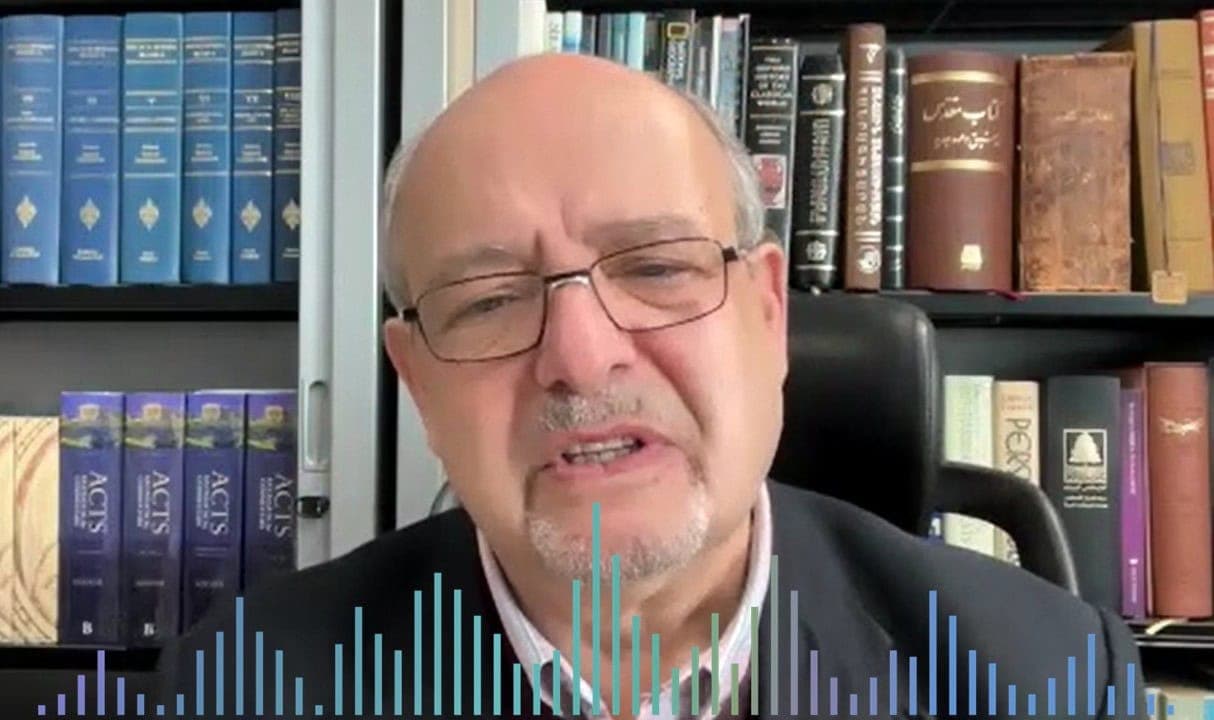
A Release International partner reports intensifying Iranian state persecution of Christians alongside explosive underground church growth — a pattern that directly mirrors biblical warnings about end-times tribulation and the unstoppable advance of the gospel under pressure.
1 Peter 4:12-14
Direct Principle“Beloved, do not be surprised at the fiery trial when it comes upon you to test you, as though something strange were happening to you. But rejoice insofar as you share Christ's sufferings, that you may also rejoice and be glad when his glory is revealed. If you are insulted for the name of Christ, you are blessed, because the Spirit of glory and of God rests upon you.”
Why this passage
Peter wrote to dispersed believers living under Roman imperial hostility, warning them not to treat suffering for Christ's name as an anomaly but as the normative testing that purifies faith and confirms identity with Christ. The phrase 'fiery trial' (pyrosis) is not merely metaphorical — it describes a smelting ordeal designed to prove genuine metal from dross.
The theological principle is precise: state-sponsored hostility directed at believers because of their allegiance to Christ's name is not divine abandonment but divine confirmation, marked by the resting of the Spirit of glory upon the sufferer.
The apostle Peter wrote to scattered, suffering believers: 'do not be surprised at the fiery trial when it comes upon you to test you, as though something strange were happening to you.' Iranian Christians today are living this word with startling literalness — arrested, imprisoned, and threatened with death for simply gathering in homes to worship Christ. Yet the astonishing paradox documented by Release International is that persecution has not extinguished the church; it has ignited it.
Underground congregations multiply precisely where the state presses hardest, confirming that the gates of hell — including the gates of Tehran's prisons — shall not prevail against Christ's church. This should both sober and embolden Western believers who pray from comfort: the same Spirit sustaining Iranian believers under the fiery trial is present with us, calling us to faithful intercession and courageous witness.
Today's Prayer
Pray that Iranian believers enduring arrest, interrogation, and isolation would experience the tangible presence of Christ in their suffering, and that every attempt by the Iranian state to extinguish the church would instead become fuel for its growth.
Further Scripture
Additional passages that illuminate this event, each grounded in a distinct interpretive lens.
“And Saul approved of his execution. And there arose on that day a great persecution against the church in Jerusalem, and they were all scattered throughout the regions of Judea and Samaria, except the apostles. Devout men buried Stephen and made great lamentation over him. But Saul was ravaging the church, entering house after house, dragging off men and women and committing them to prison. Now those who were scattered went about preaching the word.”
Why this passage
The narrative of Acts 8 presents a structurally precise pattern: concentrated state-sponsored persecution (Saul acting as instrument of religious authority), house-to-house raids targeting believers, imprisonment as the primary tool of suppression — and the direct consequence of these pressures being geographic and numerical expansion of the gospel. This is not vague thematic resonance; the parallel involves identical mechanisms: authorities entering private homes, dragging out worshippers, and incarcerating them, while the scattered community continues preaching precisely because it has been scattered.
How it applies
The Release International report documents Iranian authorities conducting raids on house churches, arresting members, and imprisoning believers — an almost verbatim replay of Saul's tactics against the Jerusalem church. And the documented result in Iran — underground church explosion — mirrors Acts 8:4 exactly: 'those who were scattered went about preaching the word.' The Iranian state, like Saul before Damascus, is functioning as an unwitting instrument of gospel dispersal.
The parallel is not imposed; it is structural, actor-specific, and outcome-specific.
“When he opened the fifth seal, I saw under the altar the souls of those who had been slain for the word of God and for the witness they had borne. They cried out with a loud voice, 'O Sovereign Lord, holy and true, how long before you will judge and avenge our blood on those who dwell on the earth?' Then they were each given a white robe and told to rest a little longer, until the number of their fellow servants and their brothers should be complete, who were to be killed as they had been.”
Why this passage
John's vision of souls under the altar addresses the cosmic dimension of martyr-suffering in the last days. The original vision revealed to John's hearers — churches under Domitian's persecution — that martyrdom is not the end of the story but a cry being held before God's throne, and that history will not close until a determined number of witnesses have been 'completed.' The phrase 'slain for the word of God and for the witness they had borne' precisely identifies the category: those who died not for political rebellion but for scriptural proclamation and personal testimony.
How it applies
Iranian believers imprisoned and in some cases killed by the Islamic Republic for possessing Scripture, leading house churches, or converting from Islam are among the souls John saw under the altar — slain for the word of God and for their witness. The underground church's continued growth despite intensifying persecution aligns with the vision's logic: persecution does not halt the completion of the number of witnesses; it accelerates it.
This passage calls the watching church not to despair over Iranian suffering but to recognize that God is sovereignly counting and honoring every cost paid for the word.
“For the earth will be filled with the knowledge of the glory of the LORD as the waters cover the sea.”
Why this passage
Habakkuk received this word in the context of Babylonian violence and apparent divine inaction — a regime of brutal power seemed to be winning while the righteous suffered. God's answer was not to deny the violence but to declare that it cannot ultimately contain his glory, which will fill the earth as inevitably as water fills a basin.
The promise is unconditional and universal — not 'the knowledge of the LORD will spread if conditions improve,' but a certainty that no nation's hostility can finally prevent.
How it applies
Iran's Islamic Republic represents one of the most sustained, state-level efforts in the modern world to prevent the knowledge of Christ from reaching its population — banning evangelism, criminalizing conversion, and imprisoning house church leaders. Yet the underground church growth documented by Release International is precisely Habakkuk 2:14 in motion: the knowledge of the glory of the Lord is filling Iran as the waters cover the sea, not despite the state's opposition, but through it.
God's covenant word to Habakkuk stands as direct promise and encouragement over every persecuted Iranian believer.
Related by Scripture
Other events we've interpreted through the same passage or hermeneutical lens.
Systemic anti-Christian violence laid bare at public hearing in India
Persecution of ChristiansShares Revelation 6:9-11Spectacular archaeological finds in Turkey shed new light on origins of Christianity
Gospel Preached WorldwideShares Habakkuk 2:14Justice Delayed: The 13-Year Struggle of the Peshawar Church Blast Survivors
Persecution of ChristiansShares Revelation 6:9-11For Christians in Israel and Jerusalem, intolerance is becoming normal - Al Jazeera
Persecution of ChristiansShares 1 Peter 4:12-14Pushback in Nigeria over ex-Boko Haram fighter reintegration
Persecution of ChristiansShares Revelation 6:9-11
Community launching soon
Get the invite by email when the Watchman's Wall opens
Share this article
Source: Release International— we link to the original for full context.