Preacher Found Dead in Russian Prison
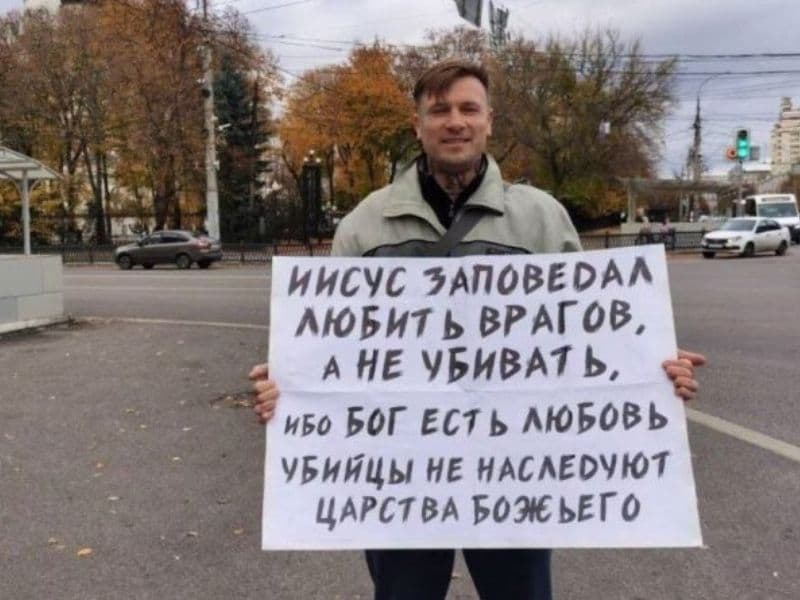
A Christian preacher and blogger died in Russian state custody after being imprisoned for openly professing his faith and calling for peace — a sobering example of the fiery trial Scripture warns believers will face in this age.
1 Peter 4:12-14
Direct Principle“Beloved, do not be surprised at the fiery trial when it comes upon you to test you, as though something strange were happening to you. But rejoice insofar as you share Christ's sufferings, that you may also rejoice and be glad when his glory is revealed. If you are insulted for the name of Christ, you are blessed, because the Spirit of glory and of God rests upon you.”
Why this passage
Peter wrote to believers dispersed across Asia Minor who faced social hostility and state suspicion for their faith. His central command — do not be surprised — rests on the theological conviction that suffering for Christ's name is not divine abandonment but divine participation in Christ's own sufferings.
The phrase 'fiery trial' (purōsis) carries the image of refining — not random cruelty, but purposeful testing that proves and purifies faith. The promise that 'the Spirit of glory and of God rests upon you' when insulted for Christ's name frames even death in custody as a Spirit-attended moment, not a forsaken one.
The apostle Peter, writing to scattered and suffering believers, declared: 'do not be surprised at the fiery trial when it comes upon you to test you, as though something strange were happening to you.' This preacher's death in a Russian prison is not an anomaly — it is the pattern Scripture told us to expect when the kingdom of Christ collides with the kingdoms of this world.
His blood joins a long witness stretching from the apostles to the present hour. Take heed, O reader: the same Spirit that sustained him through iron bars sustains every believer who stands for Christ today.
Let his faithfulness be both a sorrow and a summons.
Today's Prayer
Pray that the Church worldwide would not be surprised or shaken by such fiery trials, but would stand firm in faith, honoring those who have died confessing Christ's name under authoritarian persecution.
Further Scripture
Additional passages that illuminate this event, each grounded in a distinct interpretive lens.
“When he opened the fifth seal, I saw under the altar the souls of those who had been slain for the word of God and for the witness they had borne. They cried out with a loud voice, 'O Sovereign Lord, holy and true, how long before you will judge and avenge our blood on those who dwell on the earth?' Then they were each given a white robe and told to rest a little longer, until the number of their fellow servants and their brothers should be complete, who were to be killed as they had been.”
Why this passage
John's vision of the fifth seal reveals souls beneath the heavenly altar — those martyred 'for the word of God and for the witness they had borne.' This is a prophetic image spanning the whole age between Christ's ascension and His return: believers continue to die for their testimony, and each death is recorded before the throne.
The command to 'rest a little longer, until the number of their fellow servants should be complete' establishes that the martyrdom of believers is not chaotic but ordered within God's sovereign plan — each martyr's death advances a divinely kept count toward the day of final judgment.
How it applies
This preacher was slain 'for the word of God and for the witness he had borne' — the exact category Revelation identifies. His death in a Russian prison adds his name to that ongoing census before the altar of God.
The Russian state that imprisoned him acts in the tradition of every earthly power that has tried to silence the word of God. Scripture assures us: God sees, God counts, and God will answer.
“Indeed, all who desire to live a godly life in Christ Jesus will be persecuted.”
Why this passage
Paul's declaration to Timothy is categorical and unqualified: the desire to live a godly life in Christ Jesus will — not may — result in persecution. The original context is Paul's own imprisonment and suffering, offered as exhibit A of this universal principle for every generation of believers.
The word translated 'persecuted' (diōchthēsontai) carries the sense of being hunted or pursued — an active, sustained hostility, not mere social awkwardness. Paul frames this not as an unfortunate exception but as the normative experience of Christlike living in a fallen world.
How it applies
This preacher desired nothing more than to live a godly life — professing Christ publicly and calling for peace. Russia's prison system became the instrument of exactly the persecution Paul declared inevitable.
His story is not a tragedy that demands explanation; it is the normal Christian life unfolding under hostile government, exactly as the apostle said it would.
“If the world hates you, know that it has hated me before it hated you. If you were of the world, the world would love you as its own; but because you are not of the world, but I chose you out of the world, therefore the world hates you. Remember the word that I said to you: 'A servant is not greater than his master.' If they persecuted me, they also will persecute you. If they kept my word, they also will keep yours.”
Why this passage
Christ spoke these words to His disciples in the upper room, on the eve of His own arrest and execution by state and religious authorities. The logic is Christological: the world's hostility toward believers is derivative — it flows from its prior rejection of Christ Himself.
The phrase 'a servant is not greater than his master' anchors persecution not in political accident but in a deep spiritual necessity: to preach Christ faithfully is to provoke the same hatred Christ provoked. This is not pessimism — it is the realism of the cross.
How it applies
The Russian state that hunted this preacher for his faith hated him because, in Christ's own words, it had first hated Christ. His open profession of faith and his call for peace marked him as 'not of the world' in the only way that ultimately matters.
Christ said this would happen. It did.
His servant was not greater than his Master, and he bore that truth with his life.
Related by Scripture
Other events we've interpreted through the same passage or hermeneutical lens.
Systemic anti-Christian violence laid bare at public hearing in India
Persecution of ChristiansShares Revelation 6:9-11Cardinal Koch: ‘Today there are more martyrs than in the early centuries of the Church’
Persecution of ChristiansShares 2 Timothy 3:12Hindu nationalists face scrutiny over persecution in India - Mission Network News
Persecution of ChristiansShares John 15:18-20Exclusive: Girl Kept from Church, Bible, and Christian Friends by Portland Judge Awaits Appeals Court Ruling
Persecution of ChristiansShares John 15:18-20St. Paul City Attorney Drops Charges Against Cities Church Invaders As Church Attorneys Blast The Decision
Persecution of ChristiansShares John 15:18-20
Community launching soon
Get the invite by email when the Watchman's Wall opens
Share this article
Source: persecution— we link to the original for full context.