Pope to Equatorial Guinea: ‘Carry on the mission of Jesus’ first disciples with joy’
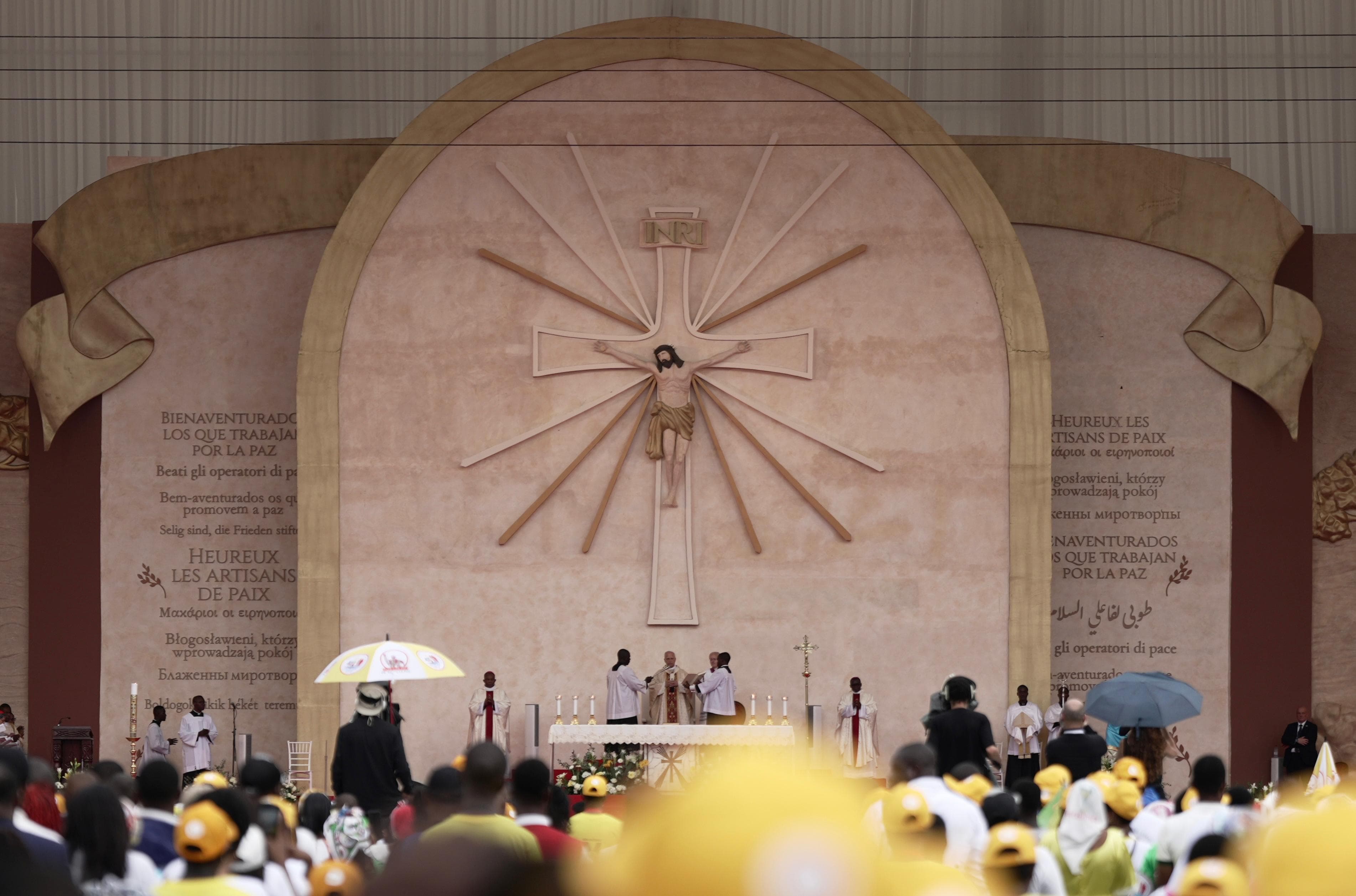
Pope Leo XIV concluded his African visit by urging Catholics in Equatorial Guinea to proclaim the Gospel with passion and bear witness to saving faith — a direct echo of Christ's Great Commission mandate that the gospel must be preached to all nations before the end.
Romans 10:14-15
Direct Principle“How then will they call on him in whom they have not believed? And how are they to believe in him of whom they have never heard? And how are they to hear without someone preaching? And how are they to preach unless they are sent? As it is written, 'How beautiful are the feet of those who preach the good news!'”
Why this passage
Paul establishes in Romans 10 an unbroken chain of necessity: sending produces preaching, preaching produces hearing, hearing produces faith. This is not a prophecy but a covenantal logic — the means by which God has ordained salvation to spread.
The citation of Isaiah 52:7 grounds this in the long arc of God's redemptive mission. The principle applies in every generation wherever the Church actively commissions and sends proclaimers.
Jesus declared in Matthew 24:14, 'this gospel of the kingdom will be proclaimed throughout the whole world as a testimony to all nations, and then the end will come.' The sight of the global Church's leader standing on African soil, urging local believers to 'carry on the mission of Jesus' first disciples,' is a living picture of that prophecy unfolding. The gospel's reach into sub-Saharan Africa — once considered remote from the centers of Christianity — now represents one of the faith's most vibrant frontiers.
For believers watching these days unfold, this is not merely news from a distant continent; it is the ongoing fulfillment of a promise Jesus made two thousand years ago.
Today's Prayer
Pray that African believers, energized by this apostolic call, will carry the Gospel with boldness into every unreached community on their continent and beyond.
Further Scripture
Additional passages that illuminate this event, each grounded in a distinct interpretive lens.
“And this gospel of the kingdom will be proclaimed throughout the whole world as a testimony to all nations, and then the end will come.”
Why this passage
In the Olivet Discourse, Jesus gives this global gospel proclamation as one of the preconditions preceding the end of the age. The original hearers would have understood 'all nations' (Greek: panta ta ethne) as every people group — a scope far beyond first-century Judea.
The 'far horizon' of this prophecy anticipates a worldwide missionary movement culminating before Christ's return. Africa, and specifically sub-Saharan nations like Equatorial Guinea, represents both a historic mission frontier and today one of Christianity's fastest-growing regions.
How it applies
Pope Leo XIV's explicit call to proclaim the Gospel with 'passion' and bear witness to 'the faith that saves' in Equatorial Guinea is a concrete instance of this worldwide proclamation mandate being actively pursued. As the Church extends its apostolic voice to the corners of Africa, the geographic scope of Matthew 24:14's 'whole world' continues to be filled in — nation by nation, people group by people group.
Related by Scripture
Other events we've interpreted through the same passage or hermeneutical lens.
'This is a turning point': Iranian Christians using time of war to share the Gospel - Christian Post
Gospel Preached WorldwideShares Romans 10:14-15Kevin Sorbo film ‘Jesus Freaks’ taps into rising spiritual discontent among young adults - Christian Post
Gospel Preached WorldwideShares Matthew 24:14100 Missionaries Deploy to 10/40 Window Amid Increasing Reports of Visions of 'The Man in White'
Gospel Preached WorldwideShares Romans 10:14-15
Community launching soon
Get the invite by email when the Watchman's Wall opens
Share this article
Source: Catholic News Agency— we link to the original for full context.