Peace efforts stall as US examines latest Iran proposal
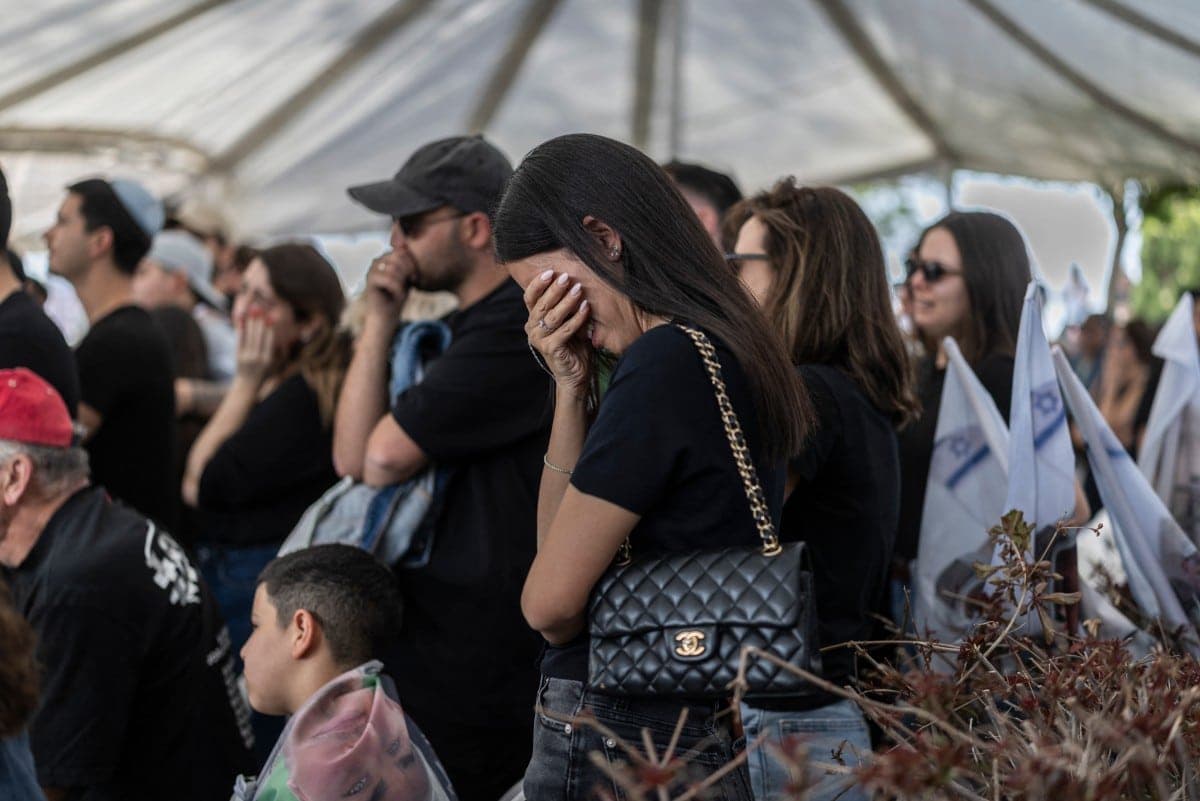
US-Iran nuclear talks have collapsed amid Tehran's refusal of Washington's terms and its threat to blockade the Strait of Hormuz — a textbook collapse of peace-where-there-is-no-peace, echoing ancient prophetic warnings against leaders who cry 'Peace!' over a wound that remains unhealed.
Ezekiel 13:10-11
Direct Principle“Because, yes, because they have misled my people, saying, 'Peace,' when there is no peace, and because, when the people build a wall, these prophets smear it with whitewash, say to those who smear it with whitewash that it shall fall! There will come a deluge of rain, and you, O great hailstones, will fall, and a stormy wind break out.”
Why this passage
Ezekiel addresses false prophets in Jerusalem who validated the political establishment's optimism about Babylon — declaring 'peace' over a city whose destruction was imminent. The image of the whitewashed wall is a direct indictment of those who use the language of stability and negotiation to conceal structural collapse.
The plain grammatical-historical sense is that God holds accountable those who manufacture the appearance of security where none exists — and that the structure so covered will still fall, with greater violence, when reality arrives. This principle applies whenever political actors substitute the rhetoric of diplomacy for honest reckoning with an adversary's stated intentions.
The prophet Ezekiel thundered against those who 'daub it with whitewash' — who cover a crumbling wall with a thin veneer of optimism so that it looks sound from a distance while remaining ready to fall. The spectacle of diplomatic communiqués and counter-proposals between Washington and Tehran is precisely that whitewashed wall: negotiations that project stability while the structure beneath — Iran's nuclear ambitions, its chokehold on the Strait of Hormuz, its destabilizing proxies — remains unaddressed.
Scripture does not counsel despair, but it does counsel clear sight. The people of God are called to see the wall for what it is, to refuse the comfort of false reassurance, and to place their trust not in diplomatic frameworks but in the One whose peace 'passes all understanding' (Philippians 4:7).
Today's Prayer
Pray that world leaders would have the courage to pursue genuine justice rather than the appearance of peace, and that God's people would not be deceived by whitewashed diplomacy that papers over real and present danger.
Further Scripture
Additional passages that illuminate this event, each grounded in a distinct interpretive lens.
“They have healed the wound of my people lightly, saying, 'Peace, peace,' when there is no peace.”
Why this passage
Jeremiah's indictment targets the priests and prophets of his day who minimized the severity of Judah's spiritual and geopolitical wound by declaring 'peace, peace' — the repetition in Hebrew emphasizing emphatic, confident reassurance — when Babylon was already massing on the horizon.
The verse's grammatical thrust is that the wound is real, the healers are negligent, and the repeated declaration of peace is not merely mistaken but morally culpable — a 'light' treatment of a mortal injury. This makes it a direct-principle text wherever diplomats declare resolution imminent while the underlying conflict remains unaddressed.
How it applies
The repeated rounds of US-Iran negotiations — each announced with cautious optimism, each collapsing against the same unresolved core dispute over enrichment and sovereignty — mirror Jeremiah's 'peace, peace' precisely.
Tehran's threat to blockade the Strait of Hormuz is not a negotiating footnote; it is the wound itself. Diplomatic frameworks that proceed as though the threat can be talked away without structural change are healing that wound lightly.
“While people are saying, 'There is peace and security,' then sudden destruction will come upon them as labor pains come upon a pregnant woman, and they will not escape.”
Why this passage
Paul's warning in 1 Thessalonians 5 is set explicitly in an eschatological frame — the day of the Lord will arrive precisely when the world's confidence in its own security arrangements is highest. The Greek words eirene (peace) and asphaleia (security) are the vocabulary of official political reassurance, the very language of treaty frameworks and diplomatic stability.
The force of the verse is not merely that peace talks fail, but that the institutional habit of declaring peace-and-security where genuine danger exists is a spiritual condition that precedes catastrophic judgment. The labor-pain metaphor communicates sudden, unstoppable, irreversible onset.
How it applies
The US-Iran negotiating framework, still described in official language as a 'proposal under examination' even as Iran threatens to close the Strait of Hormuz, is a contemporary instance of the pattern Paul describes.
The believer is not called to predict the date of any particular collapse, but to maintain the sober vigilance that 1 Thessalonians 5:4-6 immediately prescribes — 'But you are not in darkness... So then let us not sleep, as others do, but let us keep awake and be sober.'
“The word of the LORD that came to Jeremiah the prophet concerning Elam, in the beginning of the reign of Zedekiah king of Judah. Thus says the LORD of hosts: Behold, I will break the bow of Elam, the mainstay of their might. And I will bring upon Elam the four winds from the four corners of heaven. And I will scatter them to all those winds, and there shall be no nation to which those driven out of Elam shall not come.”
Why this passage
Elam in the Hebrew prophets corresponds to the territory of ancient southwestern Persia — the heartland of what is today Iran. The oracle against Elam in Jeremiah 49 is a direct prophetic address to this nation's power and its eventual judgment, delivered with the full weight of 'Thus says the LORD of hosts.'
While the near-horizon fulfillment involved ancient Median and Babylonian incursions, the far-horizon of the oracle positions Persia/Iran within God's sovereign reckoning of nations — a reminder that the current Iranian regime does not operate outside the arc of divine judgment. The 'bow' as the mainstay of military might maps naturally onto Iran's missile and nuclear program as its contemporary source of strategic leverage.
How it applies
Iran's defiance of international negotiation — grounded in its confidence in its own military deterrent, including its ability to threaten global energy supplies — echoes the Elamite pride in its 'bow.' Scripture's witness is that such confidence in military leverage is not the final word.
This oracle invites the reader not to geopolitical despair but to a sober recognition that the nation of ancient Elam stands within the scope of prophetic address — and that God's sovereignty over the nations does not pause during stalled diplomatic talks.
Related by Scripture
Other events we've interpreted through the same passage or hermeneutical lens.
Middle East crisis live: Trump claims Iran has agreed to nuclear inspections ‘long into future’, accusing Tehran of ‘false statements’
Wars & Rumors of WarsShares Jeremiah 6:14US-Iran Switzerland Talks Today After Hormuz, Lebanon Setback; Suspense Over Vance’s Presence Remains
Peace & Security DeclarationsShares Jeremiah 6:14Iran Shuts Hormuz As Middle East Peace Talks Enter Dire Straits
Wars & Rumors of WarsShares 1 Thessalonians 5:3US signs memorandum of understanding with Iran, lifting sanctions in exchange for reopening Strait of Hormuz
Peace & Security DeclarationsShares Jeremiah 6:14Vance defends deal with Iran
Peace & Security DeclarationsShares Jeremiah 6:14
Community launching soon
Get the invite by email when the Watchman's Wall opens
Share this article
Source: cebudailynews.inquirer— we link to the original for full context.