One year after Spain’s blackout, its shift to renewables and grid evolution power on
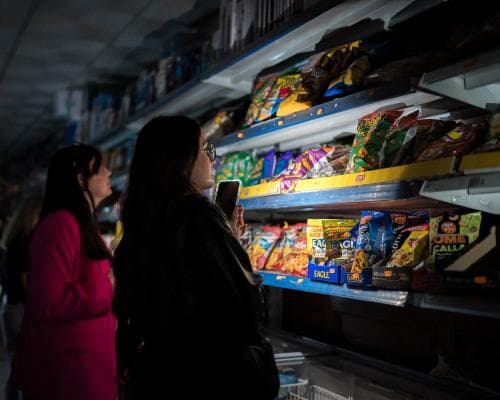
Spain's energy grid, rattled by a massive blackout one year ago, continues its shift toward renewables partly as a buffer against the economic shockwaves of Middle Eastern conflict — a vivid illustration of how distant wars reshape the daily lives of nations far from the battlefield.
Isaiah 19:2
Prophetic Fulfillment“And I will stir up Egyptians against Egyptians, and they will fight, each against another and each against his neighbor, city against city, kingdom against kingdom.”
Why this passage
Isaiah 19 is a sustained oracle against Egypt, but its pattern is the Lord using regional conflict to produce cascading economic and infrastructural collapse far beyond the immediate battlefield — canals dry up, industries fail, those who work the Nile mourn (vv. 5-10).
The original near-horizon fulfillment was Assyrian pressure on Egypt, but the far-horizon principle embedded in the oracle is that God ordains war among nations to unravel the economic certainties that empires and peoples trust in.
This structural pattern — regional war producing energy and supply insecurity across distant nations — is precisely what the article describes: Middle Eastern conflict driving gas price spikes that forced European energy policy.
The prophet Jeremiah watched as the tremors of Babylon's wars reached Jerusalem's markets and fields — the distant clash of nations reshaping the daily bread of ordinary people. So too, the wars of the Middle East reach across the sea to darken Spanish cities and strain European households, reminding us that no nation is an island when the foundations of the earth are shaken.
Scripture declares that when God 'breaks the staff of bread' and sends 'famine' and 'sword,' whole civilizations feel the rod (Ezekiel 14:13). The believer is called not to panic but to preparation, trust, and intercession — knowing that the God who governs nations governs also the grid.
Today's Prayer
Pray that believers in nations dependent on fragile energy systems would hold loosely to material security and find their stability in the God who neither slumbers nor sleeps.
Further Scripture
Additional passages that illuminate this event, each grounded in a distinct interpretive lens.
“Son of man, when a land sins against me by acting faithlessly, and I stretch out my hand against it and break its supply of bread and send famine upon it, and cut off from it man and beast”
Why this passage
God declares to Ezekiel a sovereign principle: He may withdraw the material foundations — bread, sustenance, infrastructure — from a people as an instrument of judgment or warning. The 'staff of bread' being broken is a concrete image of supply chains, energy, and provision becoming suddenly unreliable.
This is not prediction of a specific modern event but the declaration of a recurring divine principle visible throughout covenant history.
The verse does not require Israel as the subject; Ezekiel frames it as a universal principle ('when a land sins') applicable to any nation under God's general governance.
How it applies
A massive national blackout that halted hospitals, trains, and commerce — followed by ongoing vulnerability to war-driven energy price shocks — fits within this principle of providential fragility. Nations that have built their security on uninterrupted energy abundance discover, sometimes suddenly, how thin that foundation is.
The Christian reader is invited not to political commentary on Spain's energy policy, but to the deeper recognition: no civilization's lights stay on by its own ingenuity alone. Dependence on God, not on grid resilience, is the only unshakeable foundation.
“The prudent sees danger and hides himself, but the simple go on and suffer for it.”
Why this passage
The wisdom tradition in Proverbs consistently honors foresight and practical preparation as virtues of the prudent (Hebrew: arum — shrewd, discerning). Seeing danger before it arrives and acting accordingly is not faithlessness but stewardship.
The contrast is with the simple (peti — open, naive) who ignore visible warning signs and walk into foreseeable harm.
This aphorism speaks to a recurring human pattern: institutions and nations that build resilience ahead of crisis versus those that absorb preventable shocks through complacency.
How it applies
Spain's experience — a catastrophic blackout, public blame misassigned, slow grid adaptation — illustrates the Proverbs pattern of a nation learning the hard way what prudent infrastructure stewardship could have anticipated. The ongoing effort to build energy resilience in the shadow of Middle Eastern conflict is, at a civic level, the wisdom of the prudent finally acting on visible danger.
For the believer, the deeper application is personal and ecclesial: the same prudence that Proverbs commends in material affairs applies to spiritual preparedness. The signs of the times are not hidden; the call is to discern and act, not to drift.
Community launching soon
Get the invite by email when the Watchman's Wall opens
Share this article
Source: The Guardian— we link to the original for full context.