Mud-rich coastline made 2011 Japan tsunami far more destructive, study finds
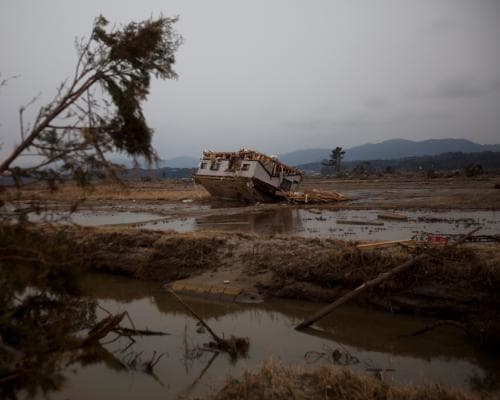
A new study reveals that mud-rich coastal rice paddies amplified the destructive force of the 2011 Japan tsunami, offering a sobering reminder of how natural geography can magnify catastrophic disasters far beyond human anticipation or control.
Romans 8:22
Direct Principle“For we know that the whole creation has been groaning together in the pains of childbirth until now.”
Why this passage
Paul in Romans 8 develops a sustained theological argument that creation itself was subjected to futility and corruption as a consequence of the fall, and that it 'groans' — using the same childbirth metaphor as Jesus — awaiting final redemption. This is not metaphorical looseness; Paul is making a cosmological claim that the physical world is in a state of bondage to decay that produces real suffering.
The principle applies directly to any event where the natural world operates in ways that produce catastrophic human suffering beyond human control.
Historical context, theological significance, application today — denomination-neutral, ~1,000-word walk-through.
Jesus warned that in the last days there would be 'earthquakes in various places' and 'terrors and great signs from heaven' — not as isolated curiosities, but as mounting birth pangs signaling the world's fragility apart from God. The 2011 Japan tsunami killed nearly 20,000 people, and now science reveals the destruction was even more amplified than understood — the very ground beneath human civilization conspiring, as it were, to magnify the wave's fury.
When Luke records Jesus saying these things will be 'the beginning of the birth pains,' the implication is that disasters will compound in ways no human engineering or foresight fully anticipates. The Christian is called not to fatalism, but to a sober, watchful faith — knowing that the earth itself groans, and that our only sure foundation is not coastal engineering but the One who commands the waves.
Today's Prayer
Pray for the families still grieving the 2011 tsunami losses, and that the Church in Japan would be a voice of eternal hope in a nation confronting its profound vulnerability to natural disaster.
Further Scripture
Additional passages that illuminate this event, each grounded in a distinct interpretive lens.
“There will be great earthquakes, and in various places famines and pestilences. And there will be terrors and great signs from heaven.”
Why this passage
Jesus delivered this Olivet Discourse as a direct answer to his disciples' question about signs preceding the end of the age. The Greek word 'seismoi' (earthquakes) covers seismic events broadly, and 'phobētra' (terrors) refers to phenomena that inspire dread through sheer destructive power.
Jesus presented these not as one-time events but as a pattern — a category of recurring, escalating disaster. The grammar places these signs within a sequence of 'birth pangs,' implying they intensify in frequency and severity over time.
How it applies
The 2011 Tōhoku earthquake and tsunami was one of the most powerful seismic events in recorded history, and this study shows its destruction was worse than originally understood because the mud-rich coastline amplified the wave's force. This exemplifies the 'terrors' Jesus described — disasters that overwhelm human calculation and exceed anticipated destruction.
It fits the pattern of escalating natural catastrophe that Christ identified as a sign of the approaching end.
Related by Scripture
Other events we've interpreted through the same passage or hermeneutical lens.
Bird flu confirmed in South Australia as infected petrel brings deadly H5N1 cases to three
Pestilence & PlaguesShares Luke 21:11The ‘earthquake gate’ stopping a San Andreas disaster is under its highest stress in 1,000 years
Earthquakes & Natural DisastersShares Luke 21:11Where the 'Big One' will hit... as underground stress reaches a 1,000-year high and earthquakes split the ground throughout the US: See America's 'time bombs'
Earthquakes & Natural DisastersShares Luke 21:11One dead, dozens injured after Indonesian quake
Earthquakes & Natural DisastersShares Luke 21:11California’s tectonic systems at highest levels of stress in 1,000 years – study
Earthquakes & Natural DisastersShares Luke 21:11
Community launching soon
Get the invite by email when the Watchman's Wall opens
Share this article
Source: The Guardian— we link to the original for full context.