Most US adults still support abortion access, despite declines for some Christians
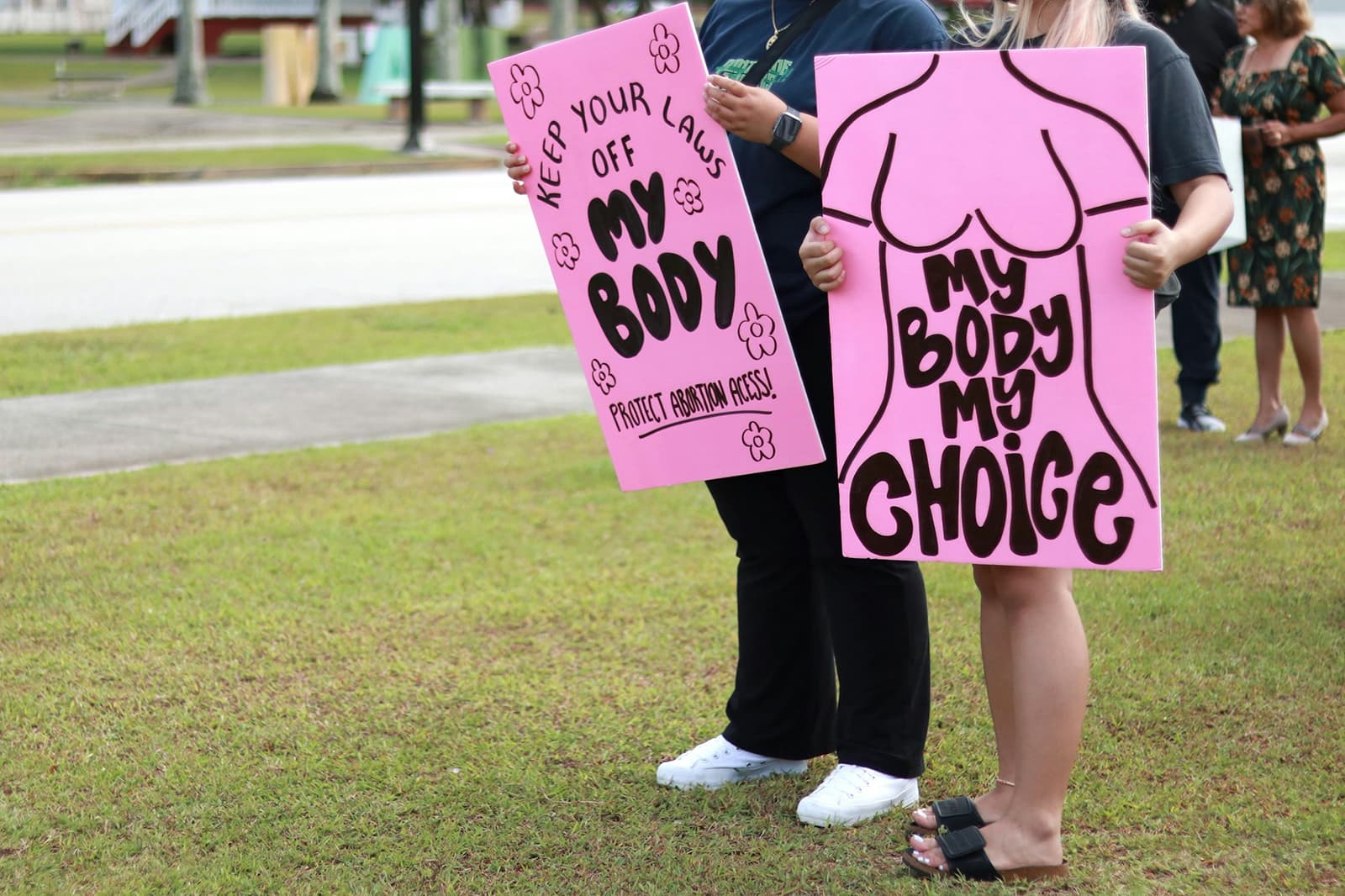
A 2025 survey reveals that majorities of white Catholics and large portions of other Christian groups support abortion access — a measurable drift among professing believers away from the biblical witness on the sanctity of human life and toward the moral consensus of post-Christian culture.
2 Timothy 4:3-4
Prophetic Fulfillment“For the time is coming when people will not endure sound teaching, but having itching ears they will accumulate for themselves teachers to suit their own passions, and will turn away from listening to the truth and wander off into myths.”
Why this passage
Paul writes to Timothy in the context of solemn charge before God and Christ who will judge the living and the dead (v.1), identifying a future — yet already-dawning — condition in which the institutional church will tolerate only teaching that confirms what people already wish to believe. The Greek 'knethoménoi tēn akoēn' ('itching ears') describes not intellectual curiosity but appetite-driven selectivity: doctrine is chosen the way a consumer chooses goods, filtered through desire.
The plain historical sense is that this describes an internal, ecclesial defection — not the world turning from truth, but those who gather in Christian assemblies doing so. The survey's finding that self-identified Christians, including Catholics, are aligning their moral convictions with secular culture on the question of human life is a precise fulfillment of this pattern: the 'sound teaching' of imago Dei ethics and the sanctity of life is being exchanged for the myths of bodily autonomy divorced from accountability to the Creator.
Paul warned Timothy that a time would come when people would not endure sound teaching, but would accumulate for themselves teachers to suit their own passions — and that time, the survey data suggests, is not merely approaching but already resident within the pews. When majorities of those who bear the name of Christ align their convictions not with Scripture's declaration that human beings are made in the image of God, but with the ambient moral consensus of a post-Christian age, the prophesied falling away takes statistical, measurable form.
The Lord does not grade faith by cultural majority. He calls His people to be transformed by the renewing of their minds, not conformed to this age — and the gap between that call and current survey results is itself a summons to repentance, intercession, and fearless pastoral courage.
Today's Prayer
Pray that pastors and teachers across every denomination would recover the courage to declare the full counsel of God on the sanctity of life, and that professing believers whose convictions have drifted would encounter the living Word and be transformed rather than conformed.
Further Scripture
Additional passages that illuminate this event, each grounded in a distinct interpretive lens.
“Woe to those who call evil good and good evil, who put darkness for light and light for darkness, who put bitter for sweet and sweet for bitter!”
Why this passage
Isaiah pronounces a series of covenant woes upon Judah for the precise moral inversion in which the categories of good and evil are transposed. The woe is not directed at ignorance but at deliberate reclassification — a society that has arrived at a consensus that evil is good, and persecutes those who hold the former standard.
The direct-principle application requires no reinterpretation: Scripture consistently treats the taking of innocent human life as evil (Prov 6:17; Ps 139:13-16; Jer 1:5), and the cultural consensus that frames such taking as a human right — a good — is precisely what Isaiah names a 'woe.' That this inversion now enjoys majority support among those bearing a Christian identity makes the oracle not merely culturally but ecclesiastically applicable.
How it applies
When majorities of professing Christians in a 2025 survey affirm abortion access as something to be supported rather than mourned, they have participated in the moral inversion Isaiah condemns: calling what Scripture judges as the shedding of innocent blood a matter of healthcare, rights, or personal freedom.
The prophet's 'Woe' is not a polite caution but a covenant lament — the sound of heaven grieving a people who have traded the fear of God for the approval of a post-Christian culture.
“Do not be conformed to this world, but be transformed by the renewal of your mind, that by testing you may discern what is the will of God, what is good and acceptable and perfect.”
Why this passage
Paul's imperative 'mē syschēmatizesthe' (present passive imperative: 'stop being molded by') describes a continuous pressure from the surrounding age that shapes the believer if the countervailing work of renewal is absent. The verse assumes that the world exerts a conforming pressure, and that believers are not immune to it — only transformed minds can discern God's will rather than merely mirroring cultural consensus.
The contrast Paul draws is not between two abstract philosophies but between the living God's revealed will and the 'aion' — the present age's dominant value system. Discerning what is 'good and acceptable and perfect' requires active renewal; absent that, conformation is the default.
How it applies
The survey result is a precise empirical portrait of conformation without transformation: large segments of self-identified Christians have adopted the present age's framing of abortion as a right rather than testing it against God's revealed will.
Romans 12:2 does not merely describe this as a moral failure — it diagnoses the mechanism: a mind not actively renewed by the Word and Spirit will, by default, be shaped by the world. The data is not merely a moral statistic; it is a discipleship crisis.
“Her priests have done violence to my law and have profaned my holy things. They have made no distinction between the holy and the common, neither have they taught the difference between the unclean and the clean, and they have disregarded my Sabbaths, so that I am profaned among them.”
Why this passage
Ezekiel indicts not the pagans of Jerusalem but its religious leaders — priests who have obliterated the distinction between holy and profane, clean and unclean. The context is a full covenant lawsuit against Jerusalem (ch.
22), and the priests bear the greatest culpability because the failure of moral distinction flows from a failure of teaching.
The structural parallel is genuine: the survey does not find that outsiders reject the sanctity of life, but that those who occupy the priestly-teaching office within Christianity have so consistently failed to teach the distinction between a culture's values and God's law that their congregants can no longer tell the difference. The pattern — leadership failure producing congregational moral confusion — is precisely what Ezekiel diagnoses.
How it applies
That majorities of white Catholics and significant portions of other Christian groups hold positions contrary to the plain biblical witness on human life points first not to congregational failure but to a crisis of teaching — bishops, priests, and pastors who have 'made no distinction between the holy and the common.'
Ezekiel's oracle reminds us that God holds religious leaders accountable for the moral confusion of their flocks; the survey's numbers are, in part, a ledger of pastoral negligence.
Related by Scripture
Other events we've interpreted through the same passage or hermeneutical lens.
Learning nothing: L.A. can't put out a warehouse fire even as city gets covered in smoke
Moral DeclineShares Isaiah 5:20‘I’ve finally found God without all the extras’: behind the surge in people converting to Progressive Judaism
Apostasy & Falling AwayShares 2 Timothy 4:3-4Not entirely unacceptable to call Hamas freedom fighters, doctor tells tribunal
Moral DeclineShares Isaiah 5:20Green councillor who praised Oct 7 attacks lands cabinet role
Moral DeclineShares Isaiah 5:20Gender Madness Is Embarrassing Reasonable Australians
Moral DeclineShares Isaiah 5:20
Community launching soon
Get the invite by email when the Watchman's Wall opens
Share this article
Source: Religion News Service— we link to the original for full context.