More than 500 people killed in Tanzania election violence, inquiry finds
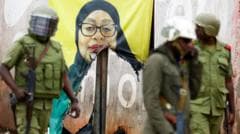
An official Tanzanian inquiry confirms over 500 people killed in election violence, with security forces implicated but the government report refusing to assign blame — a pattern of sovereign power wielded against the governed that Scripture's prophets and apostles both name and judge.
Micah 3:1-3
Direct Principle“And I said: Hear, you heads of Jacob and rulers of the house of Israel! Is it not for you to know justice? — you who hate the good and love the evil, who tear the skin from off my people and their flesh from off their bones, who eat the flesh of my people, and flay their skin from off them, and break their bones in pieces and chop them up like meat in a pot, like flesh in a cauldron.”
Why this passage
Micah addresses Israel's ruling class — judges, princes, those entrusted with the administration of justice — and indicts them not for foreign aggression but for consuming the very people under their care. The graphic imagery of flesh and bone is not incidental; it describes the systematic destruction of persons by those whose office demanded their protection.
The principle operative here is covenantal: authority is granted for the welfare of the governed, and its inversion into an instrument of killing is the precise sin Micah condemns. No special hermeneutical move is required — the pattern is identical: a governing body using lethal force against its own citizens, then refusing to answer for it.
Micah 3:1-2 demands of rulers: 'Hear, you heads of Jacob and rulers of the house of Israel! Is it not for you to know justice? — you who hate the good and love the evil, who tear the skin from off my people.' The prophet's charge was not addressed to foreign tyrants but to those entrusted with the care of the flock — and yet here were men who devoured the people they were appointed to protect.
In Tanzania, more than five hundred lives were extinguished during what should have been a civic exercise, and the official inquiry — rather than naming the guilty — has added concealment to bloodshed. The watchman does not despair, for the same God who commissioned Micah's oracle has not vacated His throne.
He who hears the cry of the oppressed is also He before whom every report that hides the truth will one day be unsealed.
Today's Prayer
Pray that the families of Tanzania's 500 slain would find advocates who refuse silence, and that God would raise up just rulers on that nation who fear Him more than they fear exposure.
Further Scripture
Additional passages that illuminate this event, each grounded in a distinct interpretive lens.
“Can wicked rulers be allied with you, those who frame injustice by statute? They band together against the life of the righteous and condemn the innocent to death.”
Why this passage
Psalm 94 is a theodicy psalm — the psalmist cries out under precisely the condition visible in Tanzania: institutional evil protected by official structures. The phrase 'frame injustice by statute' is critical; it describes not lawless mob violence but legalized oppression — harm embedded in procedure and report.
The psalmist's rhetorical question expects the answer 'No': God cannot be allied with rulers who use the machinery of governance to condemn the innocent. The Psalm then grounds the cry in the certainty of divine judgment, making this not merely a lament but a declaration.
How it applies
An official inquiry that confirms 500 deaths and then withholds the assignment of blame is precisely what Psalm 94 calls 'framing injustice by statute' — wrongdoing encoded into official process so that it appears measured and legal while the blood of the innocent goes unanswered.
The families of those killed in Tanzania face what the psalmist faced: a state apparatus arrayed against the life of the people, protected by its own procedures. The psalmist's confidence — 'the LORD has become my stronghold, and my God the rock of my refuge' — is the only stable ground for those whom earthly courts have abandoned.
“Like a roaring lion or a charging bear is a wicked ruler over a poor people. A ruler who lacks understanding is a cruel oppressor, but he who hates unjust gain will prolong his days.”
Why this passage
Proverbs 28 collects observations about the recurring patterns of human governance under the light of the fear of the Lord. The simile of lion and bear is precise: these are apex predators whose strength is used not to tend the flock but to devour it — and Proverbs applies this directly to the ruler-subject relationship.
The parallel in verse 16 anchors the observation: lack of justice ('understanding' in the wisdom tradition carries judicial freight) produces cruelty, and cruelty is named oppression. This is not metaphorical extrapolation — it is the text's own plain application to exactly this kind of governing conduct.
How it applies
The Tanzanian government's security apparatus, if the evidence holds, did not err by accident — it acted as the roaring lion of Proverbs 28, deploying overwhelming lethal force against citizens exercising a civic voice. The subsequent inquiry that refuses to name perpetrators is itself the act of a ruler who 'lacks understanding' in the Proverbs sense: moral blindness that perpetuates oppression rather than correcting it.
Proverbs offers no comfort to such rulers: the one who 'hates unjust gain will prolong his days' — the implicit warning being that the one who loves it will not.
“For rulers are not a terror to good conduct, but to bad. Would you have no fear of the one who is in authority? Then do what is good, and you will receive his approval, for he is God's servant for your good. But if you do wrong, be afraid, for he does not bear the sword in vain. For he is the servant of God, an avenger who carries out God's wrath on the wrongdoer.”
Why this passage
Romans 13 is Paul's account of the God-ordained function of civil government: the magistrate bears the sword as God's servant to restrain evil and commend good. This is not a blank endorsement of all state action — it is a definition of legitimate authority, and definitions carry implicit boundaries.
When a government turns the sword against the 'good conduct' of citizens participating in an election, it has not fulfilled its Romans 13 mandate — it has inverted it. Paul's logic itself exposes the inversion: the state that kills the civically engaged and protects the violent has ceased to be 'God's servant for your good' in any meaningful sense.
How it applies
The Tanzania violence does not challenge Romans 13 — it illustrates, by terrible contrast, what happens when those who bear the sword abandon the divine warrant that alone justifies it. Five hundred people were killed not for wrongdoing but apparently for political participation; the very act Paul identifies as reason for citizens to be unafraid.
This is the cautionary edge of Romans 13 that is too rarely preached: the passage presupposes a ruler who fulfills the function, and when that function is betrayed, Scripture's prophets — Micah, Amos, Jeremiah — stand ready to name what Paul's letter leaves implicit.
Related by Scripture
Other events we've interpreted through the same passage or hermeneutical lens.
Spain: Police raid HQ of ruling PSOE Socialist party in graft probe
Moral DeclineShares Micah 3:1-3Xi's anti-corruption crackdown sentences former Chinese defense ministers to death
Moral DeclineShares Proverbs 28:15-16'Killing off the country': Iran executes dozens, arrests 4,000-plus in war crackdown
Moral DeclineShares Proverbs 28:15-16Journalist detained in Kuwait acquitted of ‘spreading false information’, says press monitor
Persecution of ChristiansShares Psalm 94:20-21From beauty to transportation, a lack of water and power forces Cubans to change their routines
FaminesShares Proverbs 28:15-16
Community launching soon
Get the invite by email when the Watchman's Wall opens
Share this article
Source: BBC World— we link to the original for full context.