Middle East crisis live: Iran says it needs guarantees against attacks before Gulf can be stable
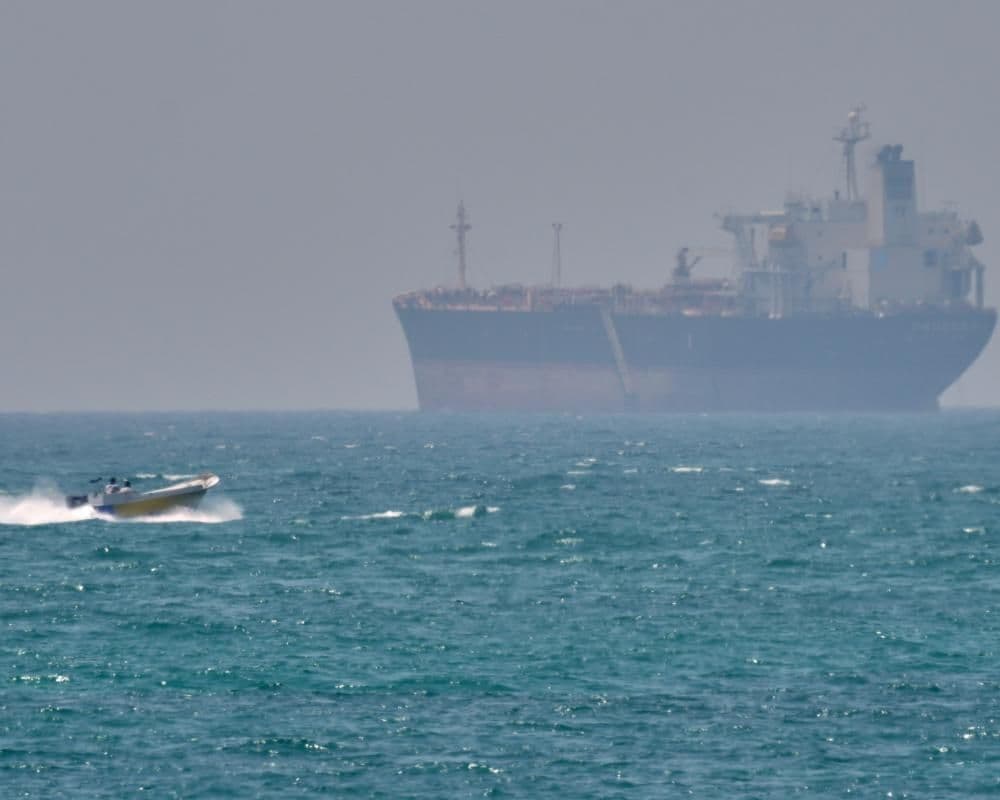
Iran's UN envoy has declared regional Gulf stability impossible without security guarantees for Iran — a diplomatic posture in which peace is promised in principle while the structural conditions for genuine peace are conspicuously absent.
Ezekiel 13:10-12
Direct Principle“Because they have misled my people, saying, 'Peace,' when there is no peace, and because, when the people build a wall, these prophets smear it with whitewash, say to those who smear it with whitewash that it shall fall! There will be a deluge of rain, and you, O great hailstones, will fall, and a stormy wind break out. And when the wall falls, will it not be said to you, 'Where is the whitewash you smeared on it?'”
Why this passage
Ezekiel addressed false prophets who painted over Israel's structural rot with soothing declarations of peace, when the nation's covenant relationship with God was broken and judgment was imminent. The principle is not limited to prophets in the narrow sense — it describes any system of actors who declare stability without addressing the moral and political foundations that make stability possible.
The plain sense is that whitewashed peace collapses under pressure precisely because it was cosmetic. The wall was never sound; the whitewash only delayed the reckoning.
The prophet Ezekiel warned of those who build a wall and others who whitewash it, crying 'Peace!' when there is no peace. Iran's demand for guarantees before stability can exist is precisely this pattern: a wall of conditions erected while the trumpet of real peace goes unblown.
Hear, O reader: the peace the nations broker is always conditional, always fragile, always hostage to the next demand. The only peace that holds is the peace of Him who is its Prince.
While diplomats trade ultimatums, the Church is called to pray for rulers and to hold fast to the One whose government shall have no end.
Today's Prayer
Pray that God would confound the counsels of those who proclaim peace with their lips while their hearts devise new conditions for conflict, and that the true peace of Christ would be proclaimed boldly throughout the Middle East.
Further Scripture
Additional passages that illuminate this event, each grounded in a distinct interpretive lens.
“They have healed the wound of my people lightly, saying, 'Peace, peace,' when there is no peace.”
Why this passage
Jeremiah's indictment of the priests and prophets of his day was that they treated a mortal wound as though it were a scratch — offering verbal assurances of shalom while the covenant nation was hemorrhaging from within. The phrase 'Peace, peace' in the Hebrew is an emphatic doubling, signaling how strenuously the false assurance was proclaimed even as the evidence contradicted it.
The grammatical-historical sense is direct: those with power to diagnose and address a crisis choose instead to minimize it with soothing words for their own political survival.
How it applies
Iran's preconditions framework echoes this exact pattern — peace is invoked as the desired outcome even as the nation maintains the very postures (nuclear development, regional proxy forces, refusal of normalization) that make peace structurally impossible. The word 'peace' functions as a diplomatic shield, not a genuine offer.
The wound of the Gulf's instability is being treated lightly, with conditions attached to conditions, while the underlying hostilities fester.
“Thus says the LORD concerning the prophets who lead my people astray, who cry 'Peace' when they have something to eat, but declare war against him who puts nothing into their mouths.”
Why this passage
Micah exposes the transactional nature of false peace declarations: peace is proclaimed when interests are served and war is threatened when they are not. The prophets in Micah's context calibrated their message entirely to what they received in return, making their 'peace' nothing more than a leverage instrument.
This is a sharp, specific principle about nations and actors whose peace rhetoric is contingent on their own satisfaction — precisely the structure of conditional peace declarations.
How it applies
Iran's posture fits this pattern with striking precision: stability is offered as a commodity contingent on receiving security guarantees and full respect of Iranian rights. Peace is dangled as a reward for compliance and implicitly withdrawn if compliance is absent — a geopolitical echo of Micah's transactional prophets.
The Gulf is not being offered genuine reconciliation; it is being offered a price list.
“While people are saying, 'There is peace and security,' then sudden destruction will come upon them as labor pains come upon a pregnant woman, and they will not escape.”
Why this passage
Paul's eschatological warning in 1 Thessalonians 5 addresses the deceptive calm that precedes the Day of the Lord — a moment when the language of peace and security is most loudly proclaimed is precisely when catastrophic disruption is nearest. The image of labor pains emphasizes both the inevitability and the sudden, irreversible onset of the judgment.
The near horizon addressed the false security of the Roman pax and the political stability claims of the empire; the far horizon speaks to any age when nations employ peace-and-security language to mask structural volatility.
How it applies
Iran's framing of Gulf stability as contingent on its own security guarantees is a form of the very 'peace and security' discourse Paul flags — not a genuine settlement but a rhetorical claim that stability is achievable, if only on the right terms. The region remains armed, the proxies remain active, and the nuclear program continues.
The proclamation of potential peace, in this context, should prompt watchfulness rather than relief — the labor pains of instability are not easing; they are intensifying beneath the diplomatic language.
Related by Scripture
Other events we've interpreted through the same passage or hermeneutical lens.
Iran Shuts Hormuz As Middle East Peace Talks Enter Dire Straits
Wars & Rumors of WarsShares 1 Thessalonians 5:3Iran US Israel war Live Updates: Trump And Pezeshkian End War Through Digital Signatures, Ships Transit Hormuz
Peace & Security DeclarationsShares 1 Thessalonians 5:3Iran's Deal With Washington Is A Pause, Not A Peace
Wars & Rumors of WarsShares 1 Thessalonians 5:3Trump signs initial deal to end war in Iran and open Strait of Hormuz
Peace & Security DeclarationsShares 1 Thessalonians 5:3Pope Leo says 'thanks be to God' for interim US-Iran peace deal
Peace & Security DeclarationsShares 1 Thessalonians 5:3
Community launching soon
Get the invite by email when the Watchman's Wall opens
Share this article
Source: Inkl— we link to the original for full context.