Mali leader Assimi Goïta assumes role of defence minister after attacks kill previous minister
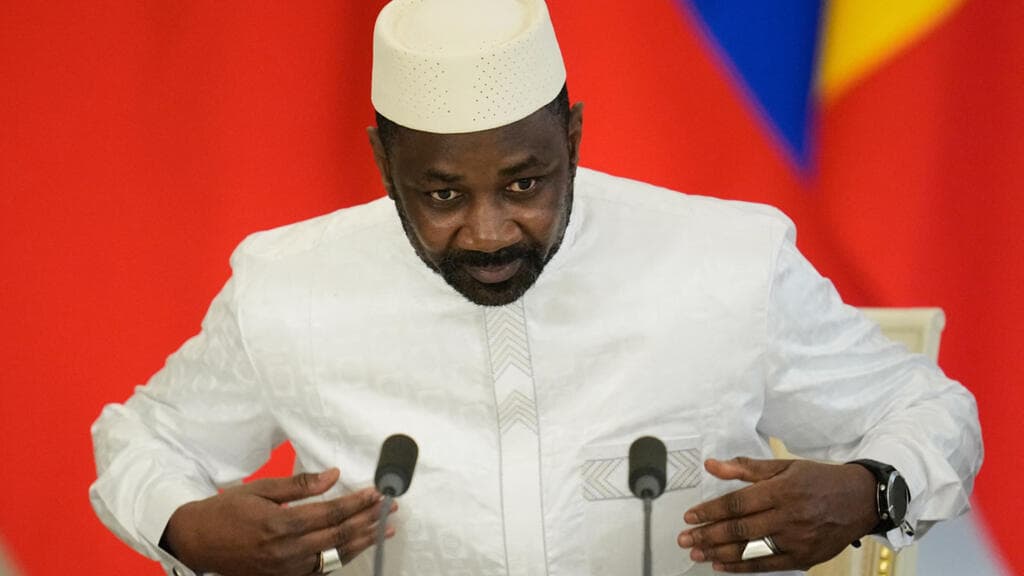
Al-Qaeda-linked militants and Tuareg separatists launched coordinated attacks in Mali that killed the nation's defence minister, forcing the military junta leader to consolidate power — a stark emblem of the relentless, multi-front warfare consuming the Sahel.
Jeremiah 25:30-32
Prophetic Fulfillment“The LORD will roar from on high, and from his holy habitation utter his voice; he will roar mightily against his fold, and shout, like those who tread grapes, against all the inhabitants of the earth. The clamor will resound to the ends of the earth, for the LORD has an indictment against the nations; he is entering into judgment with all flesh, and the wicked he will put to the sword, declares the LORD. Thus says the LORD of hosts: Behold, disaster is going forth from nation to nation, and a great tempest is stirring from the farthest parts of the earth!”
Why this passage
Jeremiah 25 is a sweeping oracle of divine judgment against the nations surrounding Judah, declaring that the LORD's wrath would move like an unstoppable tempest 'from nation to nation' (v. 32).
The original grammatical-historical sense envisions the Babylonian advance as the instrument of divine judgment spreading geopolitically — no nation immune, no stronghold secure.
The prophetic pattern Jeremiah describes — cascading, multi-directional warfare stirred from distant quarters — echoes genuinely in the Sahel crisis. Al-Qaeda franchises, Tuareg separatists, and fragmenting governments represent precisely the kind of multi-front, transnational violence the oracle envisions as the LORD's indictment pressing against the nations.
The prophet Jeremiah beheld a vision of war sweeping across the nations like a consuming whirlwind: 'The LORD will roar from on high and thunder from his holy habitation… a great tempest is stirring from the farthest parts of the earth.' In Mali, that tempest is no abstraction — a sitting defence minister is slain, a government reels, and jihadist networks press their advance across a continent.
Hear the warning embedded in this verse: the roar from Zion is not merely wrath but a summons to sobriety. As the nations are shaken by relentless conflict, the people of God are called to intercede, to hold fast, and to remember that no throne — however fortified — is secure apart from the LORD of hosts.
Today's Prayer
Pray that the Church in Mali and across the Sahel would hold firm in faith amid jihadist violence, and that the peace of Christ would penetrate regions where war reigns unchecked.
Further Scripture
Additional passages that illuminate this event, each grounded in a distinct interpretive lens.
“When he opened the second seal, I heard the second living creature say, 'Come!' And out came another horse, bright red. Its rider was permitted to take peace from the earth, so that people should slay one another, and he was given a great sword.”
Why this passage
The second seal in Revelation 6 describes an age-long, divinely permitted intensification of human warfare — not a single battle but a condition: peace taken from the earth, populations slaying one another, the great sword unleashed across nations. John's original hearers understood this as the sober reality of a world in rebellion whose violence is neither random nor outside God's sovereign purview.
The Sahel represents one of the most acute theaters of this global pattern: over a decade of cascading coups, jihadist expansion, civilian massacre, and now government ministers slain — peace comprehensively taken from an entire sub-region.
How it applies
The coordinated attacks that killed Mali's defence minister on April 25 are a vivid instance of the red-horse condition — multiple armed actors, zero peace, relentless slaughter. The rider has been given the great sword, and in West Africa's Sahel belt it is swung by al-Qaeda franchises, separatist militias, and coup-born regimes alike.
For the watchful reader of Scripture, this event is not geopolitical noise — it is a recognizable beat in the drumline of the age, calling the Church to sober intercession and steadfast hope in the Prince of Peace.
“Woe to the bloody city, all full of lies and plunder — no end to the prey! The crack of the whip, and rumble of the wheel, galloping horse and bounding chariot! Horsemen charging, flashing sword and glittering spear, hosts of slain, heaps of corpses, dead bodies without end — they stumble over the bodies!”
Why this passage
Nahum's oracle against Nineveh is addressed to a militaristic, predatory power characterized by unceasing violence, treachery, and the plunder of weaker peoples. The 'bloody city' indictment names a governing regime whose identity is inseparable from organized killing — and it pronounces divine woe upon that system.
The principle extends beyond Nineveh to any governing power that sustains itself through violence and preys upon its own region. The pattern — regime of force, armed factions, relentless bloodshed — is genuinely parallel to the military junta in Bamako surrounded by jihadist and separatist carnage.
How it applies
Mali's military government, born of a coup and now rocked by the assassination of its own defence minister, exemplifies the instability Nahum indicts: a state defined by armed force, now hemorrhaging to armed challengers. The 'hosts of slain' are no metaphor in the Sahel — they are the daily reality of coordinated militant attacks.
Nahum's woe stands as a sober reminder that governments founded on the sword and maintained by it remain perpetually vulnerable to the same — and that no human power arrangement promises the lasting peace only Christ's reign can supply.
Community launching soon
Get the invite by email when the Watchman's Wall opens
Share this article
Source: © Pavel Bednyakov, AFP— we link to the original for full context.