Keeping talks with US sputtering along, Iran may be looking for time, not a deal
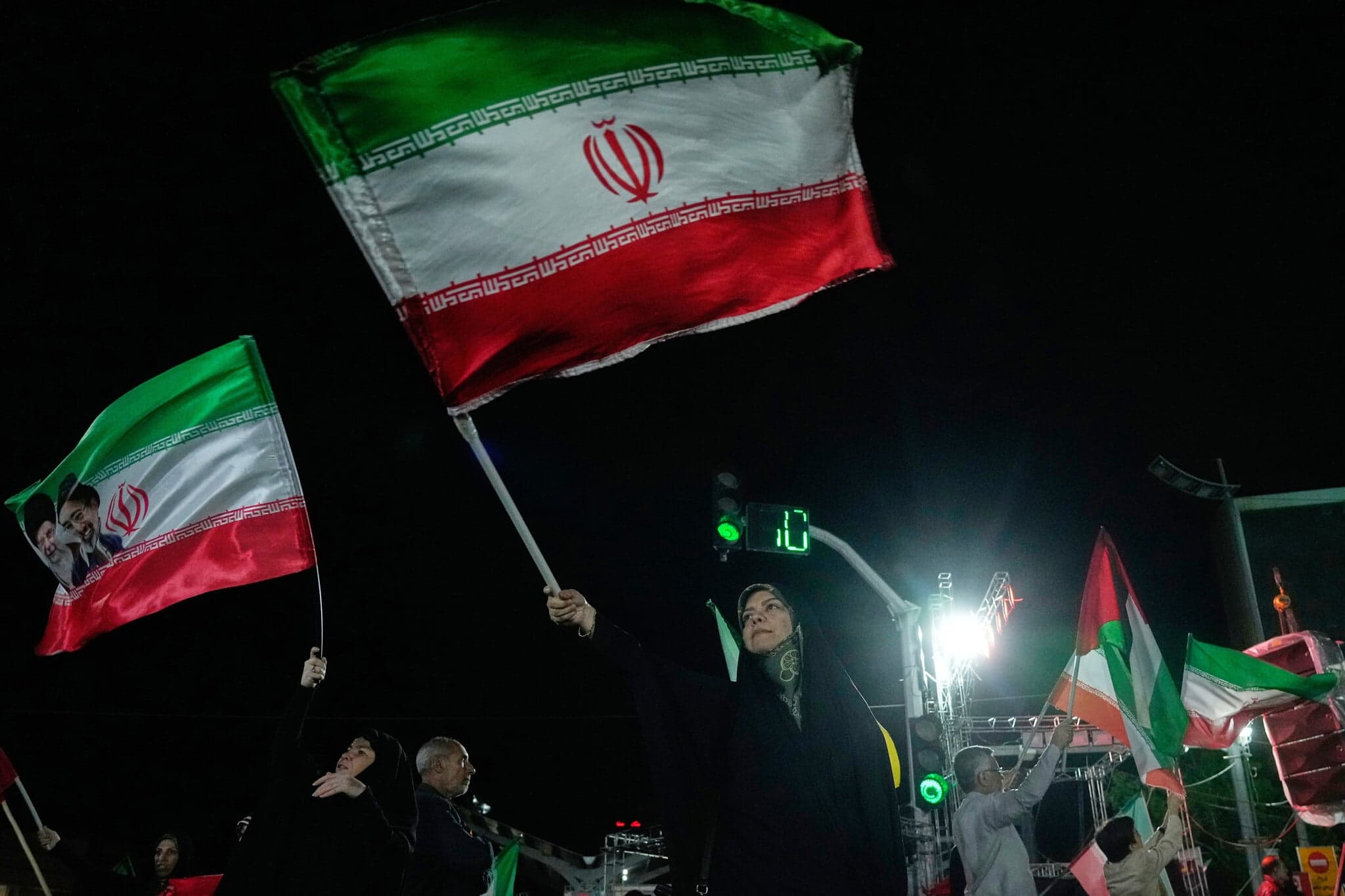
Iran appears to be exploiting nuclear negotiations with the United States as a diplomatic shield — stalling for time while the IRGC rebuilds and its nuclear program advances — a pattern Scripture identifies as the ancient treachery of whitewashed, false peace.
Jeremiah 8:11
Direct Principle“They have healed the wound of my people lightly, saying, 'Peace, peace,' when there is no peace.”
Why this passage
Jeremiah's indictment falls on those who treat a mortal wound as though it were a surface scratch — offering 'peace, peace' as a diagnosis when the condition is grave and worsening. The original context is Judah's leaders reassuring the people that no judgment is coming, suppressing alarm rather than addressing the actual condition.
The principle transfers cleanly to any diplomatic or political context where the gravity of a threat is minimized through repeated reassuring language — the double 'peace, peace' in the Hebrew underscoring the insistence of the false assurance even as reality contradicts it.
Ezekiel warned of prophets who cry 'Peace!' while daubing a wall with whitewash — making a crumbling structure appear sound to the eye while the storm gathers strength. What Iran appears to be doing at the negotiating table fits this ancient pattern precisely: words of engagement covering a structure of continued threat.
The watchman's duty is not to despair at such treachery but to name it clearly. The Lord who exposed the whitewashed wall of Ezekiel's day sees every diplomat's table.
He calls His people not to naïve optimism nor to faithless fear, but to sober vigilance — watching, praying, and trusting that no false peace outlasts His sovereign word.
Today's Prayer
Pray that the leaders of nations engaged in these negotiations would have wisdom to discern genuine peace from diplomatic theater, and that God's sovereign hand would frustrate every counsel that advances under the cover of false dealing.
Further Scripture
Additional passages that illuminate this event, each grounded in a distinct interpretive lens.
“Because, yes, because they have misled my people, saying, 'Peace,' when there is no peace, and because, when the people build a wall, these prophets smear it with whitewash, say to those who smear it with whitewash that it will fall! There will be a deluge of rain, and you, O great hailstones, will fall, and a stormy wind break out. And when the wall falls, will it not be said to you, 'Where is the coating with which you smeared it?'”
Why this passage
Ezekiel 13 addresses leaders who declare peace and stability where none genuinely exists, covering a structurally unsound situation with a veneer of reassurance — 'whitewash.' The grammatical-historical sense is a direct indictment: the wall looks solid because it has been plastered over, but the underlying structure is unreinforced and will collapse under pressure.
The principle is not limited to Israelite false prophets; it identifies a recurring pattern of governance and diplomacy — projecting stability and goodwill while the underlying reality is one of ongoing danger and bad faith. That principle applies wherever leaders use the language of peace as a cosmetic layer over unresolved and advancing threat.
How it applies
Iran's posture in these nuclear talks fits the whitewash pattern with uncomfortable precision: the diplomatic 'wall' of ongoing negotiations presents the appearance of movement toward resolution, while the IRGC rebuilds and uranium enrichment continues beneath the plaster. When the storm breaks — whether in the form of a nuclear threshold crossed or a military confrontation — the question Ezekiel's God asks will echo: where is the coating with which it was smeared?
American Christians who watch these talks should not be surprised by this pattern. The Lord identified it millennia ago, and He identified it as something that falls.
“Thus says the Lord concerning the prophets who lead my people astray, who cry 'Peace' when they have something to eat, but declare war against him who puts nothing into their mouths.”
Why this passage
Micah 3:5 exposes a specific mechanism of false peace: declarations of peace or goodwill are conditioned on self-interest — the prophet cries 'peace' when it benefits him, and pivots to hostility the moment it does not. The text reveals that the peace-language is transactional and strategic, not principled.
This is the grammatical-historical meaning addressed to Israelite prophets for hire, but it establishes the enduring principle that nations and leaders who have material or strategic interests will weaponize peace-language precisely when it serves those interests, with no genuine commitment behind it.
How it applies
Iran's calculated use of negotiations — gaining time for the IRGC to rebuild while extracting diplomatic legitimacy from the process — matches Micah's anatomy of false peace: the 'peace' language serves Iran's strategic appetite, and the moment the balance shifts, so will the posture. The talks are not a path to resolution; they are, on this reading, the fee paid for continued operation.
For the watchful Christian, Micah's word is a reminder that the appearance of dialogue is not itself evidence of peaceful intent — discernment must look past the words to what the talker is eating.
“While people are saying, 'There is peace and security,' then sudden destruction will come upon them as labor pains come upon a pregnant woman, and they will not escape.”
Why this passage
Paul's warning in 1 Thessalonians 5:3 is set in an eschatological frame — it describes the posture of the world immediately before the Day of the Lord breaks upon it. The original sense is that an atmosphere of declared peace and security, accepted as settled reality, precedes sudden catastrophe precisely because the underlying danger was never resolved.
The prophetic dimension is forward-looking: a world that learns to paper over genuine threats with diplomatic assurances trains itself into the very vulnerability Paul describes — the unescapable arrival of what was said not to be coming.
How it applies
The sputtering Iran talks, if they continue producing the impression of managed diplomacy while the actual threat advances, contribute to the broader global posture Paul names: 'peace and security' as a declared condition that lulls rather than protects. Whether or not this specific diplomatic moment is the event Paul describes, it rehearses and reinforces the pattern he warns against.
The believer is called by Paul in the very next verses to be 'sons of light' — not asleep, not lulled — precisely because the world around will be. Watching these talks with clear eyes is itself an act of faithfulness to Paul's command.
Related by Scripture
Other events we've interpreted through the same passage or hermeneutical lens.
Iran Shuts Hormuz As Middle East Peace Talks Enter Dire Straits
Wars & Rumors of WarsShares 1 Thessalonians 5:3Iran US Israel war Live Updates: Trump And Pezeshkian End War Through Digital Signatures, Ships Transit Hormuz
Peace & Security DeclarationsShares 1 Thessalonians 5:3Iran's Deal With Washington Is A Pause, Not A Peace
Wars & Rumors of WarsShares 1 Thessalonians 5:3Trump signs initial deal to end war in Iran and open Strait of Hormuz
Peace & Security DeclarationsShares 1 Thessalonians 5:3Pope Leo says 'thanks be to God' for interim US-Iran peace deal
Peace & Security DeclarationsShares 1 Thessalonians 5:3
Community launching soon
Get the invite by email when the Watchman's Wall opens
Share this article
Source: timesofisrael— we link to the original for full context.