Jordan: A Brighter Spot In Israeli Middle East Relations… But Only God Knows How Long It Will Last
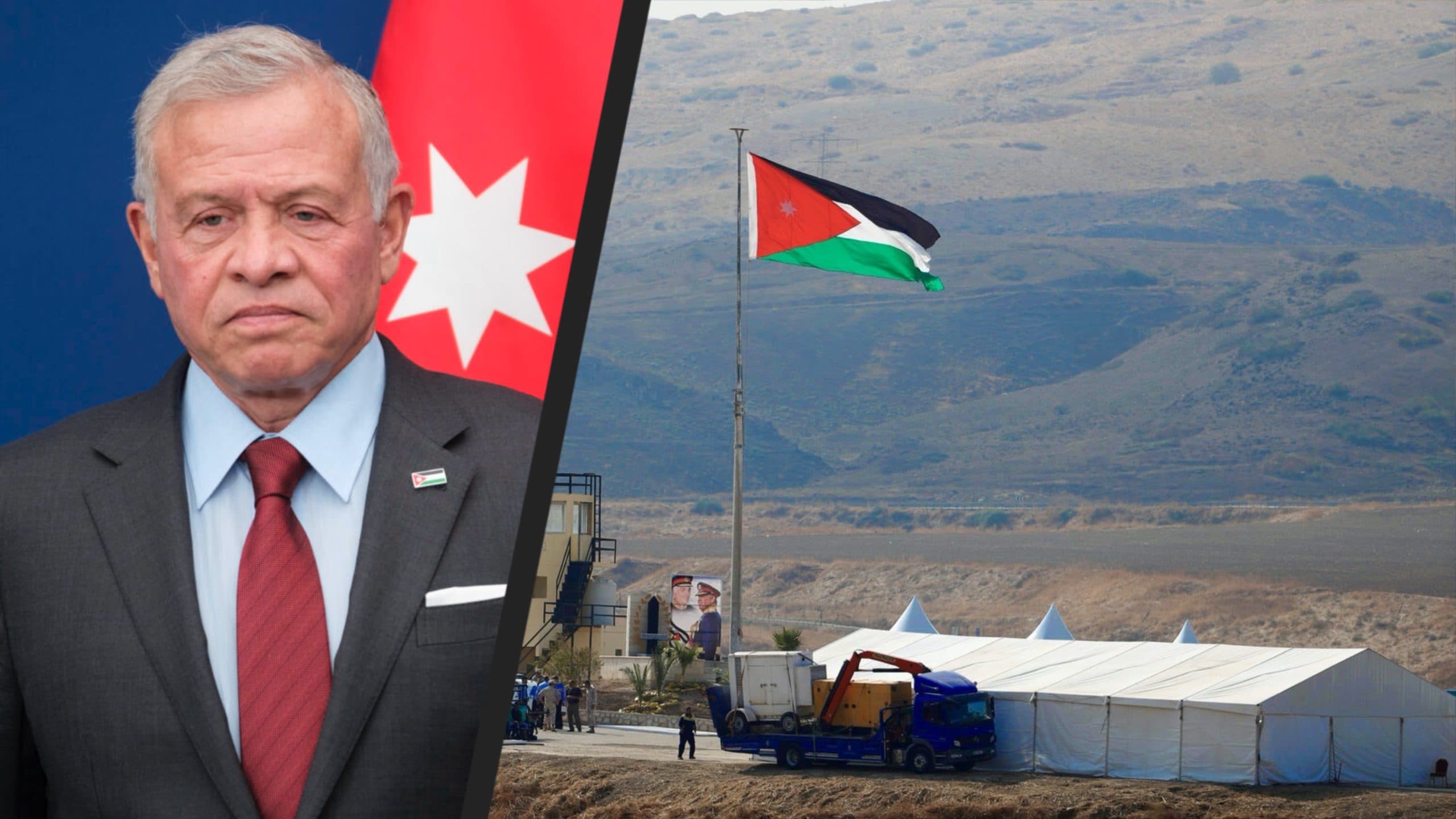
Israel's tenuous security relationship with Jordan — maintained in secret by one king against overwhelming Arab hostility — illustrates the prophesied condition of Israel as a nation dwelling alone, its alliances as fragile as a thread and its true security resting in God alone.
Numbers 23:9
Prophetic Fulfillment“For from the top of the crags I see him, from the hills I behold him; behold, a people dwelling alone, and not counting itself among the nations!”
Why this passage
Balaam's oracle, spoken over Israel at Moab's behest, declared a condition that would mark the nation across history: Israel dwells alone, set apart from the family of nations in a way no political arrangement fully overcomes. The grammatical-historical sense is descriptive of Israel's covenantal separateness — not merely geographical, but ontological.
This is not primarily a prophecy of doom but of divine design: Israel's aloneness is the imprint of its election. Yet election without the nations' embrace produces exactly the diplomatic isolation the article describes.
The prophet Zechariah declared that Jerusalem would become 'a cup of staggering to all the surrounding peoples' (Zechariah 12:2), and the current landscape of the Middle East gives that ancient word fresh weight. Israel's most cooperative neighbor keeps its friendship hidden, dependent on a single monarch's will — not the bedrock of lasting peace, but precisely the kind of trembling isolation the prophets foresaw.
Behold the mercy woven into the warning: the same God who foretold Israel's isolation is the God who promised, 'I will make Jerusalem a heavy stone for all the peoples' — immovable, indestructible, sustained not by treaties but by covenant. The Church watches, prays, and takes courage: the Shepherd of Israel neither slumbers nor sleeps.
Today's Prayer
Pray that the people of Israel and the surrounding nations would find no lasting peace in fragile human alliances, but that the eyes of many would be opened to the Prince of Peace, whose covenant with Abraham stands when every king's reign ends.
Further Scripture
Additional passages that illuminate this event, each grounded in a distinct interpretive lens.
“Behold, I am about to make Jerusalem a cup of staggering to all the surrounding peoples. The siege of Jerusalem will also be against Judah. On that day I will make Jerusalem a heavy stone for all the peoples. All who lift it will surely hurt themselves. And all the nations of the earth will gather against it.”
Why this passage
Zechariah 12 addresses the eschatological siege of Jerusalem, in which all surrounding peoples are drawn into hostility against the city. The original near horizon anticipated the pressure of surrounding nations on post-exilic Judah; the far horizon stretches to the Day of the Lord when the nations converge.
The plain sense of the text is that Israel's neighbors will not ultimately be neutralized allies — they will be instruments of pressure. The secret nature of Jordan's cooperation, conducted against the grain of fierce Arab public opinion, is not stability; it is the thinly veiled hostility the text describes dressed in diplomatic clothes.
How it applies
Jordan's public cannot be brought to open alliance with Israel; cooperation must remain hidden to survive. This is precisely the 'cup of staggering' dynamic — surrounding peoples pressured toward hostility even when individual leaders resist it.
The fragility of Jordan's friendship, contingent on one king's lifespan, confirms rather than contradicts the prophetic picture: Israel stands without secure human alliance among the nations, exactly as Zechariah foretold.
“It is better to take refuge in the LORD than to trust in man. It is better to take refuge in the LORD than to trust in princes.”
Why this passage
The psalmist, writing within Israel's covenantal framework, draws a sharp contrast between refuge found in the Lord and the unreliability of human alliances — including alliances with princes and rulers. The verse addresses the recurring pattern of Israel seeking security in foreign powers rather than in God.
The wisdom here is not pacifism or political naivety; it is the sober observation that any security architecture built on a prince's goodwill is as mortal as the prince himself.
How it applies
Israel's Jordanian relationship survives only as long as King Abdullah reigns and chooses cooperation. When that reign ends, the partnership may end with it — a textbook illustration of trusting in princes.
The article itself names this fragility explicitly, which invites the reader to ask the deeper question the psalm raises: where does Israel's — and our own — ultimate refuge lie?
“You will say, 'I will go up against the land of unwalled villages. I will fall upon the quiet people who dwell securely, all of them dwelling without walls, and having no bars or gates,' to seize spoil and carry off plunder, to turn your hand against the waste places that are now inhabited, and the people who were gathered from the nations, who have acquired livestock and goods, who dwell at the center of the earth.”
Why this passage
Ezekiel 38 describes a future coalition attack against Israel at a time when Israel appears to dwell in relative security and without reliable defensive alliances strong enough to deter the invasion. Notably, no nation rushes to Israel's military defense when the Gog coalition strikes — only a divine response intervenes.
The absence of committed allied protection is a precondition Ezekiel's text takes for granted. The fragility of Jordan's partnership — and the brittleness of all Arab normalization — contributes to the geopolitical condition the passage presupposes.
How it applies
That Israel's regional relationships remain hidden, conditional, and subject to collapse at any leadership change means that when the prophesied crisis of Ezekiel 38 arrives, the isolation will be genuine rather than surprising.
The article does not describe Ezekiel 38 in motion — but it documents the slow erosion of the alliance architecture that would otherwise stand between Israel and that prophesied aloneness.
Related by Scripture
Other events we've interpreted through the same passage or hermeneutical lens.
Netanyahu Announces Step-by-Step Annexation of Gaza as Ceasefire Stalls, Officials Say
Israel & JerusalemShares Zechariah 12:2-3Trump-Netanyahu tensions: Have Israeli and US leaders clashed before?
Israel & JerusalemShares Zechariah 12:2-3Congress moves to integrate US/Israeli defence
Israel & JerusalemShares Zechariah 12:2-3UN warns Israeli settlers could join blacklist for violations against children By Reuters
Israel & JerusalemShares Zechariah 12:2-3Itamar Ben-Gvir appoints bereaved family members as inspectors for death penalty law | The Jerusalem Post
Israel & JerusalemShares Zechariah 12:2-3
Community launching soon
Get the invite by email when the Watchman's Wall opens
Share this article
Source: harbingersdaily— we link to the original for full context.