Israeli attacks on Christians and Christianity demand answers
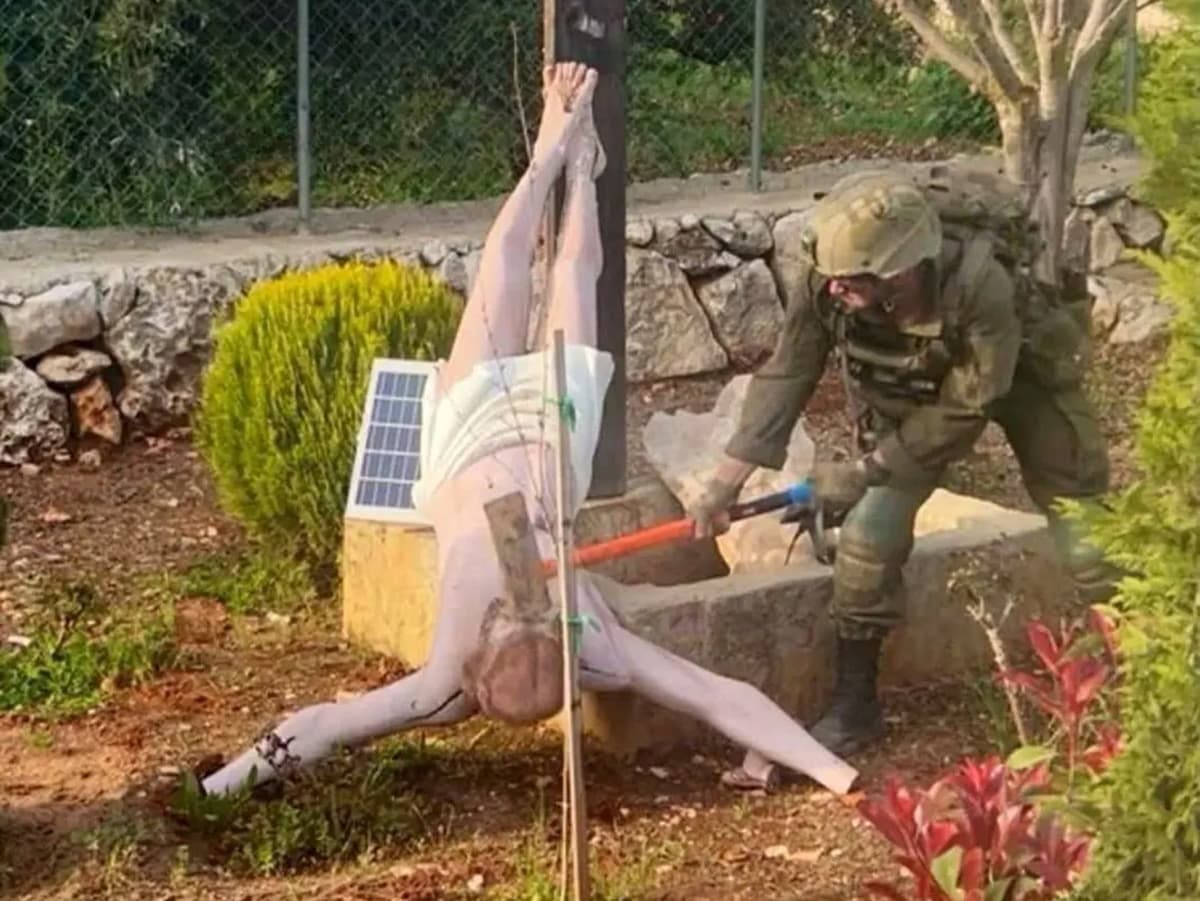
Christian communities in Israel face documented vandalism, harassment, and physical attacks from ultra-Orthodox and nationalist extremists, with authorities accused of systemic inaction — a pattern of persecution unfolding in the very land where the Church was born.
1 Peter 4:12-14
Direct Principle“Beloved, do not be surprised at the fiery trial when it comes upon you to test you, as though something strange were happening to you. But rejoice insofar as you share Christ's sufferings, that you may also rejoice and be glad when his glory is revealed. If you are insulted for the name of Christ, you are blessed, because the Spirit of glory and of God rests upon you.”
Why this passage
Peter wrote to dispersed believers — many of them in Asia Minor, living as minorities under social and religious pressure — with a pastoral theological principle: suffering for the name of Christ is neither aberrant nor purposeless. The phrase 'fiery trial' (pyrōsei) suggests a refining ordeal that tests the genuineness of faith.
The plain sense is that insult and attack directed at believers because of their identity in Christ carry a particular apostolic promise: the Spirit of glory rests upon such people.
This principle applies without reinterpretation to Christians in Israel who are attacked, vandalized against, and harassed specifically because of their Christian faith and the presence of Christian symbols — that is precisely what 'insulted for the name of Christ' denotes.
The apostle Peter warned the scattered Church: 'Do not be surprised at the fiery trial when it comes upon you to test you, as though something strange were happening to you' (1 Peter 4:12). That these trials fall upon believers in Jerusalem itself — where the Church was born in fire and the Spirit — is not strange to Scripture; it is a sobering echo of what the Lord's own people have always suffered in the land of promise.
Hear, O reader: the stones of Christendom's holiest soil are being defaced, and the shepherds of earthly authority are accused of looking away. Yet Peter does not call us to despair — he calls us to rejoice, that we share Christ's sufferings, and to pray for those who bear the weight of that sharing today.
Today's Prayer
Pray for Arab and Jewish Christian communities in Israel — that God would raise up just authorities who hold perpetrators accountable, grant boldness and peace to believers under harassment, and turn the hearts of those who persecute the Church in the very land where it was born.
Further Scripture
Additional passages that illuminate this event, each grounded in a distinct interpretive lens.
“If the world hates you, know that it has hated me before it hated you. If you were of the world, the world would love you as its own; but because you are not of the world, but I chose you out of the world, therefore the world hates you. Remember the word that I said to you: 'A servant is not greater than his master.' If they persecuted me, then they will persecute you also. If they kept my word, they will also keep yours.”
Why this passage
Christ speaks these words in the upper room, preparing his disciples for the hostility that will follow his departure. The principle is rooted in his own experience: the hatred directed at him — by religious authorities in Jerusalem, in the very city now at the center of this news — was the template for what his followers would face.
'A servant is not greater than his master' is a plain, transferable axiom with no ambiguity.
The specific geographic irony is not incidental: Jesus delivered this warning in Jerusalem, and the Christians now facing attack in Israel are suffering in the same city and land where Jesus was rejected and crucified by religious authorities who could not tolerate his witness.
How it applies
Ultra-Orthodox extremists attacking churches and Christian symbols in Israel are acting, whether consciously or not, in the pattern Christ explicitly predicted: the world that hated him will hate those who bear his name. This is not pessimism — it is the Lord's own sober preparation of his Church.
For believers in the Holy Land enduring these attacks, Christ's words are not cold comfort but warm certainty: their suffering is not accidental, their Lord was there first, and his vindication is the guarantee of theirs.
“When he opened the fifth seal, I saw under the altar the souls of those who had been slain for the word of God and for the witness they had borne. They cried out with a loud voice, 'O Sovereign Lord, holy and true, how long before you will judge and avenge our blood on those who dwell on the earth?' Then they were each given a white robe and told to rest a little longer, until the number of their fellow servants and their brothers should be complete, who were to be killed as they themselves had been.”
Why this passage
The fifth seal in Revelation 6 reveals the ongoing, accumulating testimony of those martyred for the Word of God throughout the age of the Church. John's vision — given to seven persecuted churches in Asia Minor — frames persistent suffering for the faith not as God's absence but as a numbered, sovereignly ordered reality: the count of witnesses is not yet complete.
The cry 'how long?' echoes Psalm 79:5 and the lament psalms, grounding it in Israel's own covenantal suffering-language; the promise of white robes assures vindication. Attacks on Christians in Israel — where authorities reportedly decline to prosecute — mirror the pattern of systemic impunity that makes the saints' cry in this passage so urgent.
How it applies
The documented pattern in Israel — perpetrators attacking Christian institutions with impunity, authorities accused of deliberate inaction — is precisely the condition that drives the cry of Revelation 6:10: justice deferred, the wicked unrestrained, the faithful asking 'how long?' The answer given in heaven is not silence but sovereign timing: God has numbered these witnesses, and their vindication is certain.
For the Church watching these events, this passage is both a warning against despair and a call to intercession — the Lord hears every cry rising from the land where the Church was born.
“Others suffered mocking and flogging, and even chains and imprisonment. They were stoned, they were sawn in two, they were killed with the sword. They went about in sheepskins and goatskins, destitute, afflicted, mistreated— of whom the world was not worthy— wandering about in deserts and mountains, and in dens and caves of the earth.”
Why this passage
The author of Hebrews catalogs the great cloud of witnesses — many of them from Israel's own history — who suffered precisely because they held to the word and promise of God when earthly powers would not protect them. The phrase 'of whom the world was not worthy' is the author's theological verdict on systemic injustice against the faithful: the failure of authorities to protect them is not merely a political problem but a moral indictment.
The parallel is structural: believers in Israel suffering documented abuse while authorities allegedly decline to prosecute mirrors the condition of those in Hebrews 11 who found no earthly advocate — yet whose suffering the Spirit of God recorded with honor and the promise of a better resurrection.
How it applies
Christian communities in Israel who find no justice from earthly authorities stand in the lineage of those Hebrews 11 names — believers for whom the world, including its governing structures, proved unworthy. Their vandalized churches and unanswered complaints are not forgotten in heaven; they are, in the author's word, recorded.
The passage calls the watching Church to honor these suffering witnesses as the 'great cloud' who run ahead of us, and to press on in intercession and solidarity rather than indifference.
Related by Scripture
Other events we've interpreted through the same passage or hermeneutical lens.
Systemic anti-Christian violence laid bare at public hearing in India
Persecution of ChristiansShares Revelation 6:9-11Hindu nationalists face scrutiny over persecution in India - Mission Network News
Persecution of ChristiansShares John 15:18-20Exclusive: Girl Kept from Church, Bible, and Christian Friends by Portland Judge Awaits Appeals Court Ruling
Persecution of ChristiansShares John 15:18-20St. Paul City Attorney Drops Charges Against Cities Church Invaders As Church Attorneys Blast The Decision
Persecution of ChristiansShares John 15:18-20Parliamentary group highlights plight of Christian YouTuber detained in Egypt
Persecution of ChristiansShares John 15:18-20
Community launching soon
Get the invite by email when the Watchman's Wall opens
Share this article
Source: Religion News Service— we link to the original for full context.