Hantavirus crops up on a cruise ship — what scientists are watching
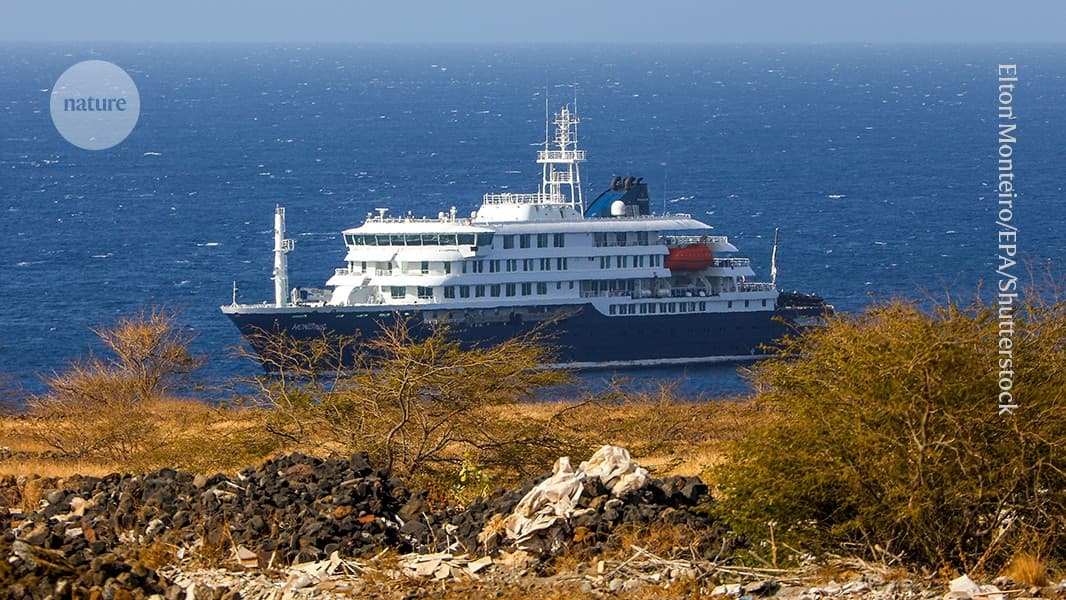
The appearance of hantavirus — a rodent-borne disease capable of causing severe illness and death in humans — aboard a cruise ship signals the ongoing emergence of zoonotic pestilences in unexpected settings, echoing biblical warnings of disease as a mark of the last days.
Luke 21:11
Prophetic Fulfillment“There will be great earthquakes, and in various places famines and pestilences. And there will be terrors and great signs from heaven.”
Why this passage
In Luke 21:11, Christ catalogues the birth-pangs of the age preceding His return, and 'pestilences' (Greek: loimoi) stands alongside earthquakes and famines as a recurring pattern — not a single event, but a class of events that increases in frequency and reach.
The plain grammatical-historical sense is that diverse, unpredictable disease outbreaks across 'various places' are among the signs the Church is to observe soberly. Hantavirus emerging in the enclosed, cosmopolitan context of a cruise ship — where containment is difficult and passengers disperse globally — illustrates precisely the kind of geographically diverse pestilence Christ described.
Historical context, theological significance, application today — denomination-neutral, ~1,000-word walk-through.
The prophet Ezekiel recorded that among the judgments upon a land would come 'pestilence and blood' (Ezekiel 38:22), and the Revelation likewise seals pestilence among the recurring sorrows of the age between the advents. That a rodent-borne hemorrhagic virus — rare, often lethal, and now appearing among hundreds of passengers at sea — emerges without warning reminds us that mankind's mastery over creation remains deeply limited.
The Sword of Gabriel does not call every outbreak an act of divine judgment, but Scripture is plain: disease is woven into the fabric of a fallen world, and its unpredictable surges are among the signs Christ bade us watch without fear. 'See that you are not alarmed,' He said, 'for these things must take place' (Matthew 24:6).
The hantavirus aboard that ship is a small but sober trumpet note in a long score Scripture has already written.
Today's Prayer
Pray that those exposed to hantavirus on the cruise ship receive swift medical care, and that God's people face every pestilence with the calm faith Christ commanded — trusting that not one sparrow, nor one life, falls outside His sovereign knowledge.
Further Scripture
Additional passages that illuminate this event, each grounded in a distinct interpretive lens.
“And I looked, and behold, a pale horse! And its rider's name was Death, and Hades followed him. And they were given authority over a fourth of the earth, to kill with sword and with famine and with pestilence and by wild beasts of the earth.”
Why this passage
The fourth seal of Revelation 6:8 depicts pestilence (Greek: thanatos, here used to encompass death-by-disease as in the LXX's rendering of deber) as a global-scale instrument operating alongside famine and violence. John's vision is eschatological and panoramic — it describes the character of the entire age of tribulation and its lead-up.
The verse's plain sense is that disease-causing agents operating through 'wild beasts of the earth' — a phrase commentators connect to zoonotic (animal-borne) transmission — will be a defining feature of the last days. Hantavirus is, by definition, a zoonotic virus transmitted from wild rodents, making this connection textually grounded rather than forced.
How it applies
The specific detail in Revelation 6:8 — that death comes 'by wild beasts of the earth' — has been credibly linked by scholars to zoonotic disease vectors, the precise category to which hantavirus belongs.
A rodent-borne hemorrhagic virus surfacing unexpectedly aboard a ship full of international travelers is a concrete instance of the kind of pestilence-by-wild-creature that Revelation's fourth seal places within the arc of the last days. This does not identify this outbreak as the seal itself, but it resonates unmistakably with its pattern.
“For thus says the Lord God: How much more when I send upon Jerusalem my four disastrous acts of judgment, sword, famine, wild animals, and pestilence, to cut off from it man and beast!”
Why this passage
Ezekiel 14:21 presents a covenantal framework in which pestilence is listed among four instruments God employs as judgment upon a land — a pattern drawn from Leviticus 26 and appearing repeatedly in the prophets. The principle is not confined to Jerusalem alone; Ezekiel applies it broadly to any nation or people.
The plain sense is that disease is never merely biological in Scripture's worldview — it operates within a moral and providential order. This does not require identifying any specific outbreak as direct punishment, but it establishes that pestilence is always a call to reflection and repentance, not merely a public-health problem.
How it applies
The emergence of hantavirus in the controlled, modern environment of a cruise ship — where human ingenuity has seemingly mastered nature — is a reminder that Ezekiel's fourfold judgment pattern remains a live framework.
Science rightly studies containment; Scripture rightly calls humanity to ask deeper questions about its relationship to the God who governs both rodents and viruses alike.
Related by Scripture
Other events we've interpreted through the same passage or hermeneutical lens.
Bird flu confirmed in South Australia as infected petrel brings deadly H5N1 cases to three
Pestilence & PlaguesShares Luke 21:11Anthony Albanese says Australia’s first mainland case of deadly H5N1 bird flu ‘concerning’
Pestilence & PlaguesShares Revelation 6:8The ‘earthquake gate’ stopping a San Andreas disaster is under its highest stress in 1,000 years
Earthquakes & Natural DisastersShares Luke 21:11Where the 'Big One' will hit... as underground stress reaches a 1,000-year high and earthquakes split the ground throughout the US: See America's 'time bombs'
Earthquakes & Natural DisastersShares Luke 21:11One dead, dozens injured after Indonesian quake
Earthquakes & Natural DisastersShares Luke 21:11
Community launching soon
Get the invite by email when the Watchman's Wall opens
Share this article
Source: Nature.com— we link to the original for full context.