Greek Catholic Churches in Belarus are Officially Liquidated
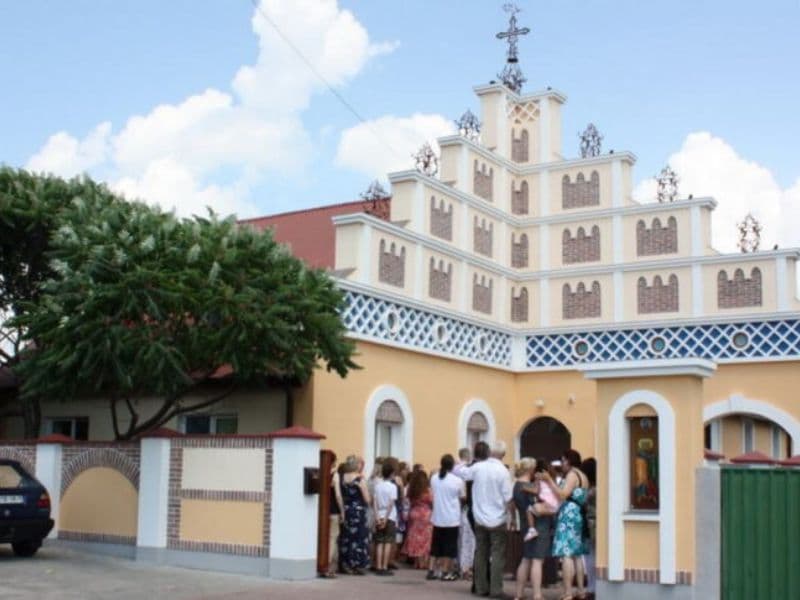
The Belarusian government has legally liquidated all Greek Catholic parishes using a re-registration law, with its Supreme Court rejecting the final appeal — erasing an entire Christian tradition from legal existence, a textbook example of state-sponsored religious persecution.
Revelation 2:9
Prophetic Fulfillment“I know your tribulation and your poverty (but you are rich) and the slander of those who say that they are Jews and are not, but are a synagogue of Satan.”
Why this passage
In the letter to Smyrna, Christ addresses a church under formal, legally-enforced marginalization — stripped of civic standing, economically impoverished, and slandered by those who weaponize religious identity claims against it. The original context was Roman imperial pressure combined with local Jewish denunciations that rendered Christians legally vulnerable.
The pattern Christ identifies is state-adjacent institutional power being used to delegitimize and erase a faithful community. Christ's response is not political strategy but the declaration: 'I know' — a sovereign awareness that the persecuted church is never invisible to him even when it is invisible to the state.
The prophet Amos declared that God 'does not do anything without revealing his secret to his servants the prophets' — and Scripture is equally clear that he does not overlook what is done to his people. When an entire Christian tradition is 'erased from legal existence' by bureaucratic decree, it echoes the pattern Amos identified in the nations surrounding Israel: systematic, institutional injustice dressed in the language of law.
The Greek Catholic communities of Belarus have not merely lost buildings or organizational status — they have been told by the state that they do not exist. Yet the God who sustains his Church through every imperial suppression from Rome to the Soviet Union remains the same.
The gates of hell — including the gates of a Supreme Court in Minsk — shall not prevail against it.
Today's Prayer
Pray for the Greek Catholic faithful in Belarus, that God would sustain their worship, preserve their pastors, and expose to the watching world the injustice of a government that erases Christ's church with a pen stroke.
Further Scripture
Additional passages that illuminate this event, each grounded in a distinct interpretive lens.
“Proclaim to the strongholds in Ashdod and to the strongholds in the land of Egypt, and say, 'Assemble yourselves on the mountains of Samaria, and see the great tumults within her, and the oppressed in her midst.' They do not know how to do right, declares the LORD, those who store up violence and robbery in their strongholds.”
Why this passage
Amos 3:9-10 indicts governing powers that institutionalize oppression — not merely through overt violence but through the structural 'storing up' of injustice within their own strongholds and legal apparatus. The rhetorical call for foreign nations to witness Samaria's internal moral disorder underscores that God holds governments accountable for systemic injustice against the vulnerable, regardless of whether it is dressed in legal language.
The phrase 'they do not know how to do right' describes a moral blindness produced by entrenched power, precisely what bureaucratic religious liquidation reflects.
How it applies
The Lukashenko government's use of a re-registration law to liquidate Greek Catholic parishes is exactly the kind of institutionalized injustice Amos condemns — violence stored up in the stronghold of a Supreme Court ruling. The oppressed in this case are not armed dissidents but worshipping communities whose only offense was failing to satisfy new administrative requirements designed to eliminate them.
God's declaration through Amos that such governments 'do not know how to do right' is a direct moral verdict on what Belarus has done.
“Nebuchadnezzar answered and said to them, 'Is it true, O Shadrach, Meshach, and Abednego, that you do not serve my gods or worship the golden image that I have set up? Now if you are ready when you hear the sound of the horn, pipe, lyre, trigon, harp, bagpipe, and every kind of music, to fall down and worship the image that I have set up, good. But if you do not worship, you shall immediately be cast into a burning fiery furnace. And who is the god who will deliver you out of my hands?'”
Why this passage
The Nebuchadnezzar narrative presents a paradigmatic case of a totalitarian state demanding religious conformity through formal legal ultimatum — comply with the state's religious structure or face institutional destruction. The decree is framed in procedural, administrative language ('when you hear the sound... you shall fall down') that masks coercion behind the appearance of legal order.
The actors are the same: an authoritarian ruler, a compliant legal system, and a religious minority whose existence is threatened not for violence but for worship that falls outside the state's approved framework.
How it applies
Belarus's re-registration law functions as a modern administrative version of Nebuchadnezzar's decree: conform to the state's approved religious structure (in this case, effectively the Russian Orthodox church-state framework) or face liquidation. The Greek Catholic parishes refused, not through armed resistance, but through continued existence as themselves — and the Belarusian Supreme Court played the role of the furnace, rendering a final verdict of elimination.
The parallel is structurally exact: compliance demanded, non-compliance punished through the full force of state legal mechanism.
“Indeed, all who desire to live a godly life in Christ Jesus will be persecuted.”
Why this passage
Paul's statement to Timothy is a universal, unqualified principle established within his broader warning about the character of the last days (2 Tim 3:1-13). The Greek word translated 'persecuted' (diōchthēsontai) carries the sense of being pursued, driven out, or harassed — not merely socially marginalized but actively hunted or suppressed.
Paul's point is that godly Christian life does not produce neutrality from surrounding powers but provokes active opposition, because the values of Christ's kingdom are fundamentally incompatible with the values of every earthly power structure.
How it applies
The liquidation of Greek Catholic parishes in Belarus is a direct institutional fulfillment of the principle Paul articulated: communities that 'desire to live a godly life in Christ Jesus' have been pursued and driven out through the machinery of the Belarusian legal system. The Supreme Court ruling is the formal instrument of that persecution.
This verse functions both as a warning that such events are not anomalies and as a pastoral anchor — the church in Belarus is not suffering because it has failed, but precisely because it has remained faithful.
Related by Scripture
Other events we've interpreted through the same passage or hermeneutical lens.
Community launching soon
Get the invite by email when the Watchman's Wall opens
Source: International Christian Concern— we link to the original for full context.