First Thing: ‘Impossible’ to reopen strait of Hormuz amid ‘flagrant’ ceasefire breaches, Iran says
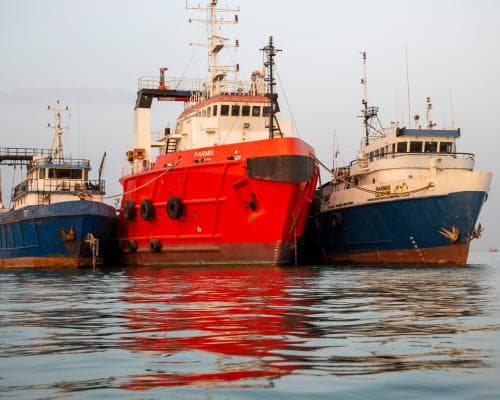
Iran has declared it impossible to reopen the Strait of Hormuz amid a volatile military standoff with the United States, with competing naval blockades and ceasefire accusations threatening global energy supplies — a pattern of escalating great-power conflict in the ancient Near East that Scripture repeatedly identifies as a sign of the age.
Isaiah 23:11
Direct Principle“He has stretched out his hand over the sea; he has shaken the kingdoms; the LORD has given command concerning Canaan to destroy its strongholds.”
Why this passage
Isaiah 23 is a burden against Tyre, the ancient maritime commercial superpower whose merchant ships dominated the sea lanes of the ancient world. The theological principle Isaiah articulates is that the LORD exercises sovereign command over sea-lanes and the kingdoms that control them — 'He has stretched out his hand over the sea; he has shaken the kingdoms.' The destruction of Tyre's commercial dominance was not random but a divine act against the pride of a nation that believed its control of maritime commerce made it unassailable.
That principle is not limited to Tyre; it is a standing declaration about who ultimately governs the world's critical waterways.
The prophet Joel warned that in the last days God would 'gather all the nations' to the valley of judgment, while 'the nations are in an uproar' over the peoples and their borders (Joel 3:2, 12). The Strait of Hormuz — a narrow passage through which a fifth of the world's oil flows — has become exactly such a chokepoint of national fury: Iran seizing ships, the United States maintaining counter-blockades, each accusing the other of breaking the peace.
What looks like a geopolitical crisis is, in the biblical frame, another episode in the long story of the nations positioning themselves against each other and, ultimately, against the Lord's sovereign order. The Christian can watch these events without panic, because the same God who declared the end from the beginning holds every naval vessel, every barrel of oil, and every negotiating table in His hand.
Today's Prayer
Pray that God's restraining hand would prevent this naval standoff from igniting a wider war, and that leaders on every side would fear the Lord more than they fear each other.
Further Scripture
Additional passages that illuminate this event, each grounded in a distinct interpretive lens.
“And I will turn you about and put hooks into your jaws, and I will lead you out, and all your army, horses and horsemen, all of them clothed in full armor, a great host, all of them with buckler and shield, wielding swords.”
Why this passage
Ezekiel 38-39 describes an end-times coalition led by 'Gog of the land of Magog' moving against Israel, with Persia (Ezekiel 38:5, Hebrew 'Paras') explicitly named among the allied forces. The identification of Paras with ancient and modern Persia (Iran) is the most linguistically direct of all the coalition members — it is not disputed that Paras equals Persia.
The image of God putting 'hooks into the jaws' of this great power and drawing it into a military campaign captures the prophetic idea that Iran's military aggression in the region — however self-motivated — is being sovereignly guided toward a predicted eschatological showdown. This is a possibility the text warrants raising, not a certainty.
How it applies
Iran is the direct linguistic descendant of Ezekiel's 'Paras,' and its current military aggression — seizing ships, closing a global sea-lane, confronting the world's leading naval power — represents an escalation of exactly the regional belligerence Ezekiel 38 associates with Iran in the last-days scenario. While this standoff is not the Gog-Magog war itself, it shows Iran continuing to position itself as a militarily aggressive power in the precise theater Ezekiel describes, consistent with the prophetic trajectory.
“I will gather all the nations and bring them down to the Valley of Jehoshaphat. And I will enter into judgment with them there, on behalf of my people and my heritage Israel, because they have scattered them among the nations and have divided up my land,”
Why this passage
Joel 3 (Hebrew 4) presents a final-days scenario in which the Lord summons the nations to account in the Valley of Jehoshaphat — a name meaning 'the LORD judges.' The original near-horizon addressed the nations that had sold Judah into captivity; the far horizon, confirmed by the NT's use of Joel (Acts 2), points to an eschatological gathering and judgment of the nations around the land of Israel. The Strait of Hormuz sits at the maritime doorway to the Persian Gulf — the very theater where ancient Persia (modern Iran) and the great sea-powers have historically collided.
The gathering of naval forces in that corridor directly east of Israel fits the pattern of nations maneuvering toward a confrontation zone adjacent to the biblical epicenter.
How it applies
Iran and the United States are currently positioning competing naval forces in a chokepoint that directly affects global commerce and Middle Eastern stability. This mirrors the prophetic image of nations being 'brought down' — drawn by their own ambitions — into a theater of confrontation near Israel's immediate region.
Whether or not this is the ultimate fulfillment, it fits the pattern Joel describes: nations in armed standoff over resources and power in the ancient Near Eastern corridor.
“For behold, I am raising up the Chaldeans, that bitter and hasty nation, who march through the breadth of the earth, to seize dwellings not their own.”
Why this passage
Habakkuk describes the LORD permitting a powerful, aggressive nation — Babylon — to 'seize dwellings not their own,' capturing ships, peoples, and territories as an instrument of divine judgment and geopolitical upheaval. The structural pattern is: a nation of notorious aggression uses military force to seize what belongs to others on international waters and trade routes.
This is not an identification of Iran as Babylon, but a genuine structural parallel: a state using armed power to seize commercial vessels in international waters, disrupting the commerce of nations, exactly as Babylon swept through the ancient Near East seizing what was not theirs.
How it applies
Iran's seizure of commercial ships in the Strait of Hormuz — vessels that are not Iranian territory and whose cargoes are not Iran's to take — mirrors the pattern Habakkuk describes: a nation marching through its region of influence, seizing what does not belong to it. The prophet's point was that such aggression, even when God permits it as judgment, does not go unanswered.
Habakkuk's lament and God's response remind believers that lawless seizure of others' property on the high seas sits within God's sight and sovereign reckoning.
Related by Scripture
Other events we've interpreted through the same passage or hermeneutical lens.
Park Slope Food Coop votes for Israel boycott
Moral DeclineShares Joel 3:2Fearing it would cause hostility, Sydney cancels controversial ‘Globalize the intifada’ forum
Moral DeclineShares Joel 3:2Czech court hands 7-year prison term to man over attempted synagogue arson attack
Israel & JerusalemShares Joel 3:2Hormuz crisis spurs $24B Iraq trade corridor as Gulf routes shift
Rise of the EastShares Isaiah 23:11Lebanon looks to Trump for ‘leverage over Israel’ with ceasefire set to expire
Israel & JerusalemShares Joel 3:2
Community launching soon
Get the invite by email when the Watchman's Wall opens
Share this article
Source: The Guardian— we link to the original for full context.