Explosion at China fireworks factory kills 26 people
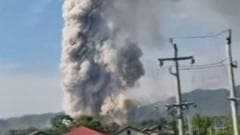
A catastrophic explosion at a fireworks factory in Hunan, China has killed 26 and injured 61, a sudden disaster laying bare the fragility of human life and the unpredictable nature of calamity that Scripture consistently associates with the groaning of a fallen world.
Luke 13:4-5
Narrative Parallel“Or those eighteen on whom the tower in Siloam fell and killed them: do you think that they were worse offenders than all the others who lived in Jerusalem? No, I tell you; but unless you repent, you will all likewise perish.”
Why this passage
Jesus directly addresses the question of sudden, structural disaster claiming lives — the tower of Siloam — and refuses to interpret it as divine punishment specifically targeting those victims above others. Instead, He turns the disaster into a universal summons to repentance for all who hear of it.
The parallel pattern is exact: sudden, unexpected industrial disaster; mass casualties; bystanders tempted to explain or explain away the deaths. Jesus' response establishes the normative pastoral interpretation of such events.
The Teacher declared in Ecclesiastes 9:12, 'For man does not know his time. Like fish that are taken in an evil net, and like birds that are caught in a snare, so the children of man are snared at an evil time, when it suddenly falls upon them.' In Hunan province, twenty-six souls went to work in a fireworks factory and never returned — a stark and sudden reminder that no day is guaranteed and no occupation is without the shadow of mortality.
Scripture does not offer easy answers to industrial tragedy, but it does speak plainly: the hour of calamity is unknown to us. These deaths call every reader to number their own days wisely, to hold loosely to this present life, and to ensure their standing before the God who holds time itself.
Today's Prayer
Pray for the families of the 26 killed and 61 injured in Hunan, that in their grief they would encounter the God who sees every sparrow fall, and pray that this tragedy would prompt Chinese authorities to safeguard the lives of workers who labor under dangerous conditions.
Further Scripture
Additional passages that illuminate this event, each grounded in a distinct interpretive lens.
“For man does not know his time. Like fish that are taken in an evil net, and like birds that are caught in a snare, so the children of man are snared at an evil time, when it suddenly falls upon them.”
Why this passage
Qohelet writes in the context of observing that the race does not always go to the swift, nor battle to the strong — chance and sudden calamity overtake the living without warning. The 'evil time' here is not morally evil but adversely calamitous: a moment of disaster that arrives without announcement.
The plain grammatical-historical sense is that human beings, for all their planning, are vulnerable to sudden catastrophe entirely outside their control. This principle requires no reinterpretation to apply — it is a universal observation about the condition of mortal life.
How it applies
Workers at a fireworks factory in Hunan had no foreknowledge of the explosion that would claim 26 of their colleagues. The snare fell suddenly, as Qohelet described millennia ago.
This event is a concrete, modern instance of the ancient wisdom: life is precarious, the hour of calamity is hidden, and the prudent response is not fatalism but the fear of God — numbering our days and holding eternity in view.
“So teach us to number our days that we may get a heart of wisdom.”
Why this passage
Moses' prayer in Psalm 90 is set against the backdrop of God's eternity and human transience — a thousand years are as a watch in the night, and human life returns to dust. The petition to 'number our days' is grounded in the reality that death is nearer and more unpredictable than human beings naturally reckon.
The wisdom sought here is not morbid fatalism but a reordered set of priorities: knowing life is brief, one applies the heart to what is eternally significant.
How it applies
Twenty-six workers in Hunan numbered far fewer days than any of them anticipated when they arrived for their shift. For those who survive and hear of this event, Moses' ancient prayer becomes urgently relevant.
To 'get a heart of wisdom' in the face of such news means more than lamenting industrial safety failures — it means asking, before God, how one is investing the unknown and finite number of days still remaining.
Related by Scripture
Other events we've interpreted through the same passage or hermeneutical lens.
Community launching soon
Get the invite by email when the Watchman's Wall opens
Share this article
Source: bbc— we link to the original for full context.