Demolition of Monastery Highlights Strain on Christians in the Middle East
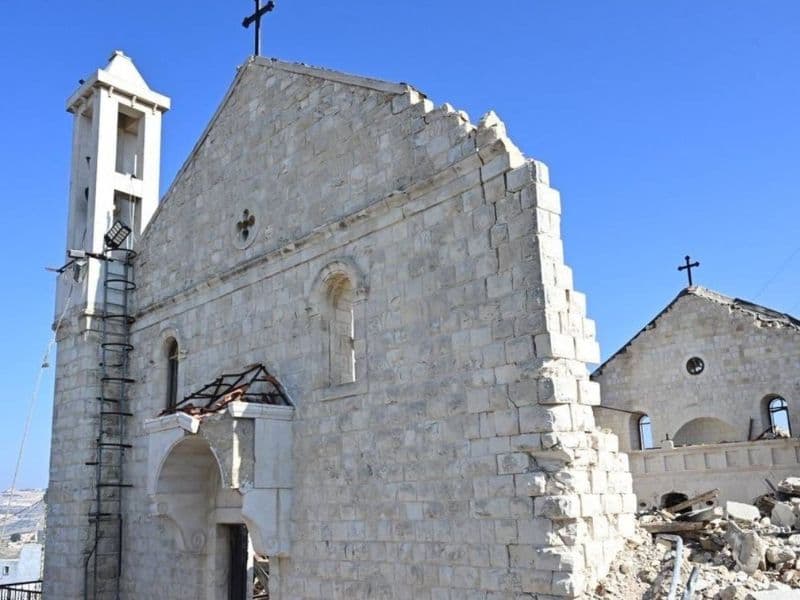
The Israeli military's demolition of a Catholic monastery and nuns' school in southern Lebanon exemplifies the ongoing persecution and strain on Christian communities in the Middle East, fulfilling Scripture's warning that believers will face tribulation for their faith.
John 15:18-20
Direct Principle“If the world hates you, know that it has hated me before it hated you. If you were of the world, the world would love you as its own; but because you are not of the world, but I chose you out of the world, therefore the world hates you. Remember the word that I said to you: 'A servant is not greater than his master.' If they persecuted me, they will also persecute you. If they kept my word, they will also keep yours.”
Why this passage
In John 15, Jesus prepares His disciples for the hostility they will face after His departure. The context is the Upper Room Discourse, where He contrasts the world's love for its own with its hatred for those whom He has chosen.
The principle is clear: persecution is not an anomaly but an expected consequence of belonging to Christ.
The demolition of a Catholic monastery and school in southern Lebanon—institutions dedicated to Christian education and worship—fits this pattern precisely. The act is not random violence but a targeted strike against a symbol of Christian presence, echoing the world's rejection of Christ Himself.
Historical context, theological significance, application today — denomination-neutral, ~1,000-word walk-through.
Behold, the demolition of a monastery in Lebanon is not merely a political act—it is a stark reminder that the world often opposes the household of faith. As Christ declared, 'If they persecuted me, they will also persecute you' (John 15:20).
This event calls the Church to sober vigilance. The stones of that school may fall, but the living stones of Christ's body cannot be shaken.
Let us pray for our brothers and sisters who bear this cross, knowing that their labor in the Lord is not in vain.
Today's Prayer
Pray for the Christians in southern Lebanon and across the Middle East, that God would strengthen their faith, protect their communities, and grant them perseverance amid the destruction of their sacred sites.
Further Scripture
Additional passages that illuminate this event, each grounded in a distinct interpretive lens.
“Then they will deliver you up to tribulation and put you to death, and you will be hated by all nations for my name's sake.”
Why this passage
In the Olivet Discourse, Jesus describes the signs of the end of the age, including the persecution of His followers. The phrase 'hated by all nations' indicates a universal scope, but the principle applies particularly where Christians are a minority facing state or military hostility.
The original audience understood this as a warning of coming tribulation, which the early church experienced under Roman and Jewish authorities.
The demolition of a Catholic monastery by the Israeli military in Lebanon—a nation where Christians have long been a significant but pressured community—echoes this prophecy. The act is not merely a military operation but a manifestation of hatred against Christ's name, targeting His people and their institutions.
How it applies
The destruction of this monastery and school in southern Lebanon is a concrete instance of the tribulation Jesus foretold. Christian leaders' renewed alarm reflects the ongoing reality that believers are 'hated for my name's sake.' This event should remind the global Church that persecution is not a distant possibility but a present reality for many, and it calls for prayer and solidarity.
“Beloved, do not be surprised at the fiery trial when it comes upon you to test you, as though something strange were happening to you. But rejoice insofar as you share Christ's sufferings, that you may also rejoice and be glad when his glory is revealed. If you are insulted for the name of Christ, you are blessed, because the Spirit of glory and of God rests upon you.”
Why this passage
Peter writes to scattered Christians facing social ostracism and persecution in Asia Minor. He reframes suffering as a participation in Christ's own sufferings and a cause for blessing, not shame.
The principle is that persecution for faith is normative, not exceptional, and carries a divine purpose.
The demolition of a monastery—a place of worship and education—is a 'fiery trial' for the local Christian community. Peter's exhortation not to be 'surprised' directly counters any assumption that such events are strange or accidental.
They are part of the pattern of Christian witness.
How it applies
For the Christians in southern Lebanon, the loss of their monastery and school is a fiery trial that tests their faith. Yet Peter calls them to see it as sharing in Christ's sufferings, a mark of blessing.
This event should not lead to despair but to a deeper reliance on the Spirit, who rests upon those who are insulted for Christ's name.
Related by Scripture
Other events we've interpreted through the same passage or hermeneutical lens.
Religious restrictions in the 25 most populous countries in 2023
Persecution of ChristiansShares Matthew 24:9Harassment of religious groups around the world in 2023
Persecution of ChristiansShares Matthew 24:9Catholic leaders across Africa, Vatican mourn slain Mozambique bishop, call for justice
Persecution of ChristiansShares Matthew 24:9Hindu nationalists face scrutiny over persecution in India - Mission Network News
Persecution of ChristiansShares John 15:18-20Exclusive: Girl Kept from Church, Bible, and Christian Friends by Portland Judge Awaits Appeals Court Ruling
Persecution of ChristiansShares John 15:18-20
Community launching soon
Get the invite by email when the Watchman's Wall opens
Share this article
Source: persecution— we link to the original for full context.