Cruise ship waiting for help off Cape Verde amid suspected deadly hantavirus outbreak
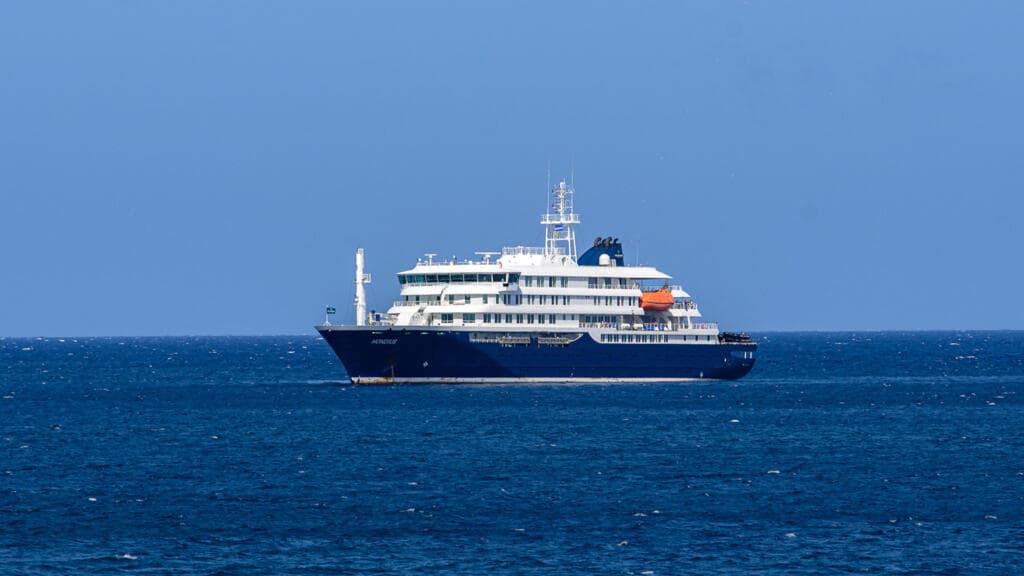
A suspected hantavirus outbreak aboard a Dutch cruise ship off Cape Verde has killed three passengers and left others critically ill, with international health authorities scrambling to respond — a stark emblem of the pestilence Jesus warned would mark the last days.
Luke 21:11
Prophetic Fulfillment“There will be great earthquakes, and in various places famines and pestilences. And there will be terrors and great signs from heaven.”
Why this passage
In the Olivet Discourse, Jesus surveyed the entire inter-advent age and named pestilences (Greek: loimoi — plagues, deadly diseases) as one of the recurring birth-pang signs preceding His return. The phrase 'in various places' (kata topous) is significant: it signals outbreaks of scattered, unpredictable geographic occurrence rather than a single centralized epidemic.
The plain grammatical-historical sense is a warning that epidemic disease will mark the age between Christ's ascension and His coming — not a single once-for-all fulfillment but a pattern whose intensity escalates. Every genuine outbreak, especially one that crosses national boundaries and causes sudden death among confined populations, echoes what the Lord described.
Historical context, theological significance, application today — denomination-neutral, ~1,000-word walk-through.
Luke 21:11 declares that 'there will be great earthquakes, and in various places famines and pestilences.' The word rendered 'pestilences' in the Greek (loimoi) carries the full weight of sudden, lethal outbreak — precisely what has struck this vessel adrift off the African coast, where death has moved swiftly among 149 souls of 23 nations.
The ship's isolation on open water is a vivid image of humanity's helplessness before disease that no passport or nationality can stop. The herald's call is not to fear, but to readiness — for Christ's own voice warned that such things must come, and they are not the end but the beginning of the birth pains (Luke 21:9).
Today's Prayer
Pray for the passengers and crew aboard this stricken vessel — that the Lord of life would stay the spread of disease, comfort the dying and grieving, and grant wisdom to every physician and health authority responding to this outbreak.
Further Scripture
Additional passages that illuminate this event, each grounded in a distinct interpretive lens.
“For thus says the Lord God: How much more when I send upon Jerusalem my four disastrous acts of judgment, sword, famine, wild animals, and pestilence, to cut off from it man and beast!”
Why this passage
Ezekiel 14 establishes a foundational covenantal pattern: God employs pestilence as one of four instruments of divine judgment against human sin and faithlessness. The principle here is not limited to Jerusalem in the sixth century BC — throughout Scripture, pestilence functions as a recurrent covenant sanction revealing both the fragility of human life and the sovereignty of God over it.
The theological principle operative in this text is that lethal disease is never merely natural — it exists within God's providential governance and serves as a summons to repentance among those who witness it.
How it applies
The sudden appearance of hantavirus aboard an isolated ship, killing passengers from 23 nations without warning, illustrates the pattern Ezekiel names: pestilence arrives swiftly, beyond human anticipation or control, cutting off life with little resistance from those it strikes.
Whether or not this specific outbreak is divine judgment, Scripture's consistent witness is that such events are a call to sobriety and prayer — a reminder that the breath of every living creature is held in God's hand (Job 12:10).
“And I looked, and behold, a pale horse! And its rider's name was Death, and Hades followed him. And they were given authority over a fourth of the earth, to kill with sword and with famine and with pestilence and by wild beasts of the earth.”
Why this passage
The fourth seal of Revelation presents Death riding a pale (Greek: chloros — sickly green) horse, with authority to kill by pestilence (Greek: thanatos used here in the sense of plague/death by disease). John draws directly on Ezekiel's four-fold judgment schema, applying it to a cosmic scale at the end of the age.
While the full fourth-seal judgment is eschatologically future, the seal imagery signals a pattern — pestilence as an agent of death across populations — that Scripture presents as characteristic of the last days. Present outbreaks are not the final fulfillment but inhabit the same prophetic trajectory.
How it applies
An outbreak that kills passengers at sea, spanning 23 nationalities, with health authorities unable to contain it aboard a vessel held in isolation, carries the same quality of sudden, multi-national death the Revelation vision describes.
This event does not fulfill the fourth seal — but it stands on the same prophetic road: pestilence moving freely across borders, indifferent to human authority, demanding acknowledgment of a sovereignty above that of governments and health organizations.
Related by Scripture
Other events we've interpreted through the same passage or hermeneutical lens.
Bird flu confirmed in South Australia as infected petrel brings deadly H5N1 cases to three
Pestilence & PlaguesShares Luke 21:11Anthony Albanese says Australia’s first mainland case of deadly H5N1 bird flu ‘concerning’
Pestilence & PlaguesShares Revelation 6:8The ‘earthquake gate’ stopping a San Andreas disaster is under its highest stress in 1,000 years
Earthquakes & Natural DisastersShares Luke 21:11Where the 'Big One' will hit... as underground stress reaches a 1,000-year high and earthquakes split the ground throughout the US: See America's 'time bombs'
Earthquakes & Natural DisastersShares Luke 21:11One dead, dozens injured after Indonesian quake
Earthquakes & Natural DisastersShares Luke 21:11
Community launching soon
Get the invite by email when the Watchman's Wall opens
Share this article
Source: © AFP— we link to the original for full context.