Canary Islands bishop on migration: ‘We feel powerless’
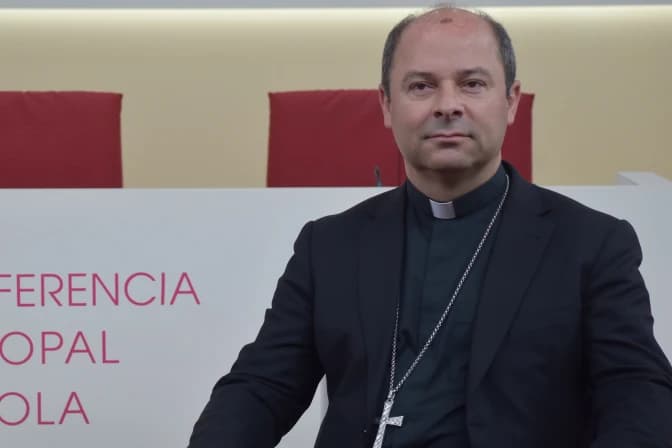
Bishops in the Canary Islands describe a humanitarian crisis as African migrants arrive by sea in overwhelming numbers, with political systems failing to respond — a situation Scripture directly judges through its consistent command to defend the sojourner and the poor.
Zechariah 7:9-10
Direct Principle“Thus says the LORD of hosts, Render true judgments, show kindness and mercy to one another, do not oppress the widow, the fatherless, the sojourner, or the poor, and let none of you devise evil against another in your heart.”
Why this passage
God spoke these words through Zechariah to a post-exilic Israel that had grown comfortable in religious ritual while neglecting the vulnerable at their gates. The fourfold list — widow, fatherless, sojourner, poor — is not incidental; it is the Old Testament's standard shorthand for those without legal standing or social protection.
The command is covenantal: Israel's fidelity to God was measured not only in temple worship but in how they treated those with no one to plead their cause. This principle does not expire with the Old Covenant; the New Testament confirms it repeatedly (James 1:27), and it stands as a direct judgment upon any society — or church — that watches the vulnerable perish and calls it someone else's problem.
The prophet Zechariah records the very words of God: 'Do not oppress the widow, the fatherless, the sojourner, or the poor, and let none of you devise evil against another in your heart.' The bishop's cry of powerlessness echoes across centuries — for when systems fail the vulnerable, it is not merely a political failure but a spiritual one.
The Church in the Canary Islands stands at the literal edge of a crisis, receiving those whom the world's structures have left without a voice. Scripture does not grant governments a pass when the sojourner drowns at the gate; it calls the covenant community to be the first to act and the loudest to speak.
Today's Prayer
Pray that governments and churches alike would hear the bishops' cry and respond to African migrants arriving at the Canary Islands with both justice and mercy, neither turning away the vulnerable nor falling silent in the face of systemic failure.
Further Scripture
Additional passages that illuminate this event, each grounded in a distinct interpretive lens.
“Is not this the fast that I choose: to loose the bonds of wickedness, to undo the straps of the yoke, to let the oppressed go free, and to break every yoke? Is it not to share your bread with the hungry and bring the homeless poor into your house; when you see the naked, to cover him, and not to hide yourself from your own flesh?”
Why this passage
Isaiah 58 is God's rebuke of a people who performed elaborate religious fasts while their economic and political structures crushed the vulnerable. The phrase 'not to hide yourself from your own flesh' is striking: God treats the hungry stranger as kin, as 'flesh,' and commands that the same instinct that protects one's family be extended to them.
This is not a general charity principle but a covenant indictment: God will not honor the worship of a community that turns its face from the destitute at its borders. The verse's application is not limited to ancient Israel — the apostles and the early church read Isaiah as directly applicable to the life of the covenant community in every age.
How it applies
The bishops of the Canary Islands are doing precisely what Isaiah calls for — refusing to 'hide themselves' from those arriving broken and hungry at Europe's southern threshold.
The failure Isaiah indicts, however, is not merely individual but systemic: it is the political will to look away, to manage rather than respond, to perform the rituals of humanitarian language while the boats keep arriving and the people keep dying. Scripture names this a fast God does not accept.
“Open your mouth for the mute, for the rights of all who are destitute. Open your mouth, judge righteously, defend the poor and needy.”
Why this passage
Proverbs 31:8-9 belongs to the instruction of King Lemuel's mother — royal wisdom concerning the primary duty of those with authority and platform. To 'open your mouth for the mute' acknowledges that the poor and destitute are structurally silenced; they cannot advocate for themselves before the powers that determine their fate.
This is wisdom literature's clearest statement that silence in the face of injustice is itself a moral failure, not a neutral position. Those with voice — whether bishops, journalists, or politicians — are held accountable for whether they use it.
How it applies
The Canary Islands bishops are fulfilling exactly this proverb by refusing silence — 'opening their mouths' on behalf of migrants who have no political standing in Europe and no means of self-advocacy.
The deeper indictment of Proverbs 31 falls on those with authority who do not speak: the political systems the bishop says are 'failing to respond' stand condemned by wisdom's oldest counsel. Righteousness, Scripture insists, is not a passive virtue.
“Behold, this was the guilt of your sister Sodom: she and her daughters had pride, excess of food, and prosperous ease, but did not aid the poor and needy.”
Why this passage
Ezekiel 16:49 delivers a startling reinterpretation of Sodom's famous judgment: God names her primary guilt not as sexual sin but as the refusal of a prosperous society to 'aid the poor and needy.' The structural parallel is striking — a wealthy region at the edge of a poorer world, confronted with desperate people, choosing comfortable inaction.
This does not require allegorizing modern Europe as 'Sodom' — rather, it reveals a recurring pattern in human history that God has already named and already judged. Prosperous societies that turn from the poor repeat the pattern Scripture has already condemned.
How it applies
The Canary Islands sit at the prosperous edge of Europe, a region of 'excess of food and prosperous ease' by global standards, confronted by the destitute arriving from the African continent.
Ezekiel's oracle does not permit comfortable neutrality: the bishops' sense of powerlessness is a prophetic alarm, and Ezekiel's word stands as a warning to any society that responds to such a crisis with indifference rather than aid.
Related by Scripture
Other events we've interpreted through the same passage or hermeneutical lens.
Community launching soon
Get the invite by email when the Watchman's Wall opens
Share this article
Source: Catholic News Agency— we link to the original for full context.