Bishop urges Christians in Nigeria to speak ‘the language of Pentecost’ amid insecurity
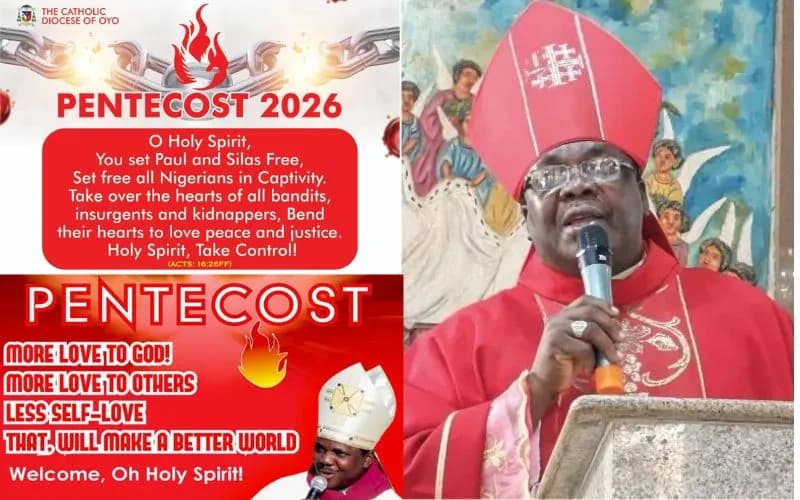
A Nigerian bishop calls Christians to speak 'the language of Pentecost'—the Holy Spirit's power—amid rampant violence and kidnapping, exemplifying faith in action under persecution.
Acts 1:8
Direct Principle“But you will receive power when the Holy Spirit has come upon you, and you will be my witnesses in Jerusalem and in all Judea and Samaria, and to the end of the earth.”
Why this passage
In its original context, Acts 1:8 is Christ's promise to the apostles just before His ascension, assuring them that the Holy Spirit would empower their global witness. The verse establishes a permanent principle: the Spirit's power is given not for comfort alone but for bold testimony in hostile environments.
This principle applies directly to every generation of believers facing opposition. The 'power' (Greek: dynamis) is the same supernatural enablement that turned fearful disciples into fearless martyrs and missionaries.
Historical context, theological significance, application today — denomination-neutral, ~1,000-word walk-through.
Behold, the Spirit of the Lord is not a distant promise but a present power for those who call upon Him. As Bishop Badejo urges, 'the language of Pentecost' is the language of bold witness and divine protection in the face of hatred.
When violence surrounds, the believer's first recourse is not fear but the Comforter. Acts 1:8 declares, 'you will receive power when the Holy Spirit has come upon you, and you will be my witnesses.' This is the same power that emboldens the persecuted church today.
Today's Prayer
Pray that Christians in Nigeria and worldwide would be filled afresh with the Holy Spirit's power to stand firm, witness boldly, and love their enemies amid persecution.
Further Scripture
Additional passages that illuminate this event, each grounded in a distinct interpretive lens.
“For God gave us a spirit not of fear but of power and love and self-control.”
Why this passage
Paul writes to Timothy from prison, encouraging him not to be ashamed of the gospel or of Paul's chains. The verse contrasts the spirit of fear (which is not from God) with the Spirit's gifts: power, love, and sound judgment (self-control).
This is a timeless principle for believers facing intimidation.
The original audience—Timothy, a young pastor in Ephesus facing opposition—mirrors the situation of Nigerian Christians today. The verse directly addresses the temptation to shrink back when threatened.
How it applies
Bishop Badejo's Pentecost message directly counters the spirit of fear that violence and kidnapping aim to produce. By urging Christians to invoke the Holy Spirit, he applies 2 Timothy 1:7: the Spirit God gives is not one of cowardice but of power to endure, love to forgive enemies, and self-control to respond wisely.
This is not mere positive thinking but a Spirit-empowered refusal to let terror dictate the church's witness.
“And now, Lord, look upon their threats and grant to your servants to continue to speak your word with all boldness, while you stretch out your hand to heal, and signs and wonders are performed through the name of your holy servant Jesus. And when they had prayed, the place in which they were gathered together was shaken, and they were all filled with the Holy Spirit and continued to speak the word of God with boldness.”
Why this passage
In Acts 4, the apostles face threats from the Sanhedrin after healing a lame man. They do not pray for removal of danger but for boldness to speak God's word despite it.
The result is a fresh filling of the Holy Spirit and continued fearless witness.
This narrative establishes a pattern for the persecuted church: when threatened, pray not for escape but for Spirit-empowered boldness. The parallel to Nigerian Christians facing violence is structurally exact—threats, prayer, and Spirit-filled witness.
How it applies
Bishop Badejo's Pentecost message mirrors the apostolic prayer in Acts 4. He does not call for political deliverance or military protection as the primary response but for the Holy Spirit's power to speak boldly in the face of threats.
The 'language of Pentecost' is precisely this: the same Spirit who emboldened the apostles to preach despite imprisonment and death threats is available to Nigerian Christians today. The bishop's call is a practical application of the Acts 4 pattern.
Related by Scripture
Other events we've interpreted through the same passage or hermeneutical lens.
Community launching soon
Get the invite by email when the Watchman's Wall opens
Share this article
Source: ewtnnews— we link to the original for full context.