ASEAN weighs control of vital Strait of Malacca amid global trade tensions | Flipboard
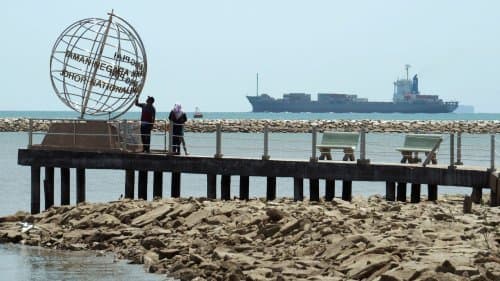
ASEAN leaders are weighing collective control of the Strait of Malacca — one of the world's most critical shipping chokepoints — amid escalating global trade tensions, signaling a reshaping of the international order over who governs the arteries of global commerce.
Job 12:23
Direct Principle“He makes nations great, and he destroys them; he enlarges nations, and leads them away.”
Why this passage
Job 12:23 is not a prophecy but a wisdom declaration about the covenantal reality that God, not human coalitions, is the ultimate sovereign over which nations rise to control the earth's resources and pathways. The original context is Job's rebuke of his friends' theological complacency — affirming that history's turns are in God's hand, not man's cleverness.
This principle directly addresses any summit of nations assembling to adjudicate control over global trade infrastructure: their deliberations occur entirely within the space God permits.
The prophet Daniel declared that in the last days 'many shall run to and fro, and knowledge shall increase' (Daniel 12:4), but Scripture also warns that the nations would contend for dominion over the earth's pathways — and that no human coalition can secure what only God governs.
The Strait of Malacca carries roughly a third of global trade. That nations now openly contest its governance is a sobering reminder that every artery of human commerce sits beneath the sovereign hand of the One who 'makes nations great, and he destroys them; he enlarges nations, and leads them away' (Job 12:23).
Let the believer watch these alignments with sober eyes, not anxious ones.
Today's Prayer
Pray that God's people remain anchored in His sovereignty as the nations contend over the powers and pathways of earthly commerce, and that the Church bears witness to the Kingdom that cannot be shaken.
Further Scripture
Additional passages that illuminate this event, each grounded in a distinct interpretive lens.
“And the merchants of the earth weep and mourn for her, since no one buys their cargo anymore, cargo of gold, silver, jewels, pearls, fine linen, purple cloth, silk, scarlet cloth, all kinds of scented wood, all kinds of articles of ivory, all kinds of articles of costly wood, bronze, iron and marble, cinnamon, spice, incense, myrrh, frankincense, wine, oil, fine flour, wheat, cattle and sheep, horses and chariots, and slaves, that is, human souls.”
Why this passage
Revelation 18 depicts the collapse of 'Babylon the Great' — a global commercial system whose tentacles reach every sea-lane and marketplace of the earth. John's vision is saturated with the language of maritime trade: merchants, cargo, ships (v.17-19), sea captains lamenting the loss of the system that enriched them.
The original vision addressed Rome's commercial empire, but the far horizon is an end-times global trade architecture whose disruption brings worldwide economic grief. The specific goods listed (spices, silk, ivory) trace the very trade routes that pass through the Strait of Malacca — the ancient and modern link between East and West.
How it applies
The nations of ASEAN contending over the Malacca Strait are, in effect, contending over one of the physical arteries of the very global commercial order Revelation 18 describes and mourns.
When Scripture pictures the merchants of the earth weeping over disrupted cargo, it presupposes a world whose trade is concentrated through narrow, contestable chokepoints — precisely the architecture now in geopolitical play.
“At the time of the end, the king of the south shall attack him, but the king of the north shall rush upon him like a whirlwind, with chariots and horsemen, and with many ships. He shall come into countries and shall overflow and pass through.”
Why this passage
Daniel 11 describes end-times geopolitical conflict explicitly involving naval power — 'many ships' — and the contest for strategic geographic passage between rival blocs. The original near-horizon referent was Seleucid-Ptolemaic conflict, but the far horizon (v.40, 'the time of the end') describes a global pattern of rival powers contending for control of strategic corridors by land and sea.
The Strait of Malacca is precisely such a corridor — a narrow geographic chokepoint through which the economic power of nations flows. The contest between Eastern blocs (ASEAN, China, Indo-Pacific powers) for dominance over it echoes the prophetic pattern of end-times rivalry over strategic passage.
How it applies
ASEAN's deliberation over who controls the Malacca Strait represents exactly the kind of geopolitical maneuvering Daniel foresaw: rival powers contending for the arteries through which nations project economic and military reach.
As US-China tensions reshape global trade architecture, the prophetic picture of nations arrayed in blocs contending for dominance — including naval dominance — becomes increasingly concrete.
Related by Scripture
Other events we've interpreted through the same passage or hermeneutical lens.
Community launching soon
Get the invite by email when the Watchman's Wall opens
Share this article
Source: Css-; Object-Fitcover; Border-Radius; Border; 0— we link to the original for full context.