2 IDF Soldiers Jailed for Involvement in Smashing Jesus Statue
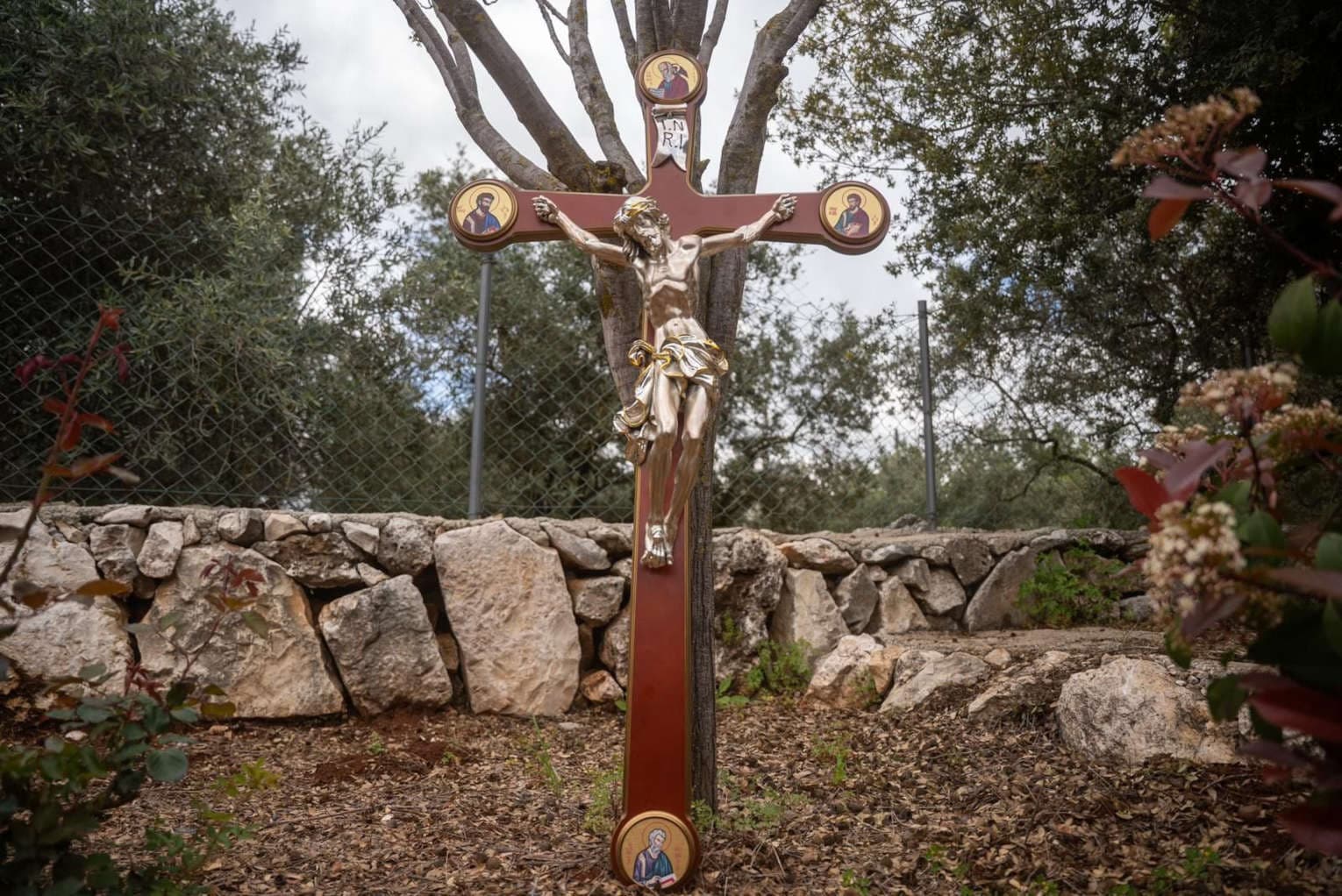
Two IDF soldiers were jailed after one smashed a statue of Jesus in Lebanon and another photographed the act — a vivid illustration of how Christian sacred sites and symbols become casualties of regional conflict, echoing Scripture's warnings about the suffering and dishonor visited upon Christ's name among the nations.
Psalm 79:1
Narrative Parallel“O God, the nations have come into your inheritance; they have defiled your holy temple; they have laid Jerusalem in ruins.”
Why this passage
Psalm 79 is Asaph's lament over the desecration of God's inheritance by foreign nations — the defilement of sacred space, the dishonor of what belongs to the Lord among the peoples. The original context is the destruction visited upon Jerusalem and the Temple, but the psalm establishes a pattern: in times of war and national upheaval, the sacred is violated and God's name is dragged through reproach.
This pattern extends legitimately to the desecration of Christian holy sites in Lebanon, where the ongoing regional conflict has created the same conditions the psalmist mourns — armed men treating consecrated objects and sacred symbols as spoils or targets of contempt.
The prophet Isaiah declared of the Suffering Servant, 'He was despised and rejected by men, a man of sorrows and acquainted with grief' (Isaiah 53:3). The desecration of a statue bearing Christ's image — however imperfect any image may be — in the land where His footprint reaches, is a stark reminder that the world's contempt for the name of Jesus did not end at Calvary.
Yet Scripture is not silent about those who treat holy things with scorn. Proverbs 14:34 declares, 'Righteousness exalts a nation, but sin is a reproach to any people.' The soldiers' imprisonment signals that even earthly authorities recognize the gravity of such contempt.
Let the Church pray, not in bitterness, but with the confidence that the Name above every name cannot ultimately be broken.
Today's Prayer
Pray that Christian communities in Lebanon and across conflict zones would be protected from desecration and violence, and that those in positions of military power would be restrained by the fear of God from treating sacred things with contempt.
Further Scripture
Additional passages that illuminate this event, each grounded in a distinct interpretive lens.
“Righteousness exalts a nation, but sin is a reproach to any people.”
Why this passage
Solomon's maxim in Proverbs 14:34 is a universal covenantal principle: the moral character of a nation's conduct — especially in moments when no one is watching — determines its honor or shame before God and man. The 'reproach' here is the public dishonor that follows moral failure at a national or corporate level.
This principle applies directly regardless of which nation is involved: when soldiers of any army desecrate religious sites, they bring a reproach not merely upon themselves but upon the people they represent.
How it applies
The act of smashing a Christian statue and photographing it for apparent sport is precisely the kind of conduct Proverbs identifies as a reproach — sin that diminishes the dignity of the people in whose name the soldiers served. The IDF's decision to imprison the soldiers reflects an acknowledgment of this principle, even if not articulated in scriptural terms.
“They will fall by the edge of the sword and be led captive among all nations, and Jerusalem will be trampled underfoot by the Gentiles, until the times of the Gentiles are fulfilled.”
Why this passage
Jesus prophesied in Luke 21:24 that during the age preceding His return, the land associated with God's people and the sacred inheritance would remain contested, trampled, and subject to the power of the nations. The 'times of the Gentiles' describes an era of ongoing upheaval in which the holy land and its environs are never fully at rest under one sovereign peace.
Lebanon, adjacent to Israel and within the ancient sphere of biblical geography, has been a theater of exactly this trampling — with Christian communities, churches, and sacred objects caught repeatedly in the crossfire of national and imperial power struggles.
How it applies
The desecration of a Jesus statue by a soldier in Lebanon is a concrete, present-tense manifestation of the kind of trampling Christ described — sacred things dishonored, holy spaces violated, Christian communities unable to protect even their most visible symbols of faith amid the unresolved conflicts of the nations. The 'times of the Gentiles' have not yet concluded.
“He was despised and rejected by men, a man of sorrows and acquainted with grief; and as one from whom men hide their faces he was despised, and we esteemed him not.”
Why this passage
Isaiah 53:3 describes the Servant of the Lord as one who is despised — not merely suffering, but actively held in contempt and treated as beneath regard. The NT applies this prophetically to Christ (cf.
John 12:38; Acts 8:32-33), establishing that contempt for Jesus is not a novelty but a pattern declared centuries before His incarnation.
The principle embedded in this verse is that the world's contempt for Christ — manifested historically in His crucifixion and continuing through history in acts of dishonor toward His name — is part of the same pattern Isaiah named.
How it applies
When a soldier deliberately destroys an image of Jesus and another photographs it, the act embodies the contempt Isaiah described. The name of Christ is 'esteemed not' in this moment — treated as a legitimate target of derision and destruction.
For the Christian reader, this is not shocking; it is the fulfillment of a pattern declared from the throne room of heaven seven centuries before the incarnation.
Related by Scripture
Other events we've interpreted through the same passage or hermeneutical lens.
Community launching soon
Get the invite by email when the Watchman's Wall opens
Source: Charisma News— we link to the original for full context.